
Laurent Giraid is a technologist whose career has been defined by the intersection of machine learning and the ethical implications of emerging tech. With a keen interest in how natural language processing and generative models are reshaping our digital reality, Giraid offers a unique perspective on the modern “arms race” within the insurance industry. As Aviva reports a record £230 million in detected insurance fraud, Giraid explores how sophisticated AI tools are being used both to fabricate reality and to defend it. This discussion provides a forensic look at the shift from opportunistic deception to automated “fraud factories” and how human-in-the-loop systems are becoming the only viable defense against the scale of modern scams.
How has the rise of generative AI shifted the landscape of insurance fraud from simple, opportunistic lies to the sophisticated “fraud factories” we see today?
The environment has shifted dramatically from a time when we merely worried about an individual exaggerating a minor slip into a life-altering injury. Today, we are seeing the emergence of sophisticated fraud factories where scammers use AI services to generate incredibly plausible images of car accident scenes that can bypass the weary eyes of a claims handler. Aviva recently uncovered a staggering £230 million in these fraudulent claims, highlighting the sheer scale of the problem. It’s no longer just about a bumped car suddenly needing four new doors; these fakes are detailed, plausible, and created by people who never even have to leave their desks to fabricate a high-value claim. This evolution means that the industry can no longer rely on human intuition alone to catch every deception buried in a heavy caseload.
With scammers now able to produce plausible medical reports and repair invoices with a simple subscription, how can an AI defense system effectively distinguish between a digital fabrication and a legitimate document?
When reality itself can be so cheaply faked, the defense must operate at a scale and speed that matches the threat. Our systems don’t just look at a document in isolation; they perform forensic pattern recognition across millions of data points from both current and past claims. We are looking for those tiny, nearly invisible inconsistencies in medical reports or repair invoices that have no basis in actual fact but look official to a cursory inspection. The AI sifts through the noise, checking if a vehicle registration number has appeared in other suspicious files or if the repair costs are out of line with thousands of similar cases. It’s a relentless, automated process that turns the scammer’s own tools against them by identifying the digital fingerprints of a fabrication.
Can you walk us through the specific forensic markers that an AI analyzes to determine if the physics of a reported accident actually matches the visual evidence provided?
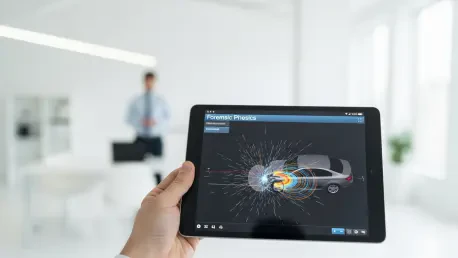
The forensic analysis is where the technology truly shines, as it evaluates the internal logic of a claim against the laws of the physical world. For example, the system cross-references the damage shown in a photo with the specific physics of the described accident to see if the impact patterns truly align. It checks if the timestamps on a series of documents make sense chronologically, ensuring that the story isn’t just a collection of AI-generated snapshots. By analyzing thousands of claims filed each day, the system builds a massive database of what a legitimate accident looks like down to the smallest detail. This level of scrutiny would be a grueling, nearly impossible task for a human to perform manually, but for an AI, it’s a matter of milliseconds to flag a discrepancy that feels “off” to the algorithm.
Beyond organized crime, “claims inflation” is a massive drain on the industry; how does AI-driven data analysis help identify when a garage or policyholder is subtly padding the bill?
Claims inflation is a more common and subtle form of dishonesty, where a garage might add unnecessary repairs to a quote or a person might pad the value of stolen items. To combat this, we use AI as a heavy-duty tool to analyze vast datasets of market values and repair costs to find the outliers. If a quote for a replacement part comes in significantly higher than the average from hundreds of other garages in the same region for that make and model, the system flags it immediately. It’s about creating a transparent baseline of what things should cost so that the noise of exaggerated claims can be filtered out. This doesn’t just stop organized crime; it protects the integrity of the entire insurance pool from the cumulative weight of thousands of small, dishonest additions.
Given the concerns surrounding AI ethics, why is the “human-in-the-loop” approach so essential when using these systems to flag potentially fraudulent behavior?
While the AI is incredibly powerful at pattern recognition, we view it primarily as an augmentation tool for human investigators rather than a total replacement. This human-in-the-loop approach is vital for ensuring fairness and preventing the technology from becoming an opaque black box that makes life-altering decisions without oversight. Our investigators are the ones who make the final call, using the AI’s forensic flags to focus their attention and expertise where it is most needed. It’s a partnership where the machine handles the massive, soul-crushing volume of data, and the human provides the nuanced judgment and empathy required for complex cases. By keeping humans central to the process, we ensure that the system remains ethical and accountable while still being fast enough to stop millions in losses.
What is your forecast for the future of the technological arms race between fraudsters and insurers?
I believe we are entering an era where the only viable defense against generative AI is a more sophisticated, adaptive AI that can learn in real-time. As scammers get better at faked identities and invoices, insurers will have to move toward predictive systems that can spot deception before a claim is even fully submitted. We will see a shift where the £230 million in fraud currently detected becomes much harder to perpetrate because the cost of bypassing an AI detective will eventually outweigh the potential payout for the scammer. Ultimately, the industry will transform into a proactive ecosystem where data integrity is verified instantly, making the “fraud factory” model obsolete. It will be a constant dance of innovation, but the side that masters pattern recognition at scale will always have the upper hand in the long run.