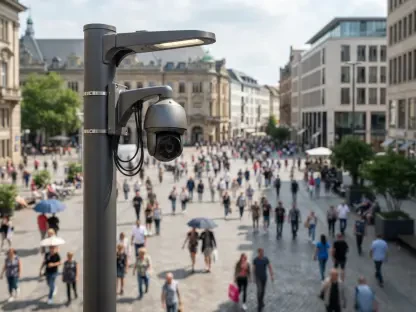

Major UK retailers including B&M and Budgens are utilizing a shared national watchlist that can effectively blacklist innocent individuals from the wider commercial landscape based on a single technical error. This sophisticated biometric infrastructure, powered by platforms such as Facewatch, was initially marketed as a cutting-edge deterrent against the rising tide of retail theft and organized shoplifting. However, the rapid integration of facial recognition technology into the daily operations of high-street brands like Home Bargains and Sports Direct has uncovered a series of systemic vulnerabilities that place everyday consumers at risk. As digital systems scan facial geometry and compare it against centralized databases of suspected offenders, the margin for error remains a significant concern for civil liberties advocates. The transition toward automated security has fundamentally altered the power dynamic between the retailer and the shopper, creating a scenario where a software mismatch can lead to immediate public confrontation.
Technical Flaws: The Discrepancy in Human Interpretation
The underlying mechanism of the Facewatch platform involves the creation of unique biometric templates that map specific distances between facial features to identify potential threats. While the system is technically designed to provide security personnel with a list of possible matches, a critical failure occurs during the human interpretation of these alerts. In many documented instances, store employees have bypassed necessary verification steps, opting instead to treat a machine-generated notification as definitive proof of criminal intent. This reliance on algorithmic certainty creates an environment where the nuance of human behavior is ignored in favor of a digital percentage. When a camera identifies a shopper as a high-probability match for a known shoplifter, the result is often an aggressive intervention that includes verbal accusations and mandatory bag searches, regardless of whether any suspicious activity was actually observed by the staff during the store visit.
Beyond the technical errors, the pervasive nature of facial recognition has introduced a form of social anxiety known as the ‘scared shopper’ phenomenon, where innocent civilians feel a lingering sense of dread during routine errands. Victims of false matches have described the experience of being publicly singled out by security as a traumatic event that causes long-term psychological distress. Reports indicate that many individuals who have faced such accusations suffer from physical symptoms of anxiety, including shaking and heart palpitations, whenever they enter a retail environment. This shift from a welcoming shopping atmosphere to a high-pressure surveillance zone fundamentally changes the public’s relationship with civic spaces. When people begin to view every camera as a potential source of a life-altering error, the sense of trust that sustains high-street commerce begins to erode. The constant awareness of being tracked and analyzed creates a persistent feeling of being under suspicion.
Systemic Accountability: The Path Toward Meaningful Reform
The most pervasive threat to individual privacy lies in the shared national watchlist model, which aggregates data from numerous participating retailers into a single, interconnected database. When an individual is flagged at one location—even if that flag is based on a false positive—their biometric data and the associated label are distributed across the entire network. This means that a shopper wrongly accused at a local store may find themselves barred from entering several other high-street brands miles away. This cascading effect creates a digital scarlet letter that follows the individual through their daily life. Legal experts have pointed out that this widespread sharing of biometric data operates in a regulatory gray area that bypasses traditional due process. In many cases, the process of submitting a Subject Access Request to discover what data a company holds is an arduous task, requiring the victim to provide even more sensitive information to the entities that mishandled their data.
Industry leaders recognized that the path forward required a fundamental shift in how biometric security prioritized human dignity over algorithmic speed. Retailers eventually moved toward publishing verifiable performance metrics that provided essential data on false-match rates across different demographics, ensuring that the technology did not target individuals based on age, race, or sex. To address the accountability gap, the retail sector implemented comprehensive policy reforms that redefined the role of human intervention. These new protocols ensured that an algorithmic alert was treated strictly as a prompt for cautious observation rather than a justification for immediate expulsion. Training programs were overhauled to emphasize de-escalation and visual verification before any action was taken. Ultimately, the establishment of a centralized clearinghouse allowed individuals to resolve errors through a streamlined process, restoring confidence in the safety and privacy of the retail experience.