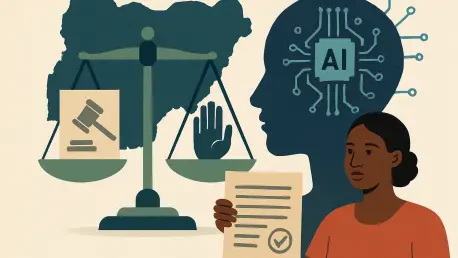

The mandatory National Identity Number system creates a significant barrier to citizenship for those living in rural areas who lack the resources to travel to registration centers. This systemic hurdle is merely the tip of the iceberg as Nigeria transitions into an era defined by artificial intelligence and automated decision-making. As the nation integrates these advanced technologies into its federal and commercial infrastructure, the conversation must shift from technical efficiency to the protection of fundamental human rights. The current trajectory suggests that without a robust governance framework, the digital divide will not only persist but deepen, transforming technological progress into a tool for further marginalization. Ensuring that AI serves as a catalyst for social inclusion requires a careful balance between innovation and the constitutional protections that define a democratic society. As algorithms begin to influence everything from financial creditworthiness to legal standing, the state faces a critical moment where the software of the future must be anchored in the ethics of the present to avoid creating a digital underclass. Modernity cannot be measured by the adoption of algorithms alone, but by how these tools protect the most vulnerable.
Navigating the Risks: Algorithmic Bias and Censorship
Addressing Systemic Inequalities: Digital Systems
AI systems are far from being the objective arbiters of truth that their proponents often claim; rather, they frequently mirror the historical and societal prejudices found within their training data. In Nigeria, where deep socio-economic disparities have long existed, the introduction of automated systems in law enforcement and banking poses a significant risk of amplifying these inequalities. If an algorithm is trained on data that reflects biased policing patterns or exclusionary lending practices, it will naturally replicate those same patterns under the guise of technical neutrality. This leads to automated discrimination that is exceptionally difficult to identify and challenge, as the bias is buried deep within the machine’s logic. For example, a credit-scoring model that prioritizes digital transaction history may inadvertently penalize millions of Nigerians who operate primarily in the informal cash economy. Consequently, these systems can become a new form of digital redlining, reinforcing the barriers that prevent marginalized groups from accessing essential financial services and legal protections.
The challenge is further compounded by the fact that these biases are often hidden behind a supposedly neutral digital interface, making them nearly invisible to the average citizen. Because the logic used to reach a decision is proprietary or overly complex, the fundamental right to equality and fair treatment is frequently compromised without the victim’s knowledge. To combat this, governance frameworks must go beyond simple technical oversight and mandate comprehensive social impact assessments for any AI system deployed in the public sector. It is essential to ensure that the datasets used for training are truly representative of Nigeria’s diverse demographic makeup, including age, gender, and regional background. Without such safeguards, the drive for modernization risks creating a technological hierarchy where those at the bottom are perpetually disadvantaged by algorithms they can neither understand nor influence. The goal of AI governance must therefore be the proactive identification and removal of these systemic biases before they are allowed to take root in the national infrastructure.
Protecting Freedom: Expression and Information
The use of AI for content moderation on social platforms introduces a dual threat to democratic discourse and the freedom of expression within the Nigerian digital space. While automated filters are designed to curb harm, they frequently lack the linguistic and cultural nuance required to distinguish between legitimate political dissent and actual hate speech. In a country with over 250 ethnic groups and a rich tapestry of local dialects, an algorithm programmed with a narrow understanding of language is likely to suppress the voices of those it is meant to protect. Sarcasm, regional idioms, and culturally specific metaphors used by activists or journalists can be misconstrued as violations of safety policies, leading to unwarranted censorship. This creates a chilling effect where individuals may self-censor to avoid being flagged by impersonal systems that do not understand the local context. For democracy to thrive, the digital public square must remain a place for open and diverse debate, protected from the blunt and often inaccurate edge of automated moderation tools.
Furthermore, recommendation algorithms that prioritize user engagement over information accuracy tend to amplify extremist content, potentially fragmenting public debate and suppressing the voices of minority groups. These systems are designed to keep users on platforms for as long as possible, often by promoting sensationalist or divisive material that triggers strong emotional responses. In the Nigerian context, this can lead to the rapid spread of misinformation and the polarization of an already complex social landscape. When the information diet of the citizenry is curated by algorithms that profit from conflict, the shared reality necessary for a stable democracy begins to erode. Governance strategies must therefore demand greater transparency in how these algorithms operate and provide users with more control over the content they see. Protecting the integrity of the digital information ecosystem is not just a matter of technical regulation; it is a vital necessity for the preservation of social harmony and the protection of every citizen’s right to access reliable and diverse information.
Ensuring Transparency: Comparative Global Standards
Overcoming the Black Box Phenomenon: Seeking Accountability
A core pillar of the rule of law is the ability of a citizen to understand and challenge decisions that impact their lives, yet many AI algorithms operate as “black boxes” whose inner workings are opaque. This lack of transparency is particularly dangerous in high-stakes contexts such as criminal sentencing or the distribution of social welfare benefits, where the logic behind a decision is hidden from public view. If a citizen is denied a government service or receives a harsher legal penalty based on an automated recommendation, they have a right to know how that conclusion was reached. Without this “right to an explanation,” the principle of due process is rendered meaningless, as there is no way to verify that the decision was made on fair and legal grounds. The opaque nature of these systems creates a power imbalance between the state and the individual, where the machine’s output is treated as infallible while the citizen is left without a clear path for appeal. Transparency is the only antidote to this growing digital authoritarianism.
To protect the right to an effective remedy, governance frameworks must mandate that algorithmic decisions are explainable and open to human oversight at every stage. This means that government agencies and private corporations must be able to provide a clear, non-technical justification for any automated decision that significantly affects an individual’s rights or status. Developing “explainable AI” is not just a technical challenge but a legal and ethical imperative that ensures technology remains a tool for human empowerment rather than a source of arbitrary power. Furthermore, there must be established protocols for human intervention, allowing a qualified official to review and override a machine’s decision when it is found to be incorrect or unjust. By embedding these requirements into the law, Nigeria can ensure that its judicial and administrative systems remain grounded in human accountability. The future of justice in a digital age depends on our ability to pull back the curtain on the black box and subject its logic to the same scrutiny as any other government action.
Regulatory Models: International Lessons
Nigeria can draw valuable lessons from global attempts to regulate AI, such as the European Union’s risk-based classification system, which provides a structured approach to managing technological impact. This model bans harmful practices—like state-sponsored social scoring—while imposing strict transparency and safety requirements on high-risk applications in sectors like healthcare and transportation. By focusing on the potential consequences of a technology rather than its underlying code, this approach allows for innovation while ensuring that the most dangerous uses of AI are strictly controlled. In contrast, the United States has historically favored a more decentralized, market-oriented approach that prioritizes commercial growth, while China has integrated AI regulation into a broader framework of state control. For Nigeria, the goal should be to find a middle path that encourages the development of a local tech ecosystem while maintaining the robust human rights protections found in the more rigorous international models.
International efforts by organizations like UNESCO emphasize that accountability and fairness must be the bedrock of any national AI strategy, regardless of its specific economic goals. These global standards highlight the importance of international cooperation in addressing the cross-border challenges posed by digital technologies, such as data sovereignty and algorithmic bias. By aligning its national policies with these international norms, Nigeria can ensure that its citizens are protected by the same high standards as those in other leading digital economies. This alignment also facilitates international trade and investment, as global tech companies are more likely to operate in a market with clear and predictable regulatory requirements. Ultimately, the successful governance of AI requires a global perspective that recognizes the universal nature of human rights while allowing for local adaptation. Nigeria has the opportunity to lead the way in Africa by creating a model of AI governance that is both technologically advanced and deeply rooted in the principles of international law.
Local Barriers: Legislative Progress
Architecture of Exclusion: Dismantling the Digital Wall
In the Nigerian context, a unique challenge known as “exclusion by design” has emerged, where digital identity systems like the National Identity Number can become insurmountable barriers to citizenship. For those living in rural areas or those living with disabilities, the sheer difficulty of accessing registration centers can lead to permanent disenfranchisement from essential services. When healthcare, banking, and education are all predicated on a digital ID that is hard to obtain, the state risks rendering a significant portion of its population invisible to the very systems designed to support them. This is not merely an administrative oversight but a fundamental violation of the right to social inclusion and equal opportunity. AI-driven governance risks exacerbating this problem by further automating the barriers that prevent the marginalized from participating in society. To avoid this, the digital architecture of the nation must be designed with the most vulnerable in mind, ensuring that technology serves as a bridge rather than a wall.
Dismantling this architecture requires a shift in how we think about digital transformation, moving away from a focus on technical speed and toward a focus on universal access. This involves not only expanding the physical reach of registration centers but also ensuring that the digital tools themselves are accessible to those with limited literacy or technical skills. AI could, in theory, be used to simplify these processes through voice-based interfaces in local languages, but only if its development is prioritized for social good rather than pure efficiency. Furthermore, the state must maintain robust non-digital alternatives for those who are unable to navigate the new systems, ensuring that no citizen is left behind in the rush toward a high-tech future. True progress is measured not by how many people are enrolled in a database, but by how effectively that database serves the needs of every citizen, regardless of their location or socio-economic status. We must ensure that the digital identity of a person is a tool for empowerment, not a mechanism for their exclusion.
Data Protection: Future Safeguards
The enactment of the Nigeria Data Protection Act in 2023 represented a vital milestone in regulating data controllers and ensuring fairness, but legislative progress remains incomplete if it does not prioritize accessibility. For the law to be effective, it must move beyond technical requirements to address the lived realities of all Nigerians, ensuring that technology does not widen the gap between the elite and the vulnerable. This requires a strong and independent Nigeria Data Protection Commission that has the power to hold both government agencies and private corporations accountable for their use of personal information. The commission must serve as a vigilant guardian of human dignity, ensuring that the extraction and processing of data do not lead to intrusive monitoring or social control. Strengthening this institutional framework is the first step toward building a trustworthy digital ecosystem where innovation and rights are not seen as competing interests, but as mutually reinforcing goals for the nation’s development.
Ultimately, the successful integration of artificial intelligence into Nigerian society required a fundamental shift toward a human-centered governance model. The Nigeria Data Protection Commission and other regulatory bodies operated with a new level of independence, ensuring that the pursuit of technological progress never came at the expense of constitutional freedoms. Policymakers and civil society groups worked together to operationalize the concept of meaningful consent, transforming it from a simple checkbox into a powerful tool for individual autonomy. By treating technology as a social and political instrument, the state managed to hard-code ethical standards into the very fabric of its digital infrastructure. This era was defined by a commitment to inclusive participation, where the voices of the most vulnerable were finally heard in the halls of policy. These actions provided a clear roadmap for other nations seeking to balance the immense potential of AI with the timeless necessity of protecting human rights. The result was a digital landscape that successfully fostered both justice and opportunity for every citizen across the nation.