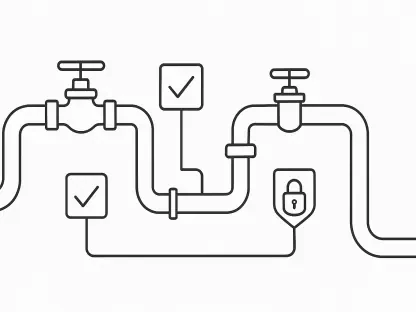

The tension between the rapid expansion of large language models and the rights of original content creators has reached a critical breaking point, necessitating a complete overhaul of how we manage digital intellectual property. For too long, website owners have been trapped in a restrictive binary choice that forced them to either surrender their valuable data to AI crawlers without any hope of compensation or block these agents entirely at the risk of losing visibility in modern search results. This unsustainable dynamic has created a rift in the digital economy, where the value generated by high-quality journalism, academic research, and creative writing is often harvested without the consent of those who produced it. Personal Digital Spaces has addressed this fundamental imbalance by launching OpenRSL, a decentralized implementation of the Really Simple Licensing protocol. By providing a technical framework for automated governance, this open-source initiative offers a sophisticated “third path” that allows creators to participate in the AI economy on their own terms.
The Architectural Pillars of Decentralized Licensing
Consent: Direct Intermediary-Free Transactions
A defining characteristic of the OpenRSL framework is its departure from the centralized gatekeeping models that have historically dominated the digital advertising and content syndication industries. Traditional web monetization often relies on complex networks of intermediaries that skim significant portions of revenue and harvest user data, leaving the original creator with only a fraction of the value. In contrast, OpenRSL utilizes a decentralized architecture that enables direct peer-to-peer licensing between the website owner and the AI developer. This peer-to-peer approach ensures that transactions are settled individually and transparently, without the need for a central authority to validate or process the exchange. By removing these burdensome middle layers, the protocol maximizes the financial return for the publisher while simultaneously streamlining the acquisition process for AI agents. This shift empowers a wide spectrum of users, from massive media conglomerates to independent bloggers, to assert control over their digital assets in a way that was previously impossible.
Furthermore, the implementation of this decentralized system creates a more resilient and private ecosystem for digital commerce. Because OpenRSL operates without a central clearinghouse, there is no single point of failure or data repository that could be targeted by malicious actors or used for intrusive tracking. The value created by expert content remains largely within the relationship between the provider and the consumer, fostering a more equitable distribution of wealth in the AI-driven era. This model also allows for a high degree of flexibility in how licensing terms are structured, enabling publishers to offer different tiers of access based on the specific needs of the AI model being trained. As the industry moves away from the “grab-and-go” culture of early web scraping, this direct interaction model establishes a new standard for professional integrity and financial accountability. It ensures that the digital property rights of the individual are not sacrificed for the sake of technological progress, but are instead integrated into the very fabric of the AI development cycle.
Machine-Readable Governance: Immutable Auditing
The technical brilliance of OpenRSL lies in its transition from the passive, easily ignored signals of the past to a robust and machine-readable governance layer. For decades, the robots.txt file served as the primary method for communicating with web crawlers, yet it offered no legal weight and was frequently bypassed by aggressive scraping bots. OpenRSL replaces these informal gestures with a standardized framework that AI systems can interpret and follow autonomously. Website operators can now define precise “rules of the road” that dictate exactly what content is free for public use, what requires explicit permission for non-commercial research, and what necessitates a formal licensing fee for commercial model training. This level of clarity provides AI developers with the legal certainty they need to build their products without the looming threat of copyright litigation. By automating the interpretative process, the protocol allows for a seamless flow of data that respects the boundaries set by the content owner.
To reinforce these digital boundaries, the framework incorporates an immutable ledger that logs every access event with surgical precision. This creates a permanent, verifiable record of how content is being utilized across the web, offering a level of transparency that was previously unattainable in the opaque world of data harvesting. Whether the settlement involves traditional fiat currency or modern token-based systems, the protocol supports a wide range of payment structures to accommodate various business models. This capacity for granular monetization means that a publisher could charge a micro-fee for every single paragraph ingested by a training model, or offer bulk subscriptions for broader datasets. The auditing capabilities ensure that both parties can verify compliance with the agreed-upon terms, reducing friction and building trust in a previously adversarial environment. This systematic approach to data management transforms the web from a chaotic repository of information into a structured marketplace where every interaction is recorded and every contribution is valued.
Strategic Impact on the AI Ecosystem
Empowering Website Owners: Incentivizing Quality
For the modern website owner, the adoption of OpenRSL represents a significant step toward achieving true digital sovereignty in an age where data is the most valuable commodity. By transforming intellectual property from a vulnerable resource prone to exploitation into a managed asset, creators can finally reclaim their position in the digital value chain. This shift is particularly vital for those who produce high-quality, expert-curated content, as these materials are the “ground truth” upon which reliable AI models are built. When creators receive fair compensation for their labor, they are financially incentivized to continue publishing the deep-dive reporting and specialized research that prevents the phenomenon known as “content decay.” If creators were to stop sharing their work due to a lack of ROI, the AI ecosystem would eventually suffer from a lack of fresh, accurate input, leading to a stagnation of knowledge. This protocol ensures that the human element of information production remains vibrant and sustainable.
Beyond the immediate financial benefits, this new standard fosters a healthier relationship between the producers of knowledge and the technology companies that utilize it. When a creator knows that their work is being accessed legally and compensated fairly, they are more likely to provide high-fidelity data that is optimized for machine learning. This alignment of interests creates a positive feedback loop where the quality of the AI’s output is directly linked to the health of the creative industry. The protocol allows for a more nuanced approach to public sharing, where a publisher might keep their most valuable insights behind a licensing wall while still allowing general information to circulate freely for search indexing. This strategic management of digital assets enables organizations to build long-term business models that are not solely dependent on declining advertising revenues. By securing the economic future of content creation, OpenRSL protects the intellectual diversity of the internet and ensures that the web remains a primary source of human-generated wisdom.
Providing Ethical Data Access: AI Developers
From the perspective of those developing the next generation of artificial intelligence, OpenRSL provides a much-needed structured pathway for ethical and legal data acquisition. As global data governance standards become increasingly stringent, the era of unbridled scraping is coming to an end, replaced by a demand for transparency and verifiable consent. Developers who utilize the OpenRSL framework can demonstrate a clear chain of title for the data they use, which is becoming a prerequisite for both regulatory compliance and corporate investment. This proactive approach to licensing mitigates the risk of costly legal battles and public relations crises that often arise from allegations of data theft. By integrating seamlessly with existing infrastructure like publishing platforms and content delivery networks, the protocol offers a scalable solution for ingesting vast amounts of data while maintaining a clean legal record. It allows labs to focus on innovation rather than navigating a minefield of copyright claims.
The collaborative nature of this framework also encourages the development of more specialized and accurate AI models. By accessing expert-vetted data through a formal licensing process, developers can ensure that their systems are trained on the most reliable information available, rather than the “noise” often found in unvetted web scrapes. The logs and analytics provided by the protocol offer deep insights into data ROI, helping developers understand which sources provide the most value for specific training tasks. This transparency naturally leads to more efficient model development and higher-quality results for end-users. As the industry moves toward a more mature phase of growth, the transition to machine-readable licensing will be viewed as a foundational moment that allowed for the coexistence of intellectual property rights and technological breakthroughs. OpenRSL does not just resolve a conflict; it builds a bridge between two essential components of the modern information economy, ensuring that the progress of AI does not occur in a legal or ethical vacuum.
The implementation of OpenRSL has established a practical and scalable foundation for the future of digital property rights in the age of artificial intelligence. By moving beyond the outdated and ineffective methods of the past, this decentralized framework has provided both creators and developers with the tools necessary for a mutually beneficial relationship. The move toward automated, machine-readable licensing has streamlined the acquisition of high-quality data while ensuring that those who produce it are fairly compensated for their efforts. Organizations looking to secure their intellectual property or refine their data acquisition strategies should begin by integrating these protocols into their existing digital workflows. Future developments will likely focus on expanding the interoperability of these systems across different platforms and jurisdictions, further solidifying a sustainable information economy. The shift toward a transparent, auditable, and consent-based internet has proven that innovation and individual rights can flourish together when the right technical infrastructure is in place.