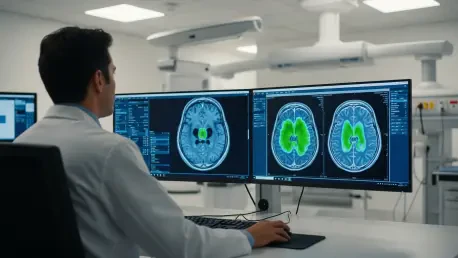

The rapid integration of sophisticated deep-learning models into the daily clinical workflows of modern radiology departments has created an urgent need for transparency that extends beyond mere diagnostic accuracy. While these computational tools offer the potential to significantly accelerate the detection of anomalies in medical imaging, the underlying logic of their decision-making processes often remains a “black box” to the practitioners who rely on them. To mitigate this uncertainty, the field of Explainable Artificial Intelligence, or XAI, has introduced various visual rationales such as saliency maps and heatmaps that aim to highlight which specific regions of an image influenced a particular diagnosis. However, the mere presence of an explanation is not enough to guarantee clinical safety if that explanation is not grounded in a stable and reproducible biological signal. Current research suggests that the true measure of a trustworthy AI system is not just its ability to provide a rationale, but the robustness of that rationale across different training cycles.
Evaluating the Credibility of AI Explanations
Professor Christian Wallraven and a multidisciplinary research team recently scrutinized the metrics currently used to evaluate the validity of AI-generated explanations in a medical context. Their investigation focused on whether the visual “evidence” provided by an AI model represents a legitimate biological marker or is simply a random byproduct of the model’s specific training parameters. Traditionally, developers have prioritized metrics like fidelity, which assesses how well a rationale reflects the internal logic of the model, and complexity, which measures the readability of the explanation for a human observer. The study discovered that these metrics are often highly volatile and can fluctuate dramatically even when the underlying diagnostic task remains unchanged. This lack of consistency poses a significant challenge in clinical environments where surgeons and radiologists require absolute certainty that a highlighted brain lesion or tissue abnormality is not a mathematical fluke but a persistent physical reality.
The findings from this research indicate that robustness is the only metric that consistently aligns with established clinical judgment and anatomical truth. While fidelity and complexity vary based on the specific architecture of a neural network, robustness ensures that the AI identifies the same physical features in a patient’s scan every time it is retrained on the same data. High robustness indicates that the model is capturing stable, reproducible features of a disease rather than overfitting to superficial noise in the imaging data. This distinction is vital for long-term patient safety because it allows clinicians to distinguish between a model that is simply “guessing” based on statistical patterns and one that is actually understanding the pathological indicators of a condition. By establishing robustness as the primary standard for trustworthiness, the medical community can move toward a more objective framework for auditing the AI tools that are becoming increasingly prevalent in modern diagnostic suites and neuroimaging laboratories.
Bridging Clinical Reality and Algorithmic Stability
To validate these theoretical concepts, the researchers performed a massive simulation involving approximately 40,000 brain MRI scans obtained from major databases such as the UK Biobank and the Alzheimer’s Disease Neuroimaging Initiative. By analyzing these scans through 10,000 different simulations and nine distinct deep-learning architectures, the team was able to cross-reference AI-generated heatmaps with three-dimensional brain tissue units called voxels. This rigorous approach allowed the researchers to quantify the clinical accuracy of the AI rationales in a way that had never been done before, moving the conversation from abstract computer science to concrete medical verification. The results proved that robustness acts as a vital bridge between algorithmic performance and biological reality, ensuring that the machine’s “thought process” is anchored in the physical world. This data-driven rigor provides a necessary safeguard against the inconsistent results that can arise when models are deployed in diverse hospital settings.
The shift toward robustness also mirrors the evolving regulatory landscape, where the European Union’s AI Act and other global frameworks now classify medical diagnostic AI as a high-risk technology. These regulations demand a high degree of transparency and stability from developers, requiring them to prove that their systems are not only accurate but also reliable over time. By adopting robustness as a standardized benchmark, the industry can meet these high ethical and legal bars more effectively, providing a clear path for the certification of new medical software. This evolution marks a transition from the experimental phase of AI development to a more mature era of professional accountability. Companies that prioritize these metrics will likely lead the market, as healthcare providers increasingly seek out solutions that offer consistent and defensible rationales for their clinical outputs. This focus on stability helps mitigate the risks of model degradation, ensuring that the tools remain effective throughout their lifecycle.
Establishing a Resilient Framework for Patient Safety
For artificial intelligence to become a permanent and trusted fixture in daily medical workflows, its explanations must be stable enough to support high-stakes decisions like surgical planning or long-term treatment strategies. A model that points to a different brain region as the source of a pathology every time it is retrained cannot be used to guide a surgeon’s scalpel or inform a patient’s prognosis. Interdisciplinary collaboration between AI engineers and clinical experts is the only way to ensure that these tools are grounded in the practical realities of the hospital ward. By integrating the insights of radiologists into the validation process, the development community can refine these algorithms to focus on the biological features that actually matter for patient care. This synergy is essential for transforming AI from a secondary diagnostic aid into a primary tool for precision medicine, where every automated suggestion is backed by a robust and clinically validated rationale that stands up to professional scrutiny.
The medical technology sector recognized that the transition toward robustness-based evaluation represented a definitive shift in the philosophy of automated diagnostics. Stakeholders moved beyond simple accuracy scores to adopt standardized robustness testing as a mandatory component for all high-risk medical algorithms. This change facilitated the creation of certified audit trails, allowing healthcare institutions to verify that their AI systems remained consistent across various updates and hardware configurations. Developers focused on building more resilient architectures that prioritized the identification of stable anatomical markers over the pursuit of marginal performance gains. By the conclusion of these research efforts, the industry established a new framework that aligned technological innovation with the fundamental requirements of evidence-based medicine. These efforts ensured that the visual evidence provided by AI became a reliable and reproducible asset for clinicians worldwide. This standardized approach provided a clear roadmap for the future expansion of AI in multi-modal imaging environments.