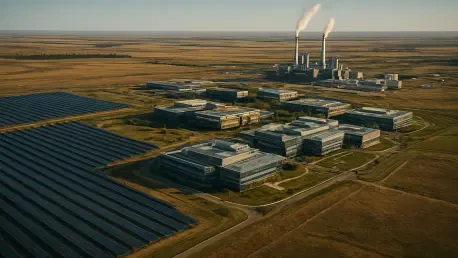

Aztec AI Health’s proposal for a 150-megawatt facility in Moose Jaw represents the latest in a series of mega-projects testing the limits of Saskatchewan’s electrical grid and zoning laws. The province, historically defined by its vast wheat fields and potash mines, is rapidly evolving into a frontier for high-intensity computing. Global tech firms are increasingly viewing the Canadian prairies as an ideal location due to the availability of space and the cooler climate, which significantly reduces the energy required for server cooling. However, this transition is happening faster than the provincial government can update its industrial guidelines. The scale of these facilities is unprecedented; while a typical commercial building might use a few dozen kilowatts, these data campuses require energy equivalent to entire small cities. This sudden demand is forcing a difficult conversation about who pays for the necessary infrastructure upgrades and how to protect local resources while courting massive international investment. Many industry analysts suggest that without immediate intervention, the province could face a permanent imbalance between its digital ambitions and its physical capacity to sustain them.
Shifting Dynamics in Environmental Oversight
The sudden influx of large-scale technology projects has highlighted significant gaps in the way provincial authorities manage environmental protection and industrial zoning. As “Big Tech” firms gravitate toward the province’s abundant energy resources, the traditional mechanisms for project approval are being stretched to their breaking point. There is an urgent need to modernize the regulatory framework to account for the unique footprint of data centers, which differ significantly from the agricultural and mining operations that have long dominated the region. These facilities do not produce physical waste in the traditional sense, but their consumption of electricity and water for cooling systems creates a different type of ecological strain. Consequently, the provincial government is being pressured to establish more rigid standards that ensure industrial growth does not compromise the long-term sustainability of local ecosystems. The lack of a clear, centralized policy has led to a situation where individual projects are evaluated on a case-by-case basis, often without a comprehensive understanding of their cumulative impact on the province’s environmental health.
The Assessment Gap: Ambiguity in State Oversight
The application of the Saskatchewan Environmental Assessment Act has become a central point of contention as the province tries to balance economic growth with ecological preservation. Under existing provincial law, any project that might consume vast amounts of water, introduce novel technologies, or trigger significant public concern should theoretically undergo a formal environmental appraisal. Yet, there is a visible disconnect between these statutory requirements and recent executive decisions. For instance, the Ministry of Environment determined that a massive 300-megawatt project near Regina did not necessitate a provincial assessment, despite its integration of a dedicated natural gas plant and solar array. This decision has sparked intense scrutiny from environmental watchdogs and local community groups alike. They argue that bypassing standard oversight creates a dangerous precedent where the cumulative impact of multiple AI facilities remains unexamined by independent scientific bodies. This regulatory silence creates a climate of uncertainty, leaving residents to worry about the potential long-term deficit in regional biodiversity and water table health.
The Self-Regulation Risk: Shifting Responsibility to Firms
In the absence of state-mandated reviews, the burden of assessing environmental impacts has effectively shifted toward corporate self-regulation, which many experts find problematic. Developers often conduct their own internal studies on issues such as noise pollution and site drainage, presenting these findings to local councils as sufficient evidence of safety. Critics argue that this abdication of provincial duty ignores the public interest, particularly when dealing with projects that carry heavy carbon footprints. Without a centralized, objective standard for measuring the atmospheric emissions or the thermal pollution generated by constant cooling systems, the environmental narrative is largely shaped by the entities seeking approval. This lack of transparency has left many rural residents anxious about the potential depletion of local aquifers and the noise generated by thousands of cooling fans. There is a growing demand for a more rigorous and standardized approach to ensure that the province’s shift toward a high-tech future does not come at the cost of the natural resources that have sustained its agricultural core for decades.
Infrastructure Strain and Local Governance
The rapid arrival of data center developers has created a complex administrative burden for local governments that are already struggling to manage existing infrastructure. Municipalities are often the first point of contact for tech giants, yet they frequently lack the specialized legislative tools needed to handle projects of this magnitude. This has led to a fragmented landscape where different towns apply vastly different rules to the same types of industrial developments. Some communities are eager for the potential tax revenue, while others are increasingly wary of the long-term costs associated with upgrading power grids and water treatment plants to meet the demands of server farms. This localized struggle underscores the need for a provincial strategy that provides a clear roadmap for both developers and citizens. Without such a framework, the province risks a scenario where local resistance slows down economic growth, or worse, where municipalities are forced to make concessions that they cannot afford to sustain in the coming years as the demand for processing power continues to rise exponentially.
Administrative Burdens: Challenges for Municipal Councils
As the provincial government remains slow to implement specific AI legislation, the burden of complex decision-making has been downloaded to municipal councils and rural reeves who may lack the technical expertise to evaluate such projects. This lack of centralized leadership has resulted in a fragmented regulatory landscape, where developers can effectively shop for the most lenient jurisdictions within the province. For example, while some regions have welcomed the tax revenue, others like Saskatoon have opted for a more cautious approach, requesting a moratorium to evaluate the implications of AI infrastructure. This discrepancy creates an uneven playing field and puts immense pressure on local planners who must navigate the specialized demands of massive tech campuses without a clear provincial roadmap. These municipalities are forced to negotiate complex power-sharing agreements and water usage permits with international giants, often feeling outmatched in these high-stakes discussions. This situation risks a patchwork of inconsistent policies that could ultimately deter stable, long-term development.
Policy Recommendations: Building a Sustainable Framework
The political opposition and local municipal advocates are increasingly vocal about the need for a more transparent and structured approach to these developments. There is a widespread concern that small local councils are ill-equipped to manage the stress these massive facilities place on the electrical grid and public water supplies. Many are now calling for a dedicated regulatory framework similar to models seen in other jurisdictions, which require data centers to pay for their total infrastructure impact upfront and adhere to strict, measurable environmental standards. This would ensure that the local taxpayers are not left holding the bill for the massive upgrades needed to support “Big Tech” operations. Furthermore, a centralized framework would provide much-needed clarity for investors, who currently face a high degree of uncertainty due to the potential for local moratoriums or sudden policy shifts. Establishing clear expectations for noise mitigation, energy efficiency, and community benefit agreements is becoming essential for maintaining public trust and ensuring the province remains competitive.
The Final Resolution: Lessons from the Infrastructure Boom
The focus eventually shifted toward long-term energy resilience, specifically by incentivizing the integration of waste heat recovery systems in every new data center project. Instead of venting heat into the atmosphere, these facilities provided heating for greenhouses or industrial processes, turning a byproduct into a regional asset. This approach was successfully modeled in several projects, proving that technical innovation could mitigate environmental concerns while boosting local food security. Establishing a provincial task force dedicated to AI infrastructure provided municipal leaders with the technical guidance necessary to vet complex proposals. This group served as a bridge between the tech industry and local communities, ensuring that technical jargon was translated into clear socio-economic impacts. Such a move demonstrated that the province was committed to fostering a high-tech economy that respected the traditional values of its residents while preparing for the demands of a processing-heavy future. Leaders recognized that an equitable distribution of financial benefits was necessary to secure broad public support.