
The conversion of promoter loans into equity through a 21 crore rupee preferential issue signals strong internal confidence in the firm’s international expansion strategy. This decisive financial move, involving the issuance of fully convertible warrants to Milind Padole, provides Affordable Robotic & Automation Limited with the necessary liquidity to execute its aggressive 2026 roadmap. By solidifying its capital base, the company is better positioned to transition its successful domestic model into the highly regulated markets of North America. This shift is not merely about increasing manufacturing capacity but involves a sophisticated alignment of technical capabilities with international safety and communication standards. As the firm pivots toward this global stage, the internal reinvestment acts as a foundational pillar, ensuring that the necessary research and development resources are available to meet stringent overseas requirements. This approach effectively secures the technological future of the brand’s fleet.
Navigating Regulatory Frameworks for Global Scalability
Part 1. Achieving Technical Compliance for Wireless Operations
Securing conditional approval from the United States Federal Communications Commission represents a watershed moment for the deployment of autonomous pallet trucks and forklifts in the American logistics sector. This regulatory hurdle is notoriously difficult to clear, as it mandates that every wireless communication module within an autonomous mobile robot functions without interfering with existing industrial frequencies. For a robotics firm, this compliance is the primary gatekeeper for entering North American warehouses, where seamless connectivity is the backbone of automated fleet management systems. By addressing these technical specifications, the organization has demonstrated a deep understanding of the intricacies involved in international hardware standards. The approval validates the reliability of their wireless stack, ensuring that their robotic solutions can operate within the complex electromagnetic environments of modern distribution centers. This milestone effectively removes a major barrier to market entry.
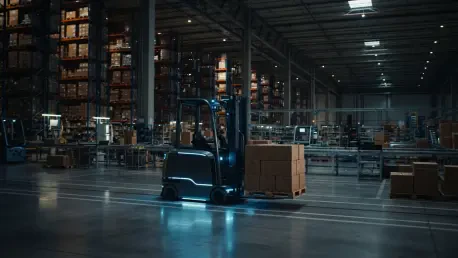
Beyond mere compliance, the integration of FCC-approved modules into autonomous material handling equipment reflects a commitment to long-term operational stability for end-users. When these robots are deployed in high-density storage facilities, the integrity of their data transmission directly impacts safety protocols and throughput efficiency. Uninterrupted communication between the central warehouse management system and the individual robotic units prevents collisions and optimizes the pathing of autonomous forklifts. This technical readiness is crucial because North American clients typically demand rigorous proof of concept regarding signal reliability before committing to large-scale fleet conversions. Consequently, the achievement of these regulatory benchmarks serves as a powerful marketing tool, signaling to potential overseas partners that the technology is mature enough for immediate industrial application. The focus now shifts toward maintaining these standards as the company scales its production to meet configurations.
Part 2. Strategic Implications of International Certification
Entering the United States market requires more than just a functional product; it demands a comprehensive strategy that encompasses local safety regulations and rigorous liability standards. The conditional approval serves as a technical invitation to a marketplace that is rapidly transitioning from manual labor to automated solutions due to rising operational costs. By establishing a foothold now, the company positions itself to capture a significant share of the warehouse automation market, which continues to expand through 2026 and beyond. This move is strategically timed to coincide with a global push for more resilient supply chains that rely less on human intervention for repetitive tasks. The ability to offer FCC-compliant hardware allows the firm to compete directly with established Western robotics manufacturers, providing a cost-effective yet technically robust alternative. Such a transition requires a careful balance between aggressive market penetration and quality maintenance.
The strategic pivot toward international waters also necessitates a shift in how the company manages its engineering and support ecosystems. Providing autonomous solutions to a distant market like North America involves setting up robust technical support structures and ensuring that software updates can be delivered securely across borders. This internationalization of the service model is often as challenging as the initial hardware design, requiring a deep bench of talent capable of navigating multiple time zones and regional industrial cultures. As the firm moves forward, the focus will likely remain on leveraging its recent regulatory wins to build credibility with American distributors and third-party logistics providers. Successfully navigating these early stages of internationalization will provide a template for future expansions into other regulated markets, such as the European Union. The emphasis remains on creating a scalable framework where each new certification builds upon the last for various needs.
Financial Foundations and Sustained Market Growth
Part 1. Analyzing Revenue Trajectories and Order Fulfillment
The financial health of the organization is underscored by a confirmed order book that has reached a substantial ₹171 crore by late September 2026, reflecting a clear upward trend. This growth includes ₹63 crore in new orders secured within the current fiscal period, demonstrating that the market demand for specialized automation remains high even as competition intensifies. Maintaining an EBITDA margin of 14.19% on a total income of approximately ₹120.96 crore indicates a disciplined approach to operational costs and project management. These figures are not just markers of past success but serve as the engine for future innovation and international deployment. A healthy margin provides the necessary cushion to absorb the high working capital requirements that are characteristic of custom robotics manufacturing. For investors and stakeholders, this financial transparency provides a degree of certainty that the company can meet its delivery obligations while investing.
Successfully executing an order book of this magnitude requires a sophisticated supply chain and production management system that can handle the complexities of bespoke automation projects. As the company transitions from domestic projects to international deliveries, the pressure on its manufacturing facilities will likely increase, necessitating further investments in automation within its own production lines. The current revenue trajectory suggests that the firm has found a sweet spot between standardized robotic platforms and the customization required by specific industrial clients. This balance is critical for maintaining profitability, as excessive customization can lead to ballooning costs and delivery delays. By leveraging its healthy EBITDA of ₹17.16 crore, the firm can continue to refine its manufacturing processes, potentially reducing lead times and improving the overall quality of its autonomous vehicles. The focus on consistent revenue realization from existing domestic contracts ensures expansion stability.
Part 2. Mitigating Risks in High-Capital Robotics
Despite the positive regulatory and financial indicators, the path to global dominance in the robotics sector is fraught with execution risks that require careful navigation. Custom robotics manufacturing is inherently capital-intensive, often requiring significant upfront investments in hardware and software development before a single unit is shipped. The transition from domestic success to international operations introduces additional variables, such as fluctuating exchange rates and complex cross-border logistics. Managing these risks involves a proactive approach to working capital management and a focus on long-term partnerships rather than one-off sales. The high cost of specialized components and the specialized labor required for assembly mean that any delays in the supply chain can have a magnified impact on the bottom line. Therefore, building a resilient network of suppliers and maintaining a robust liquidity position are essential strategies for expansion.
The shift from manual material handling to robotic solutions in global logistics hubs presents both a massive opportunity and a significant technical challenge. As warehouses become more complex, the demands on robotic intelligence and physical durability increase, requiring constant iterations of the existing technology. This constant need for innovation means that a company cannot afford to rest on its laurels after achieving a single regulatory milestone like FCC approval. Instead, the focus must remain on continuous improvement and the integration of emerging technologies like advanced machine learning and computer vision. These advancements are necessary to ensure that the autonomous pallet trucks can operate in increasingly dynamic and unpredictable environments. By staying ahead of the technological curve, the firm can maintain its competitive edge and justify its premium positioning in the market. The ability to adapt to changing industrial requirements will be the true test of the firm’s longevity.
The successful acquisition of conditional FCC approval and the strengthening of the capital structure through equity conversion established a clear path for the firm’s entry into the North American market. These strategic moves provided the necessary technical and financial legitimacy to compete on a global scale, shifting the narrative from a regional player to an emerging international contender. Moving forward, the focus transitioned toward the practical execution of the existing order book and the formalization of partnerships within US logistics hubs. Stakeholders observed the importance of maintaining a balance between rapid technological innovation and the rigorous demands of international regulatory compliance. It became evident that the long-term success of the venture depended on the company’s ability to translate these preliminary milestones into consistent revenue streams from overseas operations. This transition necessitated a focus on localized supply chain management and regional technical support units to sustain growth.