
Healthcare institutions like the National Health Service are hesitant to integrate algorithmic suites into daily practice without evidence that they offer superior results over traditional methods. The modern healthcare landscape in 2026 faces a peculiar contradiction where regulatory bodies accelerate the approval of sophisticated software while clinicians remain skeptical of the actual bedside utility. This gap between a legal clearance to sell and a clinical validation to treat is widening as the U.S. Food and Drug Administration sees a surge in submissions. The transition from a laboratory setting to a chaotic emergency room remains a significant hurdle for many developers. Procurement experts argue that a certificate of equivalence is not a guarantee of improved mortality rates or reduced operational costs. Consequently, the industry is seeing a backlog of cleared but unutilized technologies that fail to prove their worth in economic or biological terms. The focus must shift from technical feasibility to measurable patient outcomes.
The Regulatory Paradox: Market Entry Versus Clinical Validation
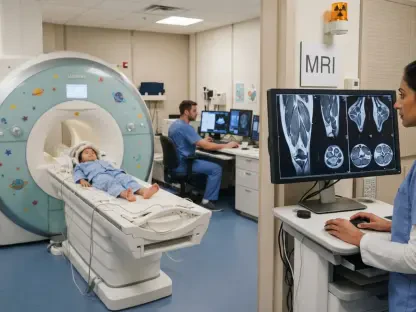
The sheer volume of AI-enabled medical devices has reached an unprecedented milestone, with over 1,524 authorizations recorded by the middle of the current year. Approximately 75 percent of these tools are concentrated within the field of radiology, where algorithms are designed to assist specialists in interpreting complex imaging data. These systems promise to identify subtle lesions and triage urgent cases with a speed that exceeds human capacity. Despite this technological prowess, the rate of actual implementation in major hospital networks remains surprisingly low. The primary reason for this inertia is the lack of longitudinal studies that confirm these tools lead to better health outcomes rather than just faster processing times. Without clear evidence that an algorithm reduces the incidence of misdiagnosis or lowers the cost of long-term care, many medical boards are reluctant to invest. The tension between regulatory volume and clinical utility continues to define the digital health market.
A critical factor in this lack of clinical certainty is the pathway through which most AI software enters the commercial market. The majority of these tools navigate the 510(k) clearance process, which requires manufacturers to demonstrate that their product is substantially equivalent to an existing legal device. This regulatory shortcut focuses almost exclusively on technical performance metrics, such as pixel sensitivity and processing speed, rather than rigorous human clinical trials. Unlike the Premarket Approval route reserved for high-risk, life-sustaining equipment, the 510(k) pathway does not mandate evidence of long-term patient survival or significant therapeutic improvement. This creates a scenario where a tool is legally fit for sale, but its actual efficacy in a real-world surgical or diagnostic environment remains unproven. Clinicians are increasingly vocal about this disparity, suggesting that technical equivalence should no longer be the sole benchmark for tools that influence life-altering medical decisions.
Breakthrough Innovations: AI in Drug Discovery and Oncology
Beyond the realm of diagnostic software, artificial intelligence is now revolutionizing the way new medications are identified and developed. The competitive market for obesity treatments provides a compelling example of this shift, as companies move away from traditional discovery methods toward AI-assisted structural modeling. Ascletis Pharma recently advanced its Investigational New Drug application for ASC39, a proprietary oral tablet designed using AI to target human amylin receptors. Unlike the injectable GLP-1 therapies that have dominated recent years and strained global supply chains, these small-molecule agonists offer a shelf-stable, convenient alternative for patients. Preliminary data from animal models indicates that this AI-designed compound can trigger significant weight reduction in a matter of days, showing a high degree of receptor selectivity. However, the industry is currently observing these developments with caution. The speed of AI-led discovery must still withstand Phase I safety trials.
The regulatory landscape is also witnessing aggressive movements in high-stakes areas such as oncology and neurodegenerative diseases. The FDA has recently granted full approval to Jemperli, an immunotherapy that offers a non-invasive alternative for treating specific types of rectal cancer. Parallel to this, a federal accelerator initiative has been launched to fast-track diagnostics for Alzheimer’s disease, aiming to detect cognitive decline before irreversible brain atrophy occurs. These advancements reflect a broader strategy to transition from reactive treatment to early intervention. Yet, as the agency accelerates these programs, its role as a safety watchdog has become even more critical. Recent recalls of over-the-counter supplements, which were found to contain hidden pharmaceutical ingredients, highlight the risks inherent in a rapidly expanding market. The challenge lies in fostering an environment where innovation can flourish without compromising consumer safety or clinical integrity.
The New Standard: Real-World Evidence and Future Strategy
As the medical community moves toward a paradigm of digital biology, the criteria for evaluating new technology are fundamentally shifting. Hospital procurement teams and chief medical officers are no longer satisfied with a simple regulatory clearance from federal authorities. In the current economic environment, the demand has shifted toward tangible proof of return on investment and real-world performance data. Healthcare providers are seeking clarity on whether a new algorithm can actually reduce the length of hospital stays or minimize the need for invasive follow-up procedures. This shift in the burden of proof suggests that manufacturers must go beyond technical specifications and provide evidence of clinical impact before securing long-term contracts. The conversation is no longer just about what the technology can do in a controlled setting, but how it performs under the pressure of a full patient load. This demand for empirical evidence is driving a more rigorous approach to software acquisition.
Ultimately, the industry arrived at a crossroads where the speed of authorization was forced to account for the practical realities of patient care. Manufacturers realized that a cleared status was merely the beginning of the journey, rather than the final destination for commercial success. To move forward, companies began prioritizing post-market surveillance and independent clinical validation to satisfy the rigorous requirements of skeptical healthcare administrators. This proactive approach helped bridge the gap between technical potential and bedside reliability, ensuring that algorithms served the individual patient rather than just the quarterly market projections. Future developments required a collaborative framework where developers worked directly alongside clinicians from the earliest stages of software design. By focusing on solving specific clinical bottlenecks rather than creating generalized tools, the industry moved toward a more integrated and effective digital healthcare ecosystem where every authorized tool provided benefit.