
The global medical landscape is currently experiencing an unprecedented transformation as artificial intelligence evolves from a specialized experimental tool into the primary engine of health economics. With the market valuation having surpassed $36.7 billion moving into 2025, the trajectory toward a staggering $505 billion valuation by 2033 represents a shift that is as much about financial growth as it is about clinical necessity. This anticipated compound annual growth rate of nearly 39 percent highlights a period where medical institutions are no longer debating the utility of AI but are instead racing to integrate it into every facet of patient care. This massive capital influx is largely driven by a desperate need to solve systemic issues, such as the rising prevalence of chronic conditions and the mounting pressure of an aging global population. By automating high-volume administrative tasks and performing complex data synthesis, these intelligent systems allow providers to maintain high standards of care while managing a patient load that would otherwise be unsustainable for traditional systems.
The Technical Foundations of Modern Medicine
Harnessing Machine Learning: The Data Processing Engine
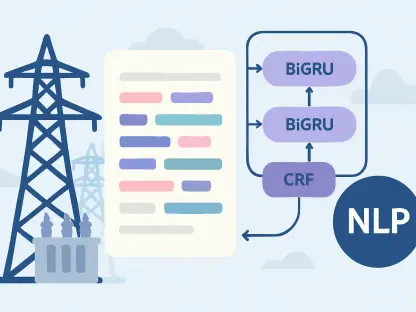
Machine learning and natural language processing serve as the dual pillars supporting this expansive technological architecture within the current medical ecosystem. These systems are designed to process and synthesize vast datasets that exceed human cognitive capacity, allowing for the identification of patterns that signal impending disease outbreaks or shifts in patient health before they manifest as critical emergencies. Natural language processing, in particular, has become indispensable for converting the unstructured narrative of traditional clinical documentation into structured, actionable data that can be queried across entire health networks. This ensures that critical observations made by a specialist during an initial consultation are not buried in digital archives but are instead used to inform every subsequent step of a patient’s journey. By creating a seamless flow of information between disparate departments, these analytics platforms are reducing the fragmentation that has historically plagued large hospital systems, leading to a more cohesive approach.
Deep Learning: Redefining Medical Imaging Standards
Computer vision and deep learning are simultaneously redefining the boundaries of what is possible in specialized fields like radiology and genomics. By utilizing multi-layered neural networks, these diagnostic tools can detect subtle structural anomalies in high-resolution medical scans that might remain invisible to even the most experienced human eyes. This level of precision is moving the industry away from a purely reactive model, where interventions only occur after symptoms have become debilitating, toward a proactive paradigm centered on early intervention. In the realm of genomics, deep learning models are analyzing massive sequences of genetic material to identify markers for hereditary conditions long before they develop. This shift ensures that the focus of modern medicine is increasingly placed on prevention and precision, rather than merely managing the aftermath of disease. As these technologies become more integrated into routine screenings, the potential for significantly reducing long-term healthcare costs through early detection becomes a tangible reality rather than a theory.
Improving Clinical Decisions and Diagnostics
Clinical Support: Reducing Human Error in Treatment
The integration of clinical decision support systems is fundamentally altering the way physicians interact with patients during the evaluation process. These sophisticated platforms act as an intelligent secondary observer, cross-referencing a patient’s unique physiological data against a massive, constantly updated library of global medical research and clinical guidelines. By providing real-time suggestions for diagnostic tests or treatment protocols, these systems help clinicians navigate the complexity of rare diseases or multi-morbid conditions where evidence-led standards are critical. This prevents the cognitive overload that often leads to medical errors, ensuring that every therapeutic decision is backed by the most current peer-reviewed data. Furthermore, these systems facilitate a more collaborative relationship between the patient and the provider, as doctors can use the insights generated by AI to explain treatment options with a higher degree of statistical confidence. The result is an environment where the guesswork is minimized.
Diagnostic Speed: Prioritizing Urgent Medical Cases
In high-pressure environments like emergency departments and intensive care units, AI-driven medical imaging is drastically shortening the window between symptom onset and definitive diagnosis. Automated algorithms are now capable of scanning thousands of images per hour to identify and flag life-threatening conditions, such as acute ischemic strokes or pulmonary embolisms, for immediate radiologist review. This prioritization system is essential in facilities where the volume of imaging requests often exceeds the available manpower, as it ensures that the most time-sensitive cases are handled first. By accelerating the diagnostic workflow, these tools directly improve survival rates and reduce the long-term disability often associated with delays in emergency care. Beyond emergency use, these algorithms are also being utilized in routine oncology screenings to track the progress of tumors over time with millimeter precision. This allows oncologists to adjust chemotherapy or radiation dosages with far greater accuracy and patient safety.
Personalized Care and the Data Explosion
Data Synthesis: Converting Wearables into Health Insights
The sheer volume of information generated by electronic health records, wearable sensors, and fitness trackers has created a data mountain that modern medical practitioners cannot navigate without advanced assistance. Artificial intelligence serves as the critical filter that extracts meaning from this noise, converting continuous streams of raw biological data into clear, actionable insights for long-term health management. This capability is particularly transformative for remote patient monitoring, where individuals with chronic conditions like diabetes or heart failure can be tracked in real-time from the comfort of their homes. If a patient’s glucose levels or heart rate deviate from their personalized baseline, the AI system can automatically alert a medical team or even trigger a medication adjustment through a connected device. This continuous loop of feedback prevents minor fluctuations from escalating into full-scale emergencies, significantly reducing the frequency of hospital readmissions and improving the patient’s daily quality of life.
Precision Medicine: Tailoring Therapy to Genetic Profiles
Precision medicine is perhaps the most significant beneficiary of this data explosion, as it enables a shift from generalized medical protocols to highly individualized care plans. By synthesizing a patient’s genetic profile, lifestyle factors, and environmental exposures, AI models can predict how a specific individual will respond to a particular drug or therapeutic intervention. This is proving to be a revolutionary development within the pharmaceutical industry, where researchers are using deep learning to simulate the interaction of new molecules with biological targets in a fraction of the time and cost required by traditional lab trials. Such advancements are not only accelerating the arrival of new treatments to market but are also ensuring that these medications are safer and more effective for the specific sub-populations they are intended to treat. As the industry moves toward 2033, the integration of these tailored insights will likely make the concept of “one-size-fits-all” medicine a complete relic of the past.
Operational Excellence and Global Expansion
Back-Office Automation: Ending Healthcare Provider Burnout
While the clinical benefits of AI are widely celebrated, its role in optimizing the administrative and operational “back office” of healthcare is equally essential for the sector’s long-term viability. By automating the more tedious aspects of healthcare management, such as patient scheduling, complex insurance billing, and clinical documentation, AI is directly addressing the burnout epidemic currently facing medical professionals. These systems allow nurses and doctors to reclaim hours of their day that were previously spent on paperwork, refocusing their energy on direct patient interaction and complex clinical problem-solving. Furthermore, predictive modeling is being utilized by hospital administrators to forecast patient inflow with remarkable accuracy, allowing for more efficient allocation of staff and equipment. By predicting a surge in respiratory illnesses weeks in advance, a hospital can adjust its inventory of ventilators and staffing levels to meet the demand without overextending its budget or staff.
Fast-Growth Markets: Bridging the Global Accessibility Gap
The global expansion of these technologies is following distinct trajectories as different regions adapt to their specific economic and demographic challenges. North America remains the dominant force in the market, supported by a mature technology infrastructure and significant investment from both public and private entities. However, the Asia-Pacific region is poised to experience the fastest growth rate as countries like China and India leverage AI to solve deep-seated issues regarding medical accessibility. In these regions, where the ratio of doctors to patients is often low, AI-powered diagnostic apps and remote triage systems are bridging the gap, providing millions of people with high-quality medical guidance that was previously out of reach. This democratization of healthcare technology is a primary driver behind the global market’s projected rise, as new markets rapidly adopt scalable digital solutions. Interconnected health networks now transcend geographical barriers, ensuring that rural patients receive expert care.
Creating a Sustainable Future for Global Health
The industry recognized that the journey toward a $505 billion valuation required more than just the adoption of new software; it necessitated a fundamental restructuring of medical ethics and data governance. Stakeholders prioritized the development of transparent algorithms to ensure that automated decisions remained accountable to both clinicians and patients throughout the treatment cycle. Organizations also invested heavily in robust cybersecurity frameworks to protect the massive influx of sensitive health data that became the lifeblood of the modern medical system. Looking forward, the focus shifted toward the seamless integration of these tools into standard curricula for medical schools, ensuring the next generation of practitioners was prepared to work alongside artificial intelligence. The transition was defined by a move toward value-based care, where success was measured by patient outcomes rather than the volume of procedures performed. This evolution created a more resilient and equitable healthcare environment.