
The transition of Indian IT leaders into hardware convergence partners is redefined by TCS’s ability to prototype and deploy fully autonomous robotic systems. As global industries shift from digital-first to physical-first automation, the emphasis has moved toward grounding artificial intelligence in the constraints of the material world. This evolution involves a sophisticated blend of sensor integration, computer vision, and low-latency processing that allows machines to interact with dynamic environments safely and efficiently. TCS has positioned itself at the center of this transformation by bridging the gap between abstract algorithms and tangible mechanical execution. By leveraging its deep domain expertise across manufacturing, logistics, and energy, the firm is creating ecosystems where AI does not just analyze data but acts upon it in real time. This paradigm shift suggests that the future of enterprise value lies in the seamless orchestration of software and silicon within the factory floor and beyond.
Industrial Automation: Advancing Through Edge Intelligence
The integration of edge intelligence into factory environments represents a fundamental change in how industrial processes are managed. Rather than relying on distant cloud servers that introduce latency, modern autonomous systems utilize high-performance compute modules located directly on the machine. This allows for instantaneous decision-making, which is critical when robotic arms are operating in close proximity to human workers or when high-speed production lines require millisecond adjustments. TCS has focused on developing proprietary edge frameworks that facilitate this localized processing, ensuring that physical AI remains resilient even when network connectivity is intermittent. These systems are designed to learn from their immediate surroundings, refining their movements and predictive maintenance schedules based on real-world wear and tear. Consequently, the reliance on static programming has faded, replaced by adaptive models that evolve alongside the physical assets they control.
Simulation technology serves as the rigorous testing ground for these autonomous systems, where digital twins of entire facilities are created to validate AI behaviors. By collaborating with advanced graphics and physics engine providers like NVIDIA, TCS utilizes the Omniverse platform to simulate complex environmental variables that would be too dangerous or costly to test in reality. These virtual environments allow engineers to subject robotic fleets to extreme conditions, ensuring that the logic governing their autonomy is robust against unforeseen anomalies. When a robot is finally deployed on the physical floor, it carries with it thousands of hours of simulated experience, which significantly reduces the time required for on-site calibration. This methodology not only accelerates the deployment cycle but also ensures a higher standard of safety and reliability. As these digital twins become more accurate, they act as continuous feedback loops, optimizing performance by reflecting real-time changes.
Autonomous Systems: Strategic Frameworks for Scalable Logistics
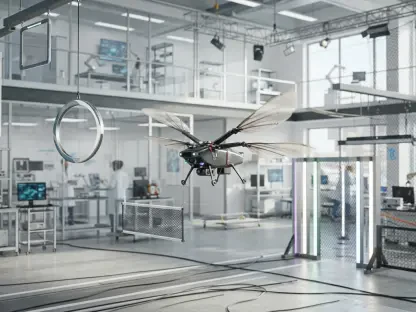
The logistics sector has become a primary laboratory for the practical application of physical AI, particularly through the deployment of autonomous mobile robots and drones. These machines are no longer confined to simple, repetitive paths but are capable of navigating complex, multi-level warehouses with minimal human oversight. TCS has been instrumental in developing the orchestration layers that manage these fleets, ensuring that individual units communicate effectively to avoid collisions and optimize throughput. The core of this technology involves sophisticated pathfinding algorithms and dynamic task allocation, which allow the system to respond to changing order priorities in real time. By treating the entire warehouse as a single, living organism, the software ensures that autonomy is not just a feature of a single machine but a property of the entire operational ecosystem. This level of coordination is essential for meeting the demands of modern commerce, where speed and precision are paramount.
The advancements made by TCS in physical AI demonstrated that the leap from software services to integrated hardware orchestration was both necessary and achievable. Enterprises that embraced these autonomous frameworks observed significant improvements in operational efficiency and worker safety. To maintain this momentum, leadership teams prioritized the selection of modular AI platforms that allowed for rapid scaling across various business units. They recognized that the most effective implementations were those that focused on solving specific, high-value bottlenecks rather than attempting to automate entire processes overnight. Looking ahead, the focus remained on strengthening the security of edge-to-cloud communications and ensuring that autonomous systems were resilient against cyber threats. Future strategies necessitated a commitment to continuous learning cycles, where data from the field refined the underlying models. By investing in robust simulation, organizations laid the groundwork for an agile future.