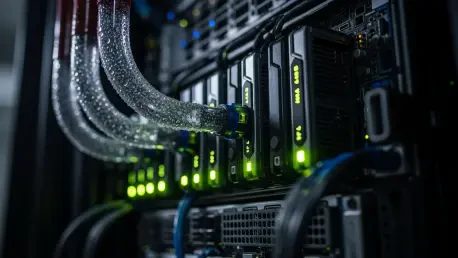

The unprecedented surge in capital expenditures by technology giants has fundamentally transformed artificial intelligence from a mere software novelty into a massive physical infrastructure movement that rivals the historical build-out of the national power grid or the interstate highway system. While early discussions around machine learning focused predominantly on algorithmic efficiency and user-facing applications, the current landscape of 2026 emphasizes the heavy industrial requirements of the sector. Large-scale language models now require hundreds of thousands of interconnected GPUs, specifically advanced units like the Nvidia Blackwell series, housed within specialized facilities that consume gigawatts of electricity. This shift has forced institutional investors to re-evaluate their portfolios, moving beyond high-growth software stocks toward tangible assets such as high-density data centers and specialized hardware clusters. As a result, AI infrastructure is no longer viewed as a subset of the tech sector but as a standalone asset class defined by long-term leases, high barriers to entry, and essential utility-like characteristics that offer a unique hedge against market volatility.
Powering the Revolution: Energy and Specialized Facilities
Building on this physical foundation, the true bottleneck for AI expansion has shifted from software algorithms to the availability of sustainable, high-density power sources. Traditional data centers, once sufficient for general-purpose cloud computing, often lack the specialized cooling systems and electrical capacity required by modern tensor processing units. Consequently, there is a frantic race to secure land and energy rights, with developers prioritizing sites that provide direct access to dedicated nuclear energy or advanced hydrogen fuel cells. Liquid cooling technologies, such as those implemented by Vertiv, have become standard requirements rather than optional upgrades, as power densities per rack have tripled between 2026 and 2028 projections. This energy-centric focus has integrated utilities and hardware manufacturers into a single, cohesive supply chain. Real estate investment trusts are increasingly pivoting toward these specialized hubs, recognizing that stable, high-load power is the primary differentiator in a competitive landscape where demand for compute capacity outstrips available supply.
The Institutional Pivot: Financial Instruments for Hardware
The maturation of this sector was marked by a significant transition from speculative venture capital to heavy involvement from global infrastructure funds and sovereign wealth entities. Financial giants like BlackRock and Brookfield have increasingly treated GPU clusters and fiber-optic networks as stable, yield-generating assets similar to toll roads or telecommunications towers. By utilizing asset-backed securities and long-term hardware leasing agreements, these institutions successfully mitigated the risks associated with rapid technological obsolescence. This structural change encouraged a broader range of investors to participate in the AI boom without being exposed to the volatility of individual software startups. Leaders in the field prioritized the vertical integration of power, cooling, and silicon to ensure operational resilience and predictable returns. Looking forward, the focus was redirected toward edge infrastructure and decentralized nodes to reduce latency for real-time inference. Organizations that successfully aligned their capital with these physical requirements managed to secure a dominant position in the broader digital economy. This strategic shift from digital abstraction to hardware-centric reliability defined the most successful investment frameworks of the current era.