
The traditional boundaries between digital processing and mechanical execution are dissolving as global logistics enters a phase where machines think, learn, and act with unprecedented autonomy. JD.com, a dominant force in the global e-commerce and logistics sector, has officially set a new course for the industry with the launch of its Physical AI Acceleration Plan. Unveiled at the JDDiscovery conference in Beijing, this roadmap represents a monumental shift toward a fully automated supply chain. Unlike traditional AI, which primarily processes data and generates text or images, JD’s vision focuses on Physical AI—the seamless integration of sophisticated digital brains with mechanical bodies. This initiative aims to bridge the gap between software intelligence and real-world execution, fundamentally changing how goods are moved, sorted, and delivered across the globe.
A New Era of Autonomous Logistics: The Physical AI Acceleration Plan
This strategic roadmap is not merely a technical upgrade but a reimagining of the entire delivery lifecycle through the lens of embodied intelligence. By merging high-level algorithmic decision-making with robust robotic hardware, JD is positioning itself to handle the mounting pressures of global trade and the consumer demand for instantaneous fulfillment. The plan outlines a future where logistics centers operate as living organisms, constantly adapting to shifting inventories and unpredictable delivery windows. This focus on physical action ensures that the intelligence generated in the digital realm is translated effectively into the movement of atoms, making the supply chain more resilient to external shocks and labor fluctuations.
Foundations of the Physical AI Revolution
The transition to Physical AI is built upon years of aggressive investment in infrastructure and a deep understanding of logistical bottlenecks. For over a decade, JD.com has been moving away from human-centric sorting centers toward highly mechanized Asia No. 1 smart warehouses. However, the current landscape demands more than just automation; it requires adaptability. Past shifts in the industry have moved from simple conveyor belts to cloud-managed logistics, but the emergence of Physical AI marks a turning point where machines no longer just follow scripts but learn to navigate the unpredictable nature of the physical world. Understanding these historical shifts is vital to grasping why the priority has moved toward hardware-software synergy over mere digital expansion.
Scaling Intelligence Through Hardware and Software Integration
The Ambition of a Three-Million-Robot Fleet
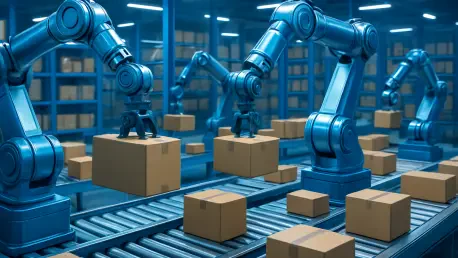
At the heart of this strategy is an unprecedented procurement target. JD.com plans to deploy 3 million industrial robots, 1 million autonomous vehicles, and 100,000 delivery drones within a five-year window from 2026 to 2031. This hardware expansion is led by the Wolf industrial robot series, designed to handle the grueling demands of warehousing, sorting, and transport. Unlike generic machinery, these systems are built for extreme environments, such as cold-chain facilities operating at minus 20 degrees Celsius. By integrating specialized hardware for medical fulfillment and disaster relief, the company is moving toward a diversified robotic ecosystem that can outperform traditional logistics in speed, precision, and reliability.
Meta Brain 3.0: The Central Nervous System
The effectiveness of this massive robot fleet depends entirely on the Meta Brain 3.0, an advanced AI control system. This software has reduced the time needed to calculate optimal delivery routes for millions of parcels from minutes to mere seconds. A standout application is the LangzuTech Packer, a robotic arm that uses multimodal sensor data to handle parcels of all shapes with human-like dexterity. Through parallel reinforcement learning, these robots practice millions of tasks in virtual simulations before ever touching a physical box. This digital twin approach allows the system to master complex movements and force-control techniques, ensuring high-precision operations around the clock.
Building the Infrastructure for Embodied AI
To power such high-level intelligence, the company is investing heavily in domestic computing clusters. In collaboration with chipmakers like Moore Threads, JD is building a 100,000-GPU cluster dedicated to training embodied AI—algorithms that learn by interacting with physical environments. Beyond raw computing power, the project involves gathering 10 million hours of video data of human activities. This data serves as a training ground for robots to understand human behavior, ensuring that autonomous vehicles and drones can safely navigate crowded urban streets and remote villages alike, effectively demystifying the navigation challenges that previously hindered wide-scale robotic deployment.
The Future of Global Instant-Retail and Automation
The industry is currently witnessing a pivot toward instant-retail, where delivery times are measured in minutes rather than days. As the Chinese market for hour-level delivery is projected to reach 1.2 trillion yuan by the end of 2026, the competitive focus has moved from price subsidies to infrastructure superiority. There is an expected explosion of dark stores and lightning warehouses in high-density urban areas, where Physical AI acts as the primary operator. Furthermore, the expansion of these automated systems into Europe and North America suggests a future where global supply chains are standardized through AI-driven logistics, reducing the impact of regional labor shortages and rising operational costs.
Strategic Realignment: Labor Transitions and Best Practices
The most profound takeaway for businesses and policymakers is the inevitable transformation of the workforce. While robots will take over the majority of repetitive parcel-delivery tasks, the company is setting a precedent by focusing on robotics service roles. Partnerships have been established with over 120 educational institutions to retrain the existing 700,000 employees for technical positions in robot maintenance, repair, and fleet oversight. For other enterprises, this model suggests that the best path forward is not just replacing labor, but investing in up-skilling programs that turn delivery personnel into robotics engineers, ensuring that the human element remains a vital part of a high-tech ecosystem.
Conclusion: Setting the Pace for a Physical AI Future
The analysis of the Physical AI Acceleration Plan demonstrated that the future of commerce depends on the successful marriage of digital intelligence and mechanical reliability. This initiative proved that the logistical landscape has moved beyond simple automation and entered a phase of cognitive execution. The strategic realignment of resources showed that large-scale technological adoption must be paired with proactive labor management to remain sustainable. Market observers noted that the massive capital expenditure in computing and hardware provided a necessary foundation for the next decade of retail growth.
Stakeholders should recognize that the integration of Physical AI is now a prerequisite for competitiveness in the instant-fulfillment market. Moving forward, businesses must prioritize the development of digital twin environments to accelerate robotic training and reduce real-world failure rates. Investing in standardized hardware that can operate in diverse climates will also be essential for global expansion. As the industry moves toward 2031, the ability to seamlessly synchronize 3 million robotic units will define the leaders of the global supply chain, turning logistical speed into the ultimate market currency.