
The landscape of modern productivity has shifted from simple chatbots that answer questions to sophisticated digital coworkers capable of independent decision-making and task execution across various professional domains. This evolution marks a departure from the “human-in-the-loop” model, where artificial intelligence served merely as a drafting tool, toward a “human-on-the-loop” architecture where autonomous agents manage end-to-end workflows in sectors as diverse as healthcare, cybersecurity, and advanced engineering. By providing a comprehensive infrastructure for these agents, NVIDIA is effectively acting as the architect for a new era of software intelligence. These digital entities do not just respond to static queries; they utilize a specialized management system to interact with digital tools, maintain long-term memory, and refine their own strategies based on real-time feedback. This transformation represents a fundamental change in how enterprise software operates, moving away from rigid, menu-driven interfaces toward fluid, goal-oriented systems that can handle long-running, multi-step processes with minimal human oversight or intervention.
Technical Foundations: The Infrastructure of Agency
The development of truly autonomous digital coworkers requires a move away from the generalized models of the past toward a specialized stack that prioritizes logical reasoning and tool utilization. NVIDIA has introduced the Agent Toolkit as the centerpiece of this effort, providing developers with a robust set of blueprints designed to build agents capable of high-level planning. Unlike traditional AI models that struggle with multi-stage logic, this toolkit provides the scaffolding necessary for an agent to break down a complex directive—such as optimizing a supply chain or diagnosing a network security vulnerability—into actionable sub-tasks. By integrating memory management and the ability to interface with external APIs, these agents can maintain context over days or weeks of operation, ensuring that the work they perform is consistent with the broader strategic goals of the organization. This architectural foundation is essential for moving AI out of the research lab and into the production environments of major global corporations where reliability is paramount.
High-Performance Reasoning: The Nemotron 3 Ultra Architecture
The introduction of the Nemotron 3 Ultra model represents a significant leap forward in the efficiency of reasoning-heavy AI workloads, specifically optimized for the continuous demands of autonomous agents. While previous large language models were often criticized for their high latency and prohibitive operational costs, this new family of models is designed to deliver high-performance logic at a fraction of the traditional resource expenditure. This efficiency is critical for agents that must remain active 24/7, monitoring industrial systems or managing complex engineering simulations without exhausting a company’s computational budget. The Nemotron 3 Ultra architecture achieves this by streamlining the token generation process and focusing on the logical relationships between variables, which allows it to handle the iterative loops of reasoning required for autonomous task completion. For large-scale enterprises, this means the cost of deploying a fleet of digital coworkers has become manageable, paving the way for ubiquitous integration across every department from finance to product development.
Furthermore, the scalability of the Nemotron family allows businesses to tailor the intelligence level of their agents to the specific complexity of the task at hand. While a core Nemotron 3 Ultra model might handle the central orchestration of a project, smaller, more specialized variants can be deployed to manage localized data processing or routine administrative duties. This modular approach to intelligence ensures that computing power is allocated where it is most needed, maximizing the overall throughput of the autonomous ecosystem. As organizations transition toward these automated workflows, the ability to run high-fidelity reasoning models locally or in the cloud provides the flexibility required to maintain data sovereignty while benefiting from the latest advancements in AI logic. This paradigm shift ensures that the digital coworkers of today are not just faster than their predecessors, but are fundamentally more capable of understanding the nuanced requirements of the modern industrial and professional landscape.
Ensuring Safety: Policy Management and OpenShell Controls
In an era where autonomous agents are granted the authority to modify digital environments and access sensitive corporate data, the implementation of rigorous safety protocols is no longer optional. To address this, NVIDIA has developed OpenShell, a secure execution environment that acts as a protective harness for AI agents, ensuring they operate within predefined ethical and operational boundaries. OpenShell manages the identity and permissions of each agent, effectively creating a sandbox where the AI can perform its duties without the risk of taking unauthorized actions or compromising the integrity of the host system. This system of checks and balances is designed to prevent common pitfalls such as prompt injection or logic errors that could lead to unintended consequences in a production environment. By establishing a clear set of guardrails, the platform provides administrators with the confidence to delegate high-stakes tasks to autonomous systems, knowing that any deviation from the established policy will be immediately flagged and contained.
The collaborative nature of this safety framework is further bolstered by strategic partnerships with industry leaders like Microsoft and various Linux organizations, ensuring that these security controls are consistent across different computing platforms. This cross-platform compatibility is vital for the modern enterprise, which often relies on a hybrid mix of on-premises hardware and multiple cloud providers to run its operations. By integrating OpenShell with existing cybersecurity protocols, NVIDIA has created a unified security layer that protects both the agent and the data it processes. These measures allow for the implementation of complex “skills” where an agent might need to access proprietary databases or interact with external software libraries to solve a problem. The presence of such a robust safety architecture ensures that as agents become more capable and autonomous, the risk profile for the enterprise remains stable, facilitating the widespread adoption of AI-driven automation in highly regulated industries like finance and healthcare.
Industrial Impact: Specialization and Skill Development
The shift toward autonomous agents is most visible in technical and industrial sectors where the sheer volume of data and the complexity of design tasks often overwhelm human teams. In these environments, the ability of an AI agent to navigate specialized software libraries and perform high-speed simulations is transformative. By turning traditional technical tools into a library of “skills,” NVIDIA has enabled agents to perform tasks that were once the sole province of human subject-matter experts. These agents are not merely following a script; they are using their reasoning capabilities to determine which tool is best suited for a specific problem and then executing that tool with precision. This modularity allows a company to build a highly specialized digital workforce by “teaching” its agents the specific physics, mathematics, or engineering principles relevant to its industry, thereby creating a customized intelligence layer that directly contributes to the bottom line of the organization.
Accelerating Innovation: Autonomous Agents in Engineering and Design
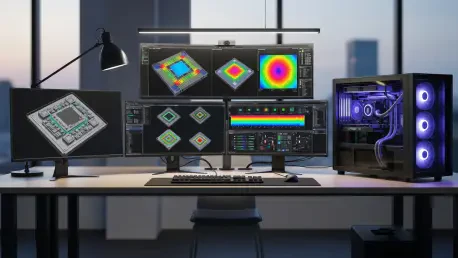
Major engineering firms have already begun to witness the dramatic impact of autonomous agents on their research and development cycles, particularly in the realm of computer chip design and hardware verification. Tasks that historically required teams of highly trained engineers several weeks to complete, such as checking for errors in complex circuit layouts or optimizing thermal performance, are now being handled by autonomous agents in a matter of hours. These digital coworkers can iterate through thousands of design variations, identifying the most efficient configurations and flagging potential failures long before a physical prototype is ever produced. This acceleration does not just save time; it fundamentally changes the nature of the engineering process by allowing human talent to focus on high-level conceptual innovation and strategic decision-making while the AI handles the grueling, data-intensive verification work that previously acted as a bottleneck.
This streamlining of the design process has profound implications for the speed of technological progress across the board. When the iteration cycle for a new component is reduced from months to days, companies can respond to market demands with unprecedented agility. The agents involved in these processes are equipped with deep domain knowledge, allowing them to understand the intricacies of electrical engineering or structural mechanics at a level that rivals human expertise. By automating the more repetitive aspects of the design flow, these agents are essentially expanding the creative capacity of the human workforce. As these tools become more integrated into the standard engineering toolkit, the expectation for project timelines will continue to shift, leading to a new industry standard where rapid, AI-assisted development is the primary driver of competitive advantage in the global manufacturing and technology markets.
Skill Transformation: Repurposing CUDA-X for Physical Tasks
A key technical breakthrough in this new ecosystem is the transformation of the long-standing CUDA-X libraries into a set of discrete “skills” that can be utilized by autonomous agents to solve real-world physical problems. These libraries, which have served as the backbone of high-performance computing for years, now provide agents with the ability to perform complex calculations related to logistics, physics simulations, and data processing at immense speeds. For instance, an agent tasked with optimizing a global shipping route can access a specialized “skill” derived from NVIDIA’s cuOpt library to analyze millions of variables and find the most fuel-efficient path in seconds. This capability effectively bridges the gap between digital intelligence and physical execution, allowing AI agents to provide actionable solutions for challenges in manufacturing, robotics, and large-scale infrastructure management that were previously too complex for automated systems to handle effectively.
The modular nature of these skills allows organizations to customize their digital coworkers with extreme precision, ensuring that the AI possesses the exact technical capabilities required for its specific role. Whether it is running an engineering simulation to test the structural integrity of a new bridge or processing massive datasets to identify trends in climate patterns, the agents can swap and combine these skills as the task demands. This flexibility is a departure from the “one-size-fits-all” approach of general-purpose AI, providing a more functional and industry-specific form of intelligence. As these skill libraries continue to expand, the range of tasks that can be performed by autonomous agents will grow exponentially, eventually touching every aspect of the physical and digital supply chains. The result is a more responsive and efficient industrial landscape where the power of high-performance computing is directly harnessed by autonomous agents to drive tangible physical outcomes and operational improvements.
Enterprise Adoption: The Path to the Autonomous Organization
The integration of autonomous agent technology into the core software platforms used by global businesses marks the final stage of this transition toward a self-sustaining digital enterprise. Software giants such as SAP and ServiceNow have recognized the potential of these tools to revolutionize business management, leading to a rapid adoption of agentic frameworks within their own ecosystems. In these environments, digital coworkers act as the connective tissue between different business functions, automatically managing resources, identifying security threats, and optimizing internal workflows without the need for constant human prompting. This shift suggests a future where the enterprise “operates itself” to a significant degree, with autonomous agents handling the routine management of the company while human leadership focuses on long-term growth and corporate vision. The move toward this autonomous enterprise model represents a historic shift in how organizational efficiency is defined and achieved in the modern economy.
Enterprise Integration: Scaling via SAP and ServiceNow Platforms
The decision by leading enterprise resource planning and service management providers to embed autonomous agent tools directly into their platforms has accelerated the arrival of the self-healing business environment. Within these systems, autonomous agents are now capable of monitoring entire corporate networks in real-time, proactively identifying and mitigating security vulnerabilities before they can be exploited by malicious actors. This capability transforms cybersecurity from a reactive discipline into a proactive, automated process where the digital coworker is always one step ahead of potential threats. Similarly, in the realm of resource management, these agents can predict equipment failures in a factory or identify inefficiencies in a corporate budget, taking corrective action or presenting optimized solutions to human managers with comprehensive data to support their findings. This deep integration ensures that the benefits of autonomous AI are accessible to companies of all sizes, not just those with specialized technical expertise.
The impact of this integration extends beyond simple task automation, as it enables a level of organizational agility that was previously impossible. When the underlying management software of a company is powered by autonomous agents, the speed of information flow increases, and the delay between identifying a problem and implementing a solution is virtually eliminated. This creates a “self-healing” business infrastructure where routine errors are corrected automatically and strategic opportunities are identified the moment they emerge in the data. The partnership between NVIDIA and enterprise software leaders has effectively democratized access to these advanced capabilities, creating a standardized environment where autonomous digital coworkers are a fundamental part of the professional landscape. This widespread adoption ensures that the shift toward agentic workflows is a permanent change in the structure of the modern workplace, rather than a temporary trend in software development.
Strategic Evolution: Navigating the Shift Toward Autonomous Enterprise
Organizations that adopted these agentic frameworks observed a significant reduction in operational friction and a marked increase in the speed of their internal processes. The implementation of self-healing systems provided a blueprint for the future of the autonomous enterprise, demonstrating that digital coworkers could handle complex responsibilities with a high degree of reliability. As the professional landscape adapted to these new tools, the focus of the human workforce shifted toward the creative and strategic tasks that required emotional intelligence and high-level abstract thought. This evolution was supported by a complete ecosystem that offered everything from the raw computational power of the Nemotron models to the sophisticated safety guardrails of OpenShell. The strategic move toward this model allowed companies to scale their operations without a corresponding increase in administrative overhead, creating a more sustainable and efficient way to conduct business in an increasingly complex global market.
The successful rollout of these autonomous agents suggested that the path forward for any modern business involved a deep commitment to integrating AI intelligence at every level of the organization. Leaders who invested in building specialized skills for their agents and securing their operational environments were better positioned to capitalize on the rapid changes in technology and market dynamics. By providing a comprehensive “operating system” for the next generation of work, NVIDIA set the stage for a new standard of industrial and corporate productivity. The involvement of major manufacturing and software companies indicated that the transition was already well underway, cementing the role of the autonomous agent as an essential component of the professional world. These developments highlighted the necessity of a proactive approach to AI adoption, where the goal was not just to use new tools, but to fundamentally reimagine the structure of work itself to thrive in an autonomous future.