


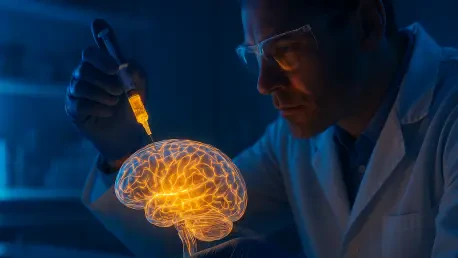

Surgery-free brain-computer interfaces could soon allow for the precise electrical stimulation of neural activity through nanodevices that navigate the blood-brain barrier autonomously. This breakthrough represents a pivotal shift in how technology interacts with the human biology, moving away from invasive procedures toward a seamless integration of digital and organic systems. At this stage of development, human augmentation is no longer a distant dream found in speculative literature but a tangible reality fueled by the convergence of robotics, artificial intelligence, and materials science. This movement focuses on repairing human functions to their optimal state or even extending capabilities beyond the natural limits of the biological frame. As modern medicine and engineering merge, the industry is witnessing the rise of physical and cognitive enhancements that redefine the fundamental parameters of human potential. The focus has transitioned from external tools to an intrinsic biological evolution supported by complex algorithms.
Advancing Neurological Therapy Through Nanoscale Innovation
The nanoscale frontier is currently dominated by the concept of circulatronics, which utilizes injectable, wireless nanoelectronic devices that are approximately a billion times smaller than a single grain of rice. These microscopic machines are designed to be introduced into the bloodstream, where they can autonomously navigate the complex vascular system of the brain to deliver targeted electrical pulses. For patients suffering from neurodegenerative diseases like Alzheimer’s or Parkinson’s, this offers a revolutionary alternative to the current standard of care. Traditional pharmaceutical interventions often lack the necessary precision, leading to systemic side effects, while traditional surgical implants carry significant risks of infection or localized trauma. By providing a surgery-free brain-computer interface, researchers are making it possible to modulate neural circuits with unprecedented accuracy, effectively bypassing the biological and mechanical barriers that previously limited treatment.
While the immediate focus of circulatronics remains therapeutic, the roadmap for this technology clearly points toward broader cognitive enhancement. By integrating generative artificial intelligence with these nanodevices, it becomes possible to predict an individual’s optimal brain state and activate specific electronic components to maintain that performance level. This could lead to a future where memory recall and processing speed are significantly augmented through the use of artificial synthetic neurons. Scientists believe that these synthetic additions could expand the human brain’s processing capacity well beyond the traditional biological limit of roughly 100 billion neurons. Clinical trials for these injectable interfaces are expected to begin within the next few years, which would mark the first step toward a programmable human mind that can be optimized for various cognitive tasks. This level of integration suggests that the boundary between biological thought and digital computation is rapidly dissolving.
Redefining the Physical Self Through Bionics
The evolution of physical augmentation is moving toward a state of profound embodiment, where prosthetic devices are no longer viewed as mere tools but as genuine extensions of the self. Modern robotic limbs are now engineered to communicate directly with the peripheral nervous system, allowing for a bidirectional flow of information that mimics the natural movement of a biological limb. This physiological integration ensures that a user does not just control a machine, but actually perceives it as a part of their own body. High-fidelity artificial sensing technologies further enhance this connection by providing tactile feedback, enabling users to “feel” the pressure and texture of objects they interact with. Such advancements represent a significant departure from the static prosthetics of the past, as they leverage the brain’s inherent ability to incorporate foreign hardware into its internal body map. This psychological shift is essential for achieving the level of grace and intuition required for superhuman physical performance.
Beyond restoring lost function, bionic research is now exploring exotic morphologies that allow the human brain to control non-traditional appendages. Experiments involving robotic tentacles or extra robotic arms connected directly to the nervous system are currently testing the limits of neuroplasticity. These studies seek to determine if the brain can adapt to controlling structures that do not exist in the natural human form with the same ease as a hand or a foot. Simultaneously, physical augmentation is moving into the commercial market through the development of powered footwear and lightweight exoskeletons. These devices, which are becoming increasingly accessible to athletes and workers, provide structural support and mechanical assistance that allow individuals to walk longer distances or carry heavier loads without experiencing fatigue. The democratization of this technology ensures that the benefits of bionics are not limited to medical patients but are available to anyone looking to improve their physical endurance.
The Rise of Ambient and Environmental Augmentation
Augmentation is not strictly confined to the individual body, as environmental or ambient enhancements are becoming equally significant in daily life. Physical AI agents are increasingly being integrated into domestic and professional spaces to offload labor-intensive or repetitive physical tasks. These robotic systems act as mobile extensions of human capability, handling the bulk of manual labor while the human remains in a supervisory role. For example, intelligent carts and automated maintenance robots can manage complex housework or warehouse logistics, allowing people to redirect their focus toward high-level decision-making and creative output. This shift focuses on the synergy between the human occupant and the intelligent environment, creating a workspace or home that actively supports the user’s goals. By delegating the mundane aspects of physical existence to these smart systems, individuals can achieve a higher level of productivity and overall well-being without the need for personal hardware.
This environmental approach to symbiosis emphasizes the importance of the space surrounding the individual as a partner in human evolution. As these intelligent systems become more sophisticated, they develop a better understanding of human behavioral patterns, allowing them to anticipate needs before they are explicitly communicated. This leads to a lifestyle where the environment itself is “aware” and works in tandem with the occupant to maximize comfort and efficiency. Unlike wearable technology, ambient augmentation does not require the user to change their physical appearance or undergo medical procedures, making it a highly accessible form of enhancement. It represents a broader definition of human-machine partnership, where the machine is an essential but non-invasive collaborator in the human experience. This type of technological synergy ensures that human potential is elevated by the tools present in their surroundings, creating a seamless flow between human intention and environmental response.
Achieving True Symbiosis Between Human and Machine
The ultimate vision for these technologies is the achievement of a bidirectional human-AI symbiosis where both parties benefit from each other’s unique strengths. In this cooperative framework, artificial intelligence provides humans with massive computational power and perfect memory recall, effectively removing the limitations of biological cognition. One of the most exciting prospects is the ability to telepresence, where a human can inhabit a robotic body located in a distant environment, such as a deep-sea station or another planet, while experiencing the sensory input as if they were physically there. This level of connectivity allows for a transcendence of geographic and biological boundaries, enabling humanity to operate in environments that were previously too hostile for survival. This partnership is not just about human enhancement; it is about creating a new type of existence where digital and biological intelligence function as a single, unified entity capable of solving global challenges.
In return for the computational advantages provided by AI, humans contribute essential traits that machines struggle to replicate, such as empathy, moral judgment, and creative intuition. This symbiotic relationship ensures that as AI systems become more integrated into the human experience, they are infused with human-centric values that guide their decision-making processes. This convergence is viewed as the next frontier of physical AI, where the distinction between biological life and technological constructs is increasingly difficult to define. The goal is to build a future where humans can overcome their inherent biological flaws while maintaining the core emotional qualities that define the species. By fostering a cooperative existence, technology serves to elevate the human spirit rather than overshadowing it. This ensures that the trajectory of human evolution remains grounded in the qualities that make us human, even as we adopt the capabilities of the most advanced machines currently in development.
Navigating Ethical Risks and Sustainable Implementation
While the potential benefits of augmentation are vast, they are accompanied by significant ethical challenges that require careful navigation. One primary concern is the phenomenon of cognitive offloading, where a heavy reliance on AI-driven tools may lead to the atrophy of natural human abilities. If individuals consistently delegate memory and problem-solving tasks to an external system, there is a risk that their baseline cognitive health could decline over time. Furthermore, the massive amounts of sensitive biological and neural data generated by these systems raise critical questions about privacy and security. Ensuring that individuals maintain absolute ownership over their neural information is a paramount technical and legal hurdle. Without robust protections, this data could be exploited, leading to unprecedented forms of manipulation or surveillance. Developers must prioritize the creation of secure frameworks that keep personal biological data within the control of the user.
The maintenance of human agency remains a paramount concern, as users must retain the ability to start, stop, or revert these augmentation systems at will to ensure the technology serves the human spirit. Additionally, the risk of an augmentation gap necessitated the development of policies that promote broad accessibility, preventing the rise of a technologically divided society. Historical progress in this field demonstrated that the most successful integrations were those that prioritized transparency and user safety over rapid commercialization. Moving forward, it was essential for developers to adopt standardized security protocols that protect the biological and neural data of every individual. By establishing these ethical and regulatory frameworks, society was able to navigate the complexities of symbiosis while fostering an environment where enhancement was treated as a universal benefit. These past actions provided a stable foundation for the continued exploration of human potential as technology and biology merged.







