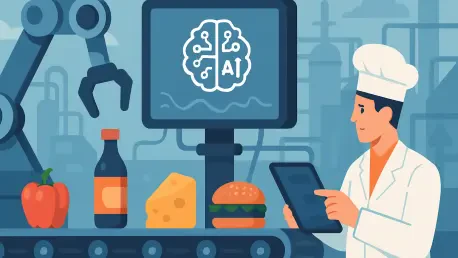

The historical failure of generic enterprise systems to handle the complex lifecycle of a batch provides a critical warning for food manufacturers adopting artificial intelligence today. For decades, the industry has wrestled with software designed for discrete manufacturing, which treats production as a simple linear assembly of parts. In the world of food, however, the reality is far more fluid, involving variable yields, expiration dates, and sensitive ingredient substitutions that occur in real time. When these nuances are ignored, the resulting technical debt forces workers to rely on manual workarounds that compromise operational visibility. As the industry moves deeper into the era of automated intelligence, the temptation to adopt broad, cross-industry tools is growing, yet the underlying risks remain unchanged. A generic algorithm lacks the inherent understanding of food safety and biological variability, potentially leading to errors that a specialized system would catch. Choosing a purpose-built foundation is not merely a preference; it is a strategic necessity for long-term survival in an increasingly digital landscape.
Managing the Batch Lifecycle and Data Integrity
The specific mechanics of food production revolve around the batch, a unit that undergoes constant physical and chemical transformations throughout its lifecycle. Unlike a machine assembly where five bolts and a frame always equal one chassis, a food batch is subject to fluctuations in moisture, temperature, and raw material potency. Generic Enterprise Resource Planning systems are fundamentally ill-equipped to track these transformations, as they often assume a rigid one-to-one relationship between inputs and outputs. When the system cannot account for by-products or shifting yields, the operational data becomes disconnected from the physical reality on the plant floor. This gap forces production managers to keep their own records, creating a fragmented information environment that makes it impossible to calculate true costs or predict production outcomes with any degree of certainty. Without an industry-specific technological core, the primary unit of value—the batch—remains a black box that hampers every other business function.
This architectural mismatch inevitably leads to the proliferation of disconnected spreadsheets, often referred to as shadow IT within the manufacturing plant. These manual documents act as a crutch, supporting the deficiencies of the main system, but they also introduce significant risks regarding data integrity and security. When critical information about lot codes, allergen presence, or quality test results lives in an Excel file rather than a centralized database, the organization loses its single version of truth. During a standard production run, this might manifest as a minor annoyance, but during a food safety crisis, it becomes a catastrophic failure. A purpose-built system ensures that every piece of data is “baked into” the digital thread from the start, eliminating the need for manual data entry and ensuring that the information remains accessible, accurate, and fully integrated. By closing the loop between the production floor and the back office, manufacturers can finally achieve the transparency required for modern efficiency.
Overcoming Financial and Regulatory Hurdles
Financial transparency remains elusive for many food manufacturers due to the persistent challenge of catch weight, a concept that is often foreign to generic software solutions. In the food sector, products are frequently handled by the case or piece but sold by weight, creating a dual unit of measure that must be reconciled at every stage of the supply chain. A generic system typically struggles to manage this discrepancy, leading to inaccuracies in inventory valuation and invoicing. If a manufacturer receives 100 cases of poultry, the actual weight—and therefore the actual cost—will vary from one shipment to the next. Without an automated way to track these variations from receiving to final sale, the finance department is forced into a constant cycle of manual adjustments. Transitioning to a specialized platform that natively supports catch weight logic allows for real-time financial accuracy, ensuring that margins are protected and that the company is actually being paid for the weight it ships to its customers.
Beyond internal financial accuracy, the regulatory environment has become significantly more demanding with the approach of the FDA Food Traceability Rule. By July 2028, manufacturers on the Food Traceability List must be capable of providing comprehensive traceability reports within a strict 24-hour window. For those relying on disconnected systems and manual records, meeting this deadline is an almost impossible task that requires hours of frantic data gathering. Industry-specific technology treats traceability as a core, non-negotiable function rather than an added feature, capturing all necessary data points automatically during the production process. This proactive approach transforms compliance from a reactive, stressful event into a standard part of daily operations. By implementing systems that are designed with these specific federal requirements in mind, manufacturers can safeguard their brand reputation and ensure that they are always prepared for an audit or a recall without disrupting their primary production schedules.
Distinguishing Between Stochastic and Deterministic AI
To navigate the current technological landscape, leaders must recognize the fundamental difference between stochastic and deterministic models of artificial intelligence. Stochastic AI, which includes the large language models popularized in recent years, operates on probability and pattern recognition to generate outputs. While these tools are exceptionally useful for streamlining administrative functions, such as drafting supplier communications or summarizing lengthy meeting transcripts, they are fundamentally unsuitable for managing core manufacturing logic. Because stochastic models are probabilistic, they have the potential to produce “hallucinations” or inaccuracies that are unacceptable in a precision-heavy environment. Relying on such a model to manage a sensitive recipe or calculate a safety-critical expiration date could lead to dangerous real-world consequences. It is essential to view these tools as assistants to human productivity rather than as the primary engines for operational control or critical data management.
Deterministic AI, by contrast, operates on fixed rules and mathematical certainty, making it the only logical choice for managing the actual engine of a food production facility. This type of intelligence is designed to live within the ERP, where it can monitor real-time data from the plant floor to trigger inventory signals, recalculate batch costs, and update traceability records without the risk of probabilistic error. In an industry where a single digit error in a lot code or a minor mistake in a temperature log can result in a massive financial loss, the absolute precision of deterministic logic is non-negotiable. By embedding these industry-specific rules into the AI, manufacturers ensure that the technology supports the rigid requirements of food safety and financial accounting. This framework provides the reliable foundation necessary for more advanced automation, allowing companies to scale their operations with the confidence that their core data is governed by a system that understands the laws of food manufacturing.
Establishing Resilient Operational Standards
The implementation of specialized AI agents allowed teams to focus on high-level strategy rather than getting bogged down in repetitive data entry tasks. These autonomous programs were successfully deployed to monitor communication inboxes for shipment updates and to process complex invoices, ensuring that the digital record always matched the physical reality of the warehouse. By automating the reconciliation of catch weight and the tracking of lot numbers, organizations removed the human error that historically led to financial discrepancies and compliance risks. This shift proved that purpose-built technology was the only way to sustain profitability in an environment where margins were thin and the pressure for transparency was at an all-time high. Manufacturers who prioritized these deterministic systems established a new standard for operational excellence, proving that specialized logic was superior to generic automation. They secured their future by building a digital infrastructure that treated food safety and financial precision as the primary drivers of business success.
Moving forward, the most successful manufacturers evaluated their technology providers based on deep domain expertise rather than broad marketing promises of general-purpose intelligence. They recognized that the complexities of the food industry required a level of specificity that generic platforms could never achieve. By integrating AI agents within a framework of industry-specific guardrails, they maintained absolute control over their production environments while maximizing efficiency. These organizations transformed their compliance operations from a source of anxiety into a competitive advantage, as they were able to provide rapid, accurate data to regulators and customers alike. The transition to industry-specific AI was not just a technical upgrade; it was a fundamental shift in how the industry approached data integrity and long-term resilience. Ultimately, the adoption of these specialized tools ensured that food manufacturers could meet the demands of the modern market with a level of accuracy and safety that was previously unattainable through manual or generic methods.