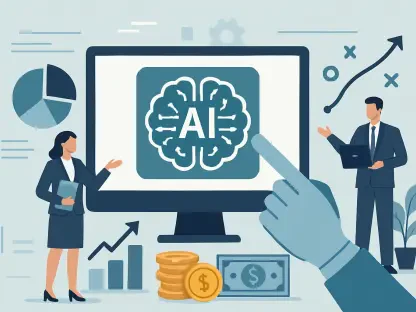

Integrating a human-in-the-loop model ensures that the artist remains the ultimate arbiter of quality while using machines to handle tedious foundational work. This approach fundamentally reframes the current technological shift not as a displacement of the creative professional, but as the arrival of a sophisticated digital co-pilot. In the modern creative landscape, the emphasis has shifted from mechanical design execution toward the high-level conceptual taste that an individual brings to a project. Adobe has spent recent years refining this synergy, ensuring that generative models act as a bridge between a rough idea and a polished final product. By focusing on the intersection of automated efficiency and artistic vision, the company aims to reassure creators that their unique perspective remains the most valuable asset in the production process. This narrative seeks to transform AI from a perceived threat into an essential assistant that handles the mechanical labor of creation, allowing professionals to focus on their original spark.
Empowering Small Businesses and Agencies
Using AI to Scale Marketing Operations
For small business owners and boutique agencies, generative AI acts as a great equalizer by democratizing high-quality branding and marketing capabilities once reserved for entities with massive budgets. Traditionally, smaller firms found themselves limited by lean financial resources and minimal staffing, often struggling to maintain a consistent visual presence across multiple platforms. However, modern AI tools now allow a single individual to manage complex product photography and diverse social media campaigns with the speed and precision of a full-scale creative agency. This operational efficiency enables a new era of rapid prototyping, where businesses can test multiple visual directions in real time without the financial risk associated with commissioning several manual projects. By lowering the barrier to entry for high-end visual production, these tools allow entrepreneurs to compete on a global stage, ensuring that the quality of their marketing matches the quality of their products and ideas.
Maintaining Brand Voice and Strategic Agility
The ability to generate polished content quickly allows smaller entities to remain agile and responsive to shifting market trends or immediate customer feedback. In a digital environment where trends can rise and fall within forty-eight hours, the speed of content creation has become a competitive necessity for survival. By using AI to create various ad iterations instantly, companies can maintain a level of relevance typically reserved for large corporations with massive creative departments. This strategic agility ensures that a brand’s message is always timely and culturally resonant without the bottleneck of a traditional three-week production cycle. Moreover, the capacity to generate localized content for different demographics becomes a standard feature rather than an expensive add-on. This flexibility allows businesses to refine their voice in real time, responding to how audiences interact with different styles, ultimately leading to a more dynamic relationship between the brand and its target consumers.
Historical Precedents and Tool Evolution
Learning From the Printing Press and Photoshop
Adobe contextualizes the current AI revolution by drawing parallels to past technological shifts that were initially met with deep skepticism, such as the printing press and the digital camera. History shows that whenever a new technology lowers the barrier to a specific form of expression, there is an initial fear that the value of professional expertise will be diluted. Johannes Gutenberg’s invention was once seen as a threat to the meticulous work of scribes, yet it ultimately expanded global literacy and created an entirely new industry for authors and thinkers. Similarly, when the digital camera first emerged, critics argued that it would destroy the art of photography by making the process too easy. Instead, it democratized the medium and allowed for a massive expansion of visual storytelling. Generative AI follows this same trajectory, acting as a force multiplier that increases production volume while raising the bar for what constitutes truly exceptional work.
Mastering the Control Harness for Artists
A critical part of the current strategy involves providing a sophisticated harness that allows creators to maintain full agency over AI-generated outputs. This means moving away from “black box” systems, where a user simply inputs a prompt and hopes for the best, toward interfaces that offer precision control over every detail. Modern creative platforms now offer deep integration where AI can be used to manipulate specific elements like camera placement, lighting, and framing within a three-dimensional environment. This level of granularity ensures that the machine remains a subservient tool rather than an autonomous creator. For a professional designer, having the ability to tweak the focal length of a generated lens or the intensity of a simulated sunset is what separates a professional workflow from a casual experiment. By giving artists these levers of control, technology providers ensure that the human remains at the center, directing the AI to fulfill a specific, intentional vision.
Implementation Strategies for Future Growth
Moving forward required a fundamental shift in how creative professionals approached their daily tasks and long-term career development. To thrive in this new environment, successful artists focused on mastering the strategic integration of AI tools rather than resisting their implementation. They prioritized the development of their conceptual skills and brand strategy, recognizing that these human elements became more valuable as technical execution became commoditized. Professionals who invested time in learning how to guide AI models through complex prompts and style-matching techniques secured a significant competitive advantage in the marketplace. Furthermore, businesses that established clear ethical guidelines and data privacy standards for their AI workflows built greater trust with their clients and audiences. The industry eventually moved toward a model where the combination of human intuition and machine speed became the standard for all high-end production.