


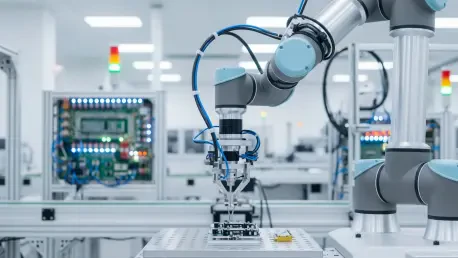

The investment landscape is currently witnessing a significant shift as the excitement surrounding artificial intelligence moves from digital software to physical applications. While data centers and semiconductor companies have dominated the conversation for the last two years, robotics and automation are now emerging as the next major phase of the AI lifecycle. This transition marks a critical turning point where technology moves beyond large language models and into the real world through factory automation and humanoid systems. As investors begin to look for the next big growth opportunity, the robotics sector appears to be at a perfect entry point for those focused on long-term gains. This shift suggests that the primary driver of value is no longer just the code but the mechanical systems that bring that code to life. Market participants are reallocating capital toward the hardware infrastructure that supports this intelligent physical labor efficiently across various industrial domains today.
The Evolution of Robotics and Automation
Moving Beyond Traditional Manufacturing
In the past, the success of the robotics industry was closely tied to the ups and downs of the automotive sector, making it a cyclical and sometimes volatile investment. However, a structural shift is taking place as advancements in machine vision and optical sensors allow robots to handle much more complex tasks than simple assembly line work. These improvements mean that automation is no longer just for car makers but is becoming essential for various industries that require precision and flexibility. This AI-driven change is creating a new foundation for the industry that is less dependent on traditional economic cycles and more focused on technological capability. Specifically, the integration of high-resolution lidar and advanced haptic feedback is allowing robots to operate in unconstrained environments like grocery warehouses. This expansion into service-oriented roles provides a resilient buffer against the manufacturing downturns that previously plagued the sector.
The adoption of collaborative robots, or cobots, in small-scale fabrication shops exemplifies how the industry has diversified its revenue streams away from heavy industry. Unlike the massive, caged machines of previous decades, these modern systems work safely alongside humans to perform repetitive tasks with high accuracy and minimal supervision. This democratization of automation technology means that a much wider array of businesses can now afford to upgrade their production capabilities without massive capital outlays. Consequently, the robotics market is seeing steady demand from sectors such as food processing, pharmaceutical packaging, and consumer electronics assembly. This shift from niche industrial use to broad commercial application is a primary reason why the sector is currently viewed as a secular growth story rather than a cyclical one. As companies across the globe grapple with labor shortages, the incentive to invest in versatile robotic platforms continues to strengthen significantly.
Technological Foundations of Modern Systems
Modern autonomous systems rely on a sophisticated interplay between edge computing and high-speed mechatronics to function in real-time within complex environments. By moving the processing power closer to the robot’s sensors, manufacturers have drastically reduced the latency that once limited machine mobility and safety. This development is crucial for mobile robots navigating busy logistics hubs where they must react instantly to moving obstacles and human workers to avoid accidents. The hardware required for these tasks, such as low-power AI chips and specialized motor controllers, represents a massive and growing sub-sector within the automation industry today. Furthermore, the development of standardized robotic operating systems has allowed for faster software integration, reducing the time it takes for a company to deploy a new fleet of machines. These technological pillars are creating a more cohesive ecosystem where hardware and software work in tandem to solve physical problems once considered human-only.
Another significant driver of progress is the advancement in energy density and battery management systems specifically tailored for the rigors of industrial robotics. Previous generations of mobile platforms were often tethered or required frequent, lengthy charging cycles that disrupted operational flow and reduced efficiency. Today, the integration of solid-state batteries and rapid-charging interfaces allows for near-continuous operation, which is essential for modern 24-hour fulfillment centers. Additionally, the use of lightweight carbon-fiber composites in robot limbs has improved the power-to-weight ratio, enabling machines to lift heavier loads with less energy consumption. These incremental but vital improvements in material science and power electronics are often overlooked by investors focusing solely on software developments. However, these components are the essential building blocks that make widespread automation economically viable for a diverse range of applications. As these technologies mature, the cost of entry will fall further.
Strategic Logic and Portfolio Construction
Portfolio Balance and Global Diversification
Investing in the robotics supply chain requires a global perspective because many of the most important companies are located in Japan, Switzerland, and South Korea. For the average investor, buying individual stocks in these foreign markets is difficult and expensive due to high fees and currency exchange issues. Using an ETF like ROBO solves this problem by providing easy access to a broad basket of international leaders through a single trade on a domestic exchange. This structure allows investors to benefit from the growth of specialized component makers without having to manage the logistics of international brokerage accounts. Furthermore, the fund provides exposure to small-cap and mid-cap companies that are often the primary innovators in niche fields like surgical robotics. These smaller firms often fly under the radar of major institutional research but represent high growth potential within the broader ecosystem. By bundling these assets, the fund effectively simplifies a complex global market for the public.
The ROBO ETF is particularly effective because of its disciplined approach to diversification, which prevents the fund from becoming too dependent on a few large names. Most holdings in the fund are weighted between 1% and 2%, ensuring that the overall performance is driven by the success of the entire robotics ecosystem rather than just one or two mega-cap stocks. This strategy is vital in an emerging industry where it is still unclear which company will ultimately dominate the market in the long run. By capturing the full breadth of the supply chain, including makers of sensors and actuators, the fund reduces the risk of picking the wrong individual winner. This “index-plus” methodology ensures that if a single breakthrough occurs in a specific sub-sector, the portfolio is likely to have exposure to that specific driver. Such an approach mitigates the catastrophic loss risk associated with betting on a single hardware manufacturer that might face unforeseen production delays or any sudden technological obsolescence.
Competitive Analysis and Strategic Outlook
The comparative analysis of performance between ROBO and its primary competitors revealed a significant advantage in the fund’s diversified methodology. While many rival products remained heavily concentrated in a few large-cap technology stocks, this fund benefited from the rapid growth of specialized mid-cap firms across the globe. This broader exposure allowed the portfolio to capture gains from niche sectors like precision sensor manufacturing and advanced motion control that were often ignored by more traditional investment vehicles. Investors who chose a more balanced approach observed higher risk-adjusted returns during periods of market transition and technological upheaval. Furthermore, the exclusion of overly expensive, hype-driven companies protected capital from the sharp corrections that occasionally impacted the broader tech sector. This disciplined strategy proved to be a reliable way to gain pure-play exposure to the robotics revolution while minimizing the risks associated with individual stock volatility.
The decision to integrate specialized robotics exposure into a diversified portfolio required a careful assessment of both technological trends and fund management styles. Investors who sought to move beyond the saturated market of large-cap software providers found that the robotics sector offered a fresh avenue for growth driven by tangible industrial demand. To maximize the benefits of this shift, it was essential to monitor the progress of edge computing and the decreasing costs of high-precision components. Strategists recommended a long-term holding period to allow the structural changes in global labor markets to fully manifest in the earnings of automation leaders. By focusing on funds that avoided heavy concentration, capital was shielded from the volatility of individual stock failures while remaining positioned for the broad-based adoption of intelligent machines. The focus shifted toward ensuring that these investments aligned with the ongoing reshoring of manufacturing and the increasing need for efficiency.







