
The creative professional landscape has undergone a definitive and irreversible transformation as artificial intelligence moved from the periphery of experimental tech to the very heart of the modern production environment. By 2026, the initial anxiety surrounding automation has largely given way to a sophisticated partnership where generative tools serve as the “creative assistant” rather than a replacement for human talent. This evolution is particularly visible in the way creative directors, writers, and digital artists manage their daily workflows, utilizing neural networks to handle the heavy lifting of data processing and pattern recognition. While the speed of these systems is unmatched, the industry has collectively recognized that technical efficiency cannot substitute for the emotional depth, cultural context, and subjective vision that a human artist brings to the table. The current era is defined by this synergy, where the goal is no longer to produce art through a machine, but to use the machine as a specialized lens through which human creativity can be magnified and refined. Consequently, the value of a professional now lies in their ability to curate, direct, and oversee these digital systems, ensuring that every piece of output aligns with a broader strategic objective or artistic narrative. This ongoing shift has forced a total reimagining of skill sets, placing a premium on those who can navigate the interface between human intuition and algorithmic precision.
Underlying Mechanisms of Synthetic Content Creation
At the core of this technological shift lies the advancement of generative models that have been meticulously trained on massive datasets encompassing text, imagery, and audio. These systems function by identifying the underlying statistical properties of content, allowing them to predict and generate new assets that mirror the complexities of human-made work. By analyzing millions of parameters, the AI can replicate artistic styles, linguistic nuances, and even the physical properties of lighting and shadow within a digital environment. This capability has turned the technology into a massive force multiplier for individual creators, enabling them to produce initial concepts and high-fidelity assets at a pace that was previously physically impossible. However, it is vital to understand that these systems do not possess independent thought; they operate through sophisticated pattern matching rather than conscious intent. This distinction is crucial for modern professionals because it emphasizes that the AI is a reactive tool that requires specific, well-reasoned inputs to produce meaningful results. The current generation of models excels at synthesizing vast amounts of information into coherent structures, but the decision-making process of determining which iteration is correct for a specific audience remains a purely human responsibility.
In practical application, generative intelligence is primarily utilized across three distinct functional categories: rapid ideation, task automation, and skill augmentation. Rapid ideation allows creators to brainstorm hundreds of variations for a campaign in the time it used to take to sketch a single mockup, facilitating a much broader exploration of the creative space. Task automation removes the drudgery from the creative process by handling repetitive actions such as resizing layouts, tagging metadata, or cleaning up background noise in field recordings. Skill augmentation is perhaps the most transformative aspect, as it allows specialists to cross over into neighboring disciplines; a writer might use visual AI to create storyboards, while a graphic designer might use linguistic models to help structure a brand narrative. Despite these powers, the lack of agency in AI means it cannot understand the “why” behind a creative choice or the subtle emotional impact of a specific color palette or word choice. This ensures that the professional’s role has shifted from being a mere technician to becoming an orchestrator of multiple intelligent systems. The most successful creatives in 2026 are those who view these tools as a significant upgrade to their natural talent, using them to eliminate friction while keeping their unique perspective at the center of the project.
Evolution of Design and Strategic Writing
The graphic design sector has witnessed a radical shift in how brand identities and marketing materials are developed, moving toward a model of real-time adaptation and scale. Modern design environments like Canva and Figma have integrated features that allow users to generate entire campaign boards from a single brief, effectively automating the assembly of user interface elements. This allows designers to spend less time on the mechanics of layout and more time on the psychology of the user experience. Even industry standards like Adobe Photoshop have evolved to include contextual generative fill, which permits professionals to expand the boundaries of an image or swap complex elements with simple natural language commands. These tools do not just save time; they allow for a level of experimentation that was once too expensive or time-consuming to justify for most clients. By 2026, the focus has shifted toward maintaining brand consistency across thousands of assets, a feat that would be impossible without AI-driven versioning. The designer now acts as a gatekeeper of quality, ensuring that every piece of machine-generated content adheres to the subtle nuances of the brand’s voice and visual language.
Writing tools have undergone a similar transformation, evolving from simple grammatical assistants into sophisticated partners for content strategy and logical reasoning. Assistants like Grammarly and Hemingway now provide deep insights into tone and readability, helping writers calibrate their message for specific demographics with surgical precision. Meanwhile, large language models such as ChatGPT and Claude are being leveraged for more complex tasks, such as analyzing thousands of pages of research or generating the first drafts of long-form reports. The current trend suggests that AI is most effective when used for the heavy lifting of information synthesis, while the heart of the argument must come from the human author. A writer’s unique personality, their lived experience, and their ability to forge a genuine connection with the reader are qualities that AI cannot replicate. Consequently, the modern writer’s workflow often involves using AI to organize thoughts and verify facts, followed by a rigorous human-led editing process that injects soul and stylistic flair into the text. This collaborative approach ensures that the final output is not only factually sound and well-structured but also resonates on a personal level with the intended audience.
Sophisticated Audio and Video Synthesis
Video production remains one of the most technically demanding fields for AI integration, yet recent breakthroughs have enabled the creation of remarkably realistic footage. New platforms now allow directors to use text-based prompts to generate high-quality scenes for storyboarding or to apply motion brushes that control the physics of specific elements within a frame. This level of control is essential for professional applications where elements like the movement of water or the flow of fabric must look natural to the human eye. Furthermore, video editing has been revolutionized by text-based workflows, where editors can cut and rearrange footage by simply manipulating a transcribed text file. This has drastically reduced the time required for documentary work and interviews, allowing creators to focus on the narrative arc rather than the technical minutiae of scrubbing through hours of raw tape. These advancements have democratized high-end video production, enabling smaller teams to produce cinematic content that was previously the exclusive domain of major studios. The role of the director has expanded to include the mastery of these generative systems, ensuring that every frame produced aligns with the intended visual metaphor.
In the realm of audio, the technology has branched into two distinct but equally valuable paths: the generation of original compositions and the restoration of legacy recordings. Tools that can generate full musical tracks with vocals based on a few descriptors have become essential for creators who need background music for social media or indie games without navigating complex licensing hurdles. Conversely, professional sound engineers are utilizing AI for surgical audio repairs, such as isolating voices in noisy environments or removing unwanted artifacts from old recordings without degrading the overall quality. This technology makes professional-grade audio production accessible to a much wider audience, from podcasters to independent musicians who might not have access to a sound-treated studio. The ability to perform these repairs in real-time has also transformed live broadcasting, where AI-driven noise suppression ensures that the speaker’s voice remains clear regardless of the surrounding environment. As audio tools become more intuitive, the emphasis remains on the creative vision of the producer, who must decide how these synthetic elements should be balanced against traditional recordings to create a cohesive and engaging soundscape.
Strategic Asset Management and Image Processing
Digital photography and image management have reached a new peak of efficiency through the application of advanced processing algorithms. Photographers now have the ability to rescue shots that were previously deemed unusable due to poor lighting or technical errors, using AI to add realistic depth of field or adjust the lighting on a subject after the shutter has been pressed. These tools can also sharpen blurry images and remove digital noise with startling accuracy, which is a vital resource for those working with archival materials or low-light event photography. The ability to swap backgrounds or adjust the mood of a scene with a few clicks has transformed commercial photography, allowing for a single photoshoot to yield a vast range of diverse assets. This capability not only saves on production costs but also provides clients with more flexibility in how they use their visual materials across different platforms. However, the use of such powerful tools requires a high degree of ethical consideration to ensure that the final image remains an authentic representation of the subject. The photographer’s expertise in lighting and composition remains the foundation, while AI serves as the ultimate finishing tool that polishes the raw material into a professional-grade product.
Navigating the economic side of these tools has become a central part of a professional’s operational strategy, as most AI services have adopted a freemium or subscription-based model. While free versions are excellent for testing new features or handling hobbyist projects, they often come with limitations that are unacceptable for professional work, such as watermarks or restricted commercial rights. For those working with high-profile clients, paid tiers are a necessity to ensure access to the highest resolution outputs, faster processing speeds, and robust legal protections. Managed effectively, these costs are usually offset by the massive gains in productivity, but it requires a careful audit of which tools provide the most value for a specific niche. Professionals must also consider the licensing terms of the content they generate, as the legal landscape surrounding AI-generated art continues to evolve. Staying informed about these changes is crucial for protecting both the creator and the client from potential copyright disputes. This financial and legal management is now just as important as the creative work itself, forming a new pillar of the modern creative business model that emphasizes long-term sustainability and risk mitigation.
Local Infrastructure and Ethical Integrity
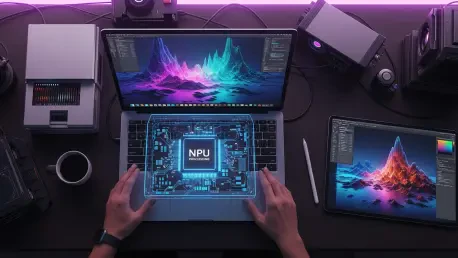
To support the demanding requirements of modern creative software, the physical hardware used by professionals has evolved to include specialized processing units known as NPUs. While many initial AI tasks were handled by remote cloud servers, the need for speed, privacy, and reliability has pushed more professionals toward local inference. Running models locally requires a minimum of 16GB of high-speed memory and advanced graphics cards capable of handling heavy computational loads without overheating. This shift toward “AI-ready” hardware ensures that sensitive client data never has to leave the local machine, providing an essential layer of security for high-stakes projects. Furthermore, having local power allows for much faster iterations, as the creator is not dependent on internet speeds or server availability to generate their work. The investment in high-end hardware has thus become a prerequisite for staying competitive in a field where the speed of execution is often a deciding factor for client satisfaction. As the software becomes more complex, the hardware must keep pace, leading to a closer relationship between creative professionals and the technology they use to manifest their ideas.
As these tools have become standard, the ethical questions surrounding original style and intellectual property have taken center stage in professional discourse. Responsible creators must be diligent in checking the terms of service for every tool they use, ensuring that their work does not inadvertently infringe on the rights of others. This has led to the rise of prompt engineering as a core skill, where the goal is to give the AI precise instructions that result in unique and original output rather than generic replications of existing styles. There is also a growing movement toward transparency, where professionals disclose the extent to which AI was used in their process to maintain trust with their audience. Protecting the integrity of the creative process involves ensuring that the human element remains dominant, preventing the market from being flooded with low-effort, synthetic content that lacks depth. Success in this environment belongs to those who use AI to handle the tedious, time-consuming aspects of their craft, thereby freeing up more time to focus on the story and the vision. Ultimately, the industry has learned that while a machine can follow a set of instructions perfectly, it cannot provide the soul, intent, or narrative purpose that defines a true masterpiece.
Building a Sustainable Strategy for the Modern Creator
The integration of artificial intelligence within the creative sectors necessitated a fundamental reevaluation of what it meant to be a professional artist or strategist. By 2026, the industry moved past the initial phase of experimentation and firmly established a set of best practices that prioritized human intent above all else. Success in this era was not defined by how well a person could use a single software package, but by how effectively they could master the interface between abstract thought and digital execution. Creators who embraced these machines to handle tedious technical work found that they had more time to focus on the narrative and the emotional impact of their projects. Ethical standards became a standard part of the workflow, as professionals learned to navigate the complexities of copyright and data privacy to protect their clients and their own reputations. The synergy between human intuition and machine efficiency ultimately redefined the boundaries of what was possible, creating a world where technical limitations no longer dictated the scope of creative ambition. This shift proved that while machines could mimic the appearance of art, the soul of the work always resided with the person guiding the machine. Moving forward, the focus remained on refining this relationship to ensure that technology continued to serve the interests of human expression and strategic storytelling.