



Maintaining the structural integrity of steel bridges is increasingly difficult as many of these critical assets begin to exceed their original intended service lives. Across the globe, civil engineering departments are facing a mounting crisis where aging bridges require constant surveillance to prevent catastrophic failures. Traditionally, this heavy burden has fallen on human inspectors who must navigate highly variable field conditions, such as fluctuating lighting, deep shadows, and complex structural geometries that often hide surface defects. While visual inspection remains the industry standard, it is frequently hampered by human subjectivity and the sheer scale of the infrastructure networks involved. To address these systemic challenges, researchers at Saitama University, led by PhD student Sal Saad Al Deen Taher and Associate Professor Ji Dang, have developed a sophisticated two-level artificial intelligence framework. This system marks a significant shift from the simple binary models used previously, offering a new level of precision and informative depth.
Overcoming the Constraints of Traditional Monitoring
The Limitations of Conventional AI in Infrastructure
Before the introduction of this hierarchical framework, deep learning tools for corrosion were mostly restricted to binary semantic segmentation. These systems were trained to label pixels simply as corroded or non-corroded, which is helpful for measuring the total area of rust but lacks the qualitative detail required for professional engineering. From a technical perspective, not all rust is equal; different visual characteristics indicate different underlying structural issues and require specific remediation strategies. Most existing models treat every instance of oxidation as a uniform threat, failing to distinguish between surface-level discoloration and deep pitting that compromises the metal’s core. This lack of specificity forces engineers to manually re-evaluate every AI-generated alert, effectively doubling the workload rather than reducing it. The industry has long demanded a more nuanced approach that mirrors the complex analytical processes utilized by veteran bridge inspectors.
Engineering Nuance and Boundary Accuracy
Standard AI models often fail to distinguish between rust blooming on a flat surface and corrosion hidden within the crevices of a bolted joint. Furthermore, these basic models struggle with boundary accuracy, which is the ability to precisely trace the irregular edges of a damaged area. Precise perimeter tracking is essential for engineers who need to monitor the progression of material loss over several years. Without accurate boundaries, it is nearly impossible to determine if a patch of rust is stable or rapidly expanding toward a critical structural connection. The irregularity of corrosion patterns often creates complex geometries that confuse traditional convolutional neural networks, leading to blurred detections and false positives. By focusing on the sharp definition of these boundaries, the new framework provides a reliable baseline for long-term health monitoring, ensuring that even minor changes in the footprint of deterioration are detected before they become significant hazards.
A Sophisticated Dual-Layered Analytical Approach
Mapping Presence and Spatial Extent
The first level of the Saitama University framework serves as the primary detection engine, tasked with identifying corrosion and mapping its location across the bridge. To train this stage, the team utilized a vast dataset of nearly 2,000 images from Japanese bridge inspection reports, ensuring the model could handle diverse environmental conditions. They compared various architectures, including traditional convolutional neural networks and modern transformer-based models, to find the most effective balance of speed and accuracy. The researchers discovered that the SegFormer-B2 model, when paired with boundary-aware supervision, provided the best results for general coverage detection. However, they also utilized the Mask2Former-Small model, which proved superior at capturing the complex, jagged boundaries of corroded patches. This distinction highlights that a model good at finding the general area of rust might not be the best at defining its exact edges, a discovery that led to a more refined detection process.
Visual Pattern Classification
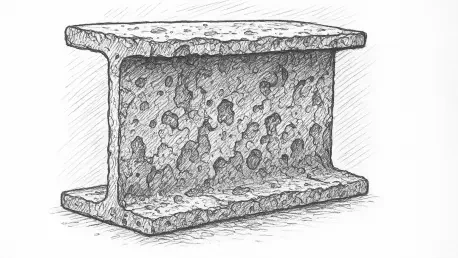
The second level of the framework represents the most significant innovation, as it classifies identified rust into four distinct engineering categories. These include uniform corrosion, which suggests broad surface wear; crevice corrosion, which points to issues in mechanical joints; underfilm corrosion, signaling a failure in protective coatings; and localized pitting. By categorizing rust this way, the AI provides a qualitative assessment that directly informs the inspector’s next steps. While categorizing these complex visual textures is difficult, the system achieved a high level of reliability and closely matched the judgment of human experts. In blind tests, the AI’s classifications aligned with professional human annotators over 92.81% of the time. This phase of the framework ensures that the digital output is not just a collection of data points, but a structured report that mirrors the logic used by experienced field engineers during physical onsite bridge inspections.
Enhancing Human Expertise Through Data
Integrating Artificial Intelligence With Human Insight
The Saitama University team emphasizes that their AI is designed to function as a practical assistant rather than a replacement for human judgment. By providing a categorized map of deterioration, the system guides inspectors on exactly which tools to bring to a site. For instance, a prediction of uniform corrosion might prompt an inspector to use ultrasonic thickness gauges, while a crevice alert would focus their attention on the integrity of specific structural fasteners. This proactive approach saves time and ensures that inspectors are equipped with the specialized instruments needed for the specific type of decay identified. By narrowing the scope of the manual search, the framework allows the expert to apply their specialized knowledge where it is most needed. This synergy between machine precision and human experience represents a new standard in infrastructure safety, where technology acts as a force multiplier for the existing workforce rather than a disruptive automated substitute.
Standardizing Reports and Resource Allocation
This level of detail streamlines the transition from digital analysis to physical maintenance, ensuring that limited repair budgets are allocated to the most critical areas. It creates a more consistent reporting standard across different projects, reducing the variability that often comes with human-only inspections. By automating the tedious task of pattern recognition, the framework allows engineers to spend more time on high-level safety analysis and less time on manual data entry. In the current economic climate, where infrastructure funding must be maximized, the ability to pinpoint exact repair needs is invaluable. Maintenance crews can be deployed with precise instructions, reducing the time spent on-site and minimizing traffic disruptions for the public. Furthermore, the standardization of data allows for better communication between different agencies and stakeholders, ensuring that everyone involved in the bridge’s lifecycle is working from a single, highly accurate version of the structural truth.
Future Outlook for Infrastructure Management
Integration and the Rise of Digital Twins
Looking forward, this AI framework is expected to become a core component of advanced bridge management systems, especially as the use of drones and high-resolution imaging becomes standard. Starting from 2026 and moving toward 2030, future versions will be tested in diverse environments, such as coastal areas with high salinity, to ensure the AI can recognize rust under various atmospheric conditions. There are also plans to optimize the software for mobile devices, allowing for real-time processing directly at the bridge site through edge-computing hardware. The ultimate goal is to integrate these visual maps into digital twins, which are virtual models of bridges that combine historical data, blueprints, and physical measurements. This would provide a chronological history of a structure’s health, allowing owners to make data-driven decisions about long-term repairs. By 2028, these systems could potentially predict failure points before they are even visible to the naked eye.
Path Toward Objective Structural Evaluations
The researchers maintained a realistic stance on the limitations of the current technology while highlighting the actionable path forward for the industry. They concluded that while the AI evaluated the visual appearance of damage, it did not replace the need for physical measurements of steel thickness. The study demonstrated that the most effective way to manage aging infrastructure was through a hybrid approach that combined automated visual sorting with rigorous engineering oversight. To implement these findings, agencies were encouraged to begin digitizing their historical inspection reports and integrating them into centralized AI-ready databases. By creating a traceable history of deterioration, engineers moved closer to a preventative maintenance model. Ultimately, the framework represented a vital step toward a future where infrastructure management was more systematic and data-driven. This shift ensured that the global bridge network remained safe and functional despite the increasing challenges of material aging.







