
The relentless churn of the five-trillion-dollar-a-day currency market has finally outpaced the physiological limits of the human mind, necessitating a fundamental move toward autonomous systems. This technological shift represents a significant advancement in the financial sector, moving beyond simple automation to create a complex ecosystem where machines do not just execute orders but actually “understand” market dynamics. This review explores the evolution of this technology, its core components, its real-world performance metrics, and the profound impact it has exerted on global liquidity and retail trading accessibility.
Evolution of Forex Automation: From Rule-Based Algorithms to Adaptive AI
Early iterations of currency trading software were defined by rigid, manual parameters that left little room for market nuance. These legacy systems operated on basic if-then logic, such as triggering a buy order when a moving average crossed a specific line. While efficient for removing emotional bias, they were notoriously fragile, often failing during periods of high volatility or fundamental shifts in monetary policy. The shift toward adaptive AI has replaced these static rules with dynamic, self-evolving frameworks that thrive on the very complexity that once broke traditional models.
Modern systems represent a departure from these “black box” algorithms by incorporating feedback loops that allow for real-time recalibration. The relevance of this shift in the broader technological landscape cannot be overstated, as it mirrors the transition seen in autonomous vehicles and precision medicine. By moving from a reactive stance to a predictive one, AI-driven trading platforms have fundamentally altered the context of risk, transforming it from an avoided variable into a calculated, navigable landscape for institutional and retail participants alike.
Key Technological Foundations of AI-Driven Trading Bots
Machine Learning and Predictive Signal Analysis
Machine learning serves as the primary engine for forecasting price action by ingesting decades of historical tick data to identify recurring behaviors. Unlike a human analyst who might focus on a handful of variables, these models evaluate thousands of data points simultaneously to determine the probability of a price reversal or trend continuation. This capability matters because it allows for the identification of “micro-trends” that are invisible to the naked eye, providing a unique competitive edge that competitors using legacy technical analysis simply cannot match.
Natural Language Processing for Sentiment Interpretation
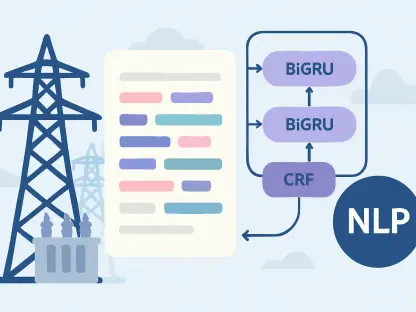
The foreign exchange market is uniquely sensitive to the spoken word, with single sentences from central bank officials often triggering massive liquidations. Natural language processing (NLP) allows trading bots to interpret this soft data by scanning news wires, social media, and official transcripts in milliseconds. By converting human speech into a sentiment score, these systems can react to market-moving events faster than any human could read a headline, bridging the gap between fundamental news and technical execution.
Deep Learning and Neural Network Architectures
To address the non-linear nature of currency markets, developers have integrated deep learning models that mimic the layered processing of the human brain. These neural networks are designed to recognize multi-layered relationships between technical indicators, such as the subtle interplay between interest rate differentials and commodity price fluctuations. This implementation is unique because it moves beyond linear regression, allowing the system to understand that a specific signal might be bullish in one economic climate but bearish in another, depending on the broader context.
Reinforcement Learning and Autonomous Strategy Refinement
The most sophisticated layer of modern trading involves reinforcement learning, where the algorithm improves through a process of trial and error. By assigning “rewards” for profitable outcomes and “penalties” for drawdowns, the system refines its internal logic without human intervention. This creates a self-healing strategy that adjusts to changing market regimes, ensuring that the bot does not become obsolete as soon as a new economic cycle begins, which is the primary reason it outperforms static competing models.
Emerging Trends and Strategic Shifts in the Currency Market
The current environment has seen a move toward the hybridization of different AI techniques, combining the speed of high-frequency execution with the wisdom of long-term macro analysis. This integration of cross-market signals—where a bot monitors equity health and oil prices to predict the movement of the Canadian dollar or the Japanese yen—is becoming the industry standard. These strategic shifts indicate that the market is no longer viewing currencies in isolation but rather as a single component of a massive, interconnected global financial web.
Real-World Applications and Proactive Risk Management
Global financial institutions now deploy these technologies to monitor liquidity changes and correlations that might signal an impending flash crash. AI systems are uniquely capable of automated position downsizing, where they reduce exposure during volatility spikes to protect the underlying capital. This proactive risk management is a significant departure from traditional stop-loss orders, as the AI can detect a “toxic” liquidity environment before the price even begins to drop, saving millions in potential slippage costs.
Navigating the Technical and Regulatory Challenges of AI Implementation
Despite the successes, the technology faces hurdles such as data quality issues and the phenomenon of overfitting, where a model becomes so attuned to historical data that it fails to generalize for live conditions. There is also the persistent challenge of “black swan” events—economic shocks that fall so far outside historical norms that no amount of training data can prepare the system. Regulatory bodies are also increasing their oversight, demanding more transparency in how these “black box” decisions are made to ensure market stability is not compromised.
The Future Horizon: Long-Term Impacts on Global Finance
The trajectory of this field suggests a future where human intuition and machine intelligence reach a state of total synthesis. We are likely to see breakthroughs in broader data integration, where satellite imagery of shipping lanes or real-time consumer spending data is fed directly into the trading models. As automated trading becomes a permanent pillar of finance, the focus will likely shift from pure speed to the quality of the underlying logic and the robustness of the system against unforeseen global disruptions.
Conclusion: Assessing the Current State of AI-Powered Forex Trading
The transition from rigid automation to intelligent, adaptive ecosystems was viewed as a necessary response to the overwhelming complexity of modern markets. Investors who adopted these systems found that the primary value lay not just in increased profits, but in the radical reduction of emotional fatigue and the ability to maintain consistency during extreme turbulence. The industry realized that while machines handled the heavy lifting of data processing, the human element remained essential for setting the ethical and strategic boundaries of the operation.
The evidence suggested that the most successful implementations were those that balanced technical sophistication with rigorous human oversight. It was determined that the unique strength of AI in this sector resided in its capacity to find order within chaos, providing a level of precision that was previously thought impossible. Ultimately, the integration of artificial intelligence into the foreign exchange market proved to be a transformative force that redefined the mechanics of global finance and set a new benchmark for how technology can be leveraged to navigate the world’s most liquid and volatile asset class.