



Introduction
The competitive landscape of the semiconductor industry shifted dramatically as AMD solidified its commitment to the next generation of artificial intelligence by absorbing a team led by one of the most influential researchers in the field. This $8.2 billion acquisition of World Labs represents a calculated move to dominate the emerging field of spatial intelligence. By bringing the legendary researcher Fei-Fei Li into the executive ranks, the organization is positioning itself to lead the development of systems that perceive and interact with three-dimensional space.
The primary objective of this discussion is to unpack the technical and strategic layers of this merger, answering critical questions about how spatial AI will influence global industries. Readers can expect to learn about the mechanics of world models and the way this maneuver alters the ongoing rivalry between the largest players in the silicon market. This exploration provides a comprehensive look at how environmental simulation is becoming the new standard for modern artificial intelligence infrastructure.
Key Questions: Exploring the Strategic Acquisition
Why Is the Acquisition of World Labs Significant for AMD?
The hardware market has historically focused on raw computational power, but the industry shift through 2026 demonstrates that hardware alone is no longer a sufficient competitive edge. This acquisition is significant because it grants AMD direct control over the spatial intelligence stack, allowing AI to interpret and generate complex 3D environments. Such capabilities are vital for the next phase of automation, where machines must move beyond processing text to navigating and interacting with the physical world.
Bringing Fei-Fei Li on as Executive Vice President and Chief Scientist provides instant credibility and a direct line to cutting-edge research. This leadership ensures that future silicon designs are optimized specifically for the unique demands of world models, which are far more complex than previous generative systems. By integrating these research capabilities, the firm is building a loop where software insights directly drive the physical architecture of its next-generation chips, challenging the dominance of established software-hardware ecosystems.
How Do World Models Change Industrial and Creative Workflows?
The integration of world models addresses the long-standing testing bottleneck that has slowed the deployment of advanced robotics for many years. Previously, creating the vast number of simulated environments needed to train a robot was a manual, labor-intensive process that required scanning real-world locations. World Labs’ Marble model changes this by allowing users to generate high-fidelity, interactive 3D environments from simple prompts, drastically reducing the time required for simulation and site scanning.
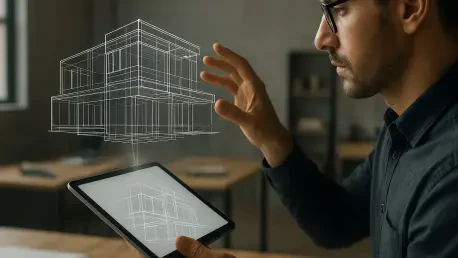
In the creative sector, major software players are pioneering workflows where designers use world models to generate rough 3D layouts in seconds. This generative step provides a spatial foundation that is then refined within professional CAD software, effectively blending AI speed with traditional precision. This synergy revolutionizes how architects and developers conceptualize physical surroundings, allowing for rapid iteration in media and entertainment without the constraints of traditional 3D modeling pipelines.
What Does This Deal Mean for the Competitive AI Hardware Landscape?
As the industry moves through 2026, the friction between major chipmakers has intensified regarding the management of the software ecosystems that support their hardware. Many of the advanced tools used to process the 3D files generated by world models currently rely on competitor platforms such as NVIDIA’s Omniverse. AMD’s acquisition is a direct attempt to challenge this market position by fostering an open ecosystem that prioritizes research-driven innovation over proprietary platform lock-in.
This move forces a recalculation of market value for many enterprises that were previously committed to a single hardware vendor. By offering a platform that is deeply integrated with the latest spatial AI research, the company is making a play for the developers who are building the autonomous systems of the future. The rivalry is shifting from who has the fastest processor to who can provide the most comprehensive environment for simulating the complexities of the physical world in a digital space.
Summary: Recap of Key Insights
The acquisition of World Labs marks a turning point in the race for AI dominance, focusing the industry’s attention on the importance of spatial intelligence. By incorporating the Marble world model, the organization creates a new standard for how AI systems understand three-dimensional space. This strategic pivot ensures the company remains at the forefront of the shift from text-based processing toward complex environmental simulation.
Key takeaways include the dismantling of simulation bottlenecks in robotics and the necessity for hardware manufacturers to integrate deep research into their development cycles. As these tools become more accessible, the barriers to creating physically accurate digital worlds continue to fall. This deal reinforces the consensus that the next frontier of AI lies in its ability to master the physical world through sophisticated generative modeling.
Conclusion: Final Thoughts and Future Outlook
The decision to bring World Labs into the fold demonstrated a clear understanding that the future of AI was no longer confined to static data or simple language processing. By prioritizing the ability of machines to simulate reality, the organization provided a roadmap for how enterprises approached the development of physical AI. This shift encouraged leaders to look beyond current computational limits and consider how spatial intelligence could solve real-world problems in ways that were previously impossible.
Enterprises that embraced these advancements found themselves better equipped to handle the rapid evolution of autonomous systems and digital design. The move ultimately suggested that the next leap in productivity would come from a deeper synergy between the physical and the virtual. As the focus shifted toward more immersive and interactive AI applications, the groundwork laid by this acquisition served as a vital foundation for the technologies that continued to shape the landscape of the late 2020s.







