
Laurent Giraid brings a seasoned perspective to the rapidly shifting landscape of machine learning and natural language processing, where the hype of “research previews” often collides with the cold reality of enterprise requirements. As a technologist who has watched the AI industry move from basic chatbots to integrated agents, he offers a deep dive into how Anthropic is attempting to turn the creative process into a standardized, brand-compliant engine. In this conversation, we look past the surface-level aesthetics of AI-generated designs to examine the structural and ethical shifts occurring as these tools become embedded in the daily workflows of massive organizations.
The discussion centers on the strategic transformation of a viral design prototype into a sophisticated enterprise platform that prioritizes consistency and code integration over mere visual novelty. We explore the tactical fixes for “token-burning” issues that previously made these tools cost-prohibitive, the emergence of a “round-trip” workflow that seeks to end the decades-old friction between designers and engineers, and the competitive pressure from open-source projects. Ultimately, the focus is on how Anthropic is building an ecosystem where AI isn’t just an assistant but a foundational layer for brand compliance and software development across the entire enterprise stack.
Large organizations often struggle with maintaining brand consistency across thousands of assets. How do features like design system imports change the landscape for an enterprise with 10,000 employees and a massive brand standards document?
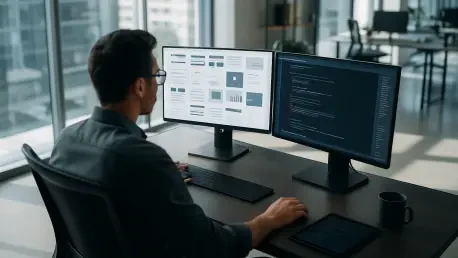
The shift from a “blank canvas” model to a design system compliance layer is the most significant pivot I’ve seen in the creative AI space this year. Previously, you would give an AI a prompt and it would return something visually stunning but stylistically rogue—it was a freelancer who didn’t read the brief. Now, by allowing teams to ingest their actual components, buttons, and typography directly from a GitHub repository or raw files, the AI stops guessing and starts obeying. It creates a reality where the model checks its own output against a 200-page brand standards document and auto-corrects before a human ever sees a pixel out of place. For a massive enterprise, the new admin role that locks down these systems is the real game-changer because it prevents a junior designer from overriding the core brand identity on a whim. It transforms the AI from a creative wild card into a tireless guardian of the brand’s visual DNA.
The original release of this tool was criticized for being a “token-hungry” product that could burn through 80 percent of a weekly Pro allowance in just 25 minutes. How has the architectural approach to consumption changed to make this viable for daily professional use?
The economics of generative design are notoriously brutal because the model has to reason about everything from responsiveness to color theory simultaneously, which is why that PCWorld reviewer hit his limit in less than half an hour. Anthropic’s fix isn’t just a simple discount; it’s a total restructuring of how the tool occupies the user’s workspace. By sharing usage limits across chat, Claude Code, and the new Cowork feature, users have much more breathing room than they did when the design tool was an isolated silo. They’ve also introduced a manual editor that allows for dragging and resizing elements without triggering a fresh model turn, which is a massive relief for the wallet. It’s the difference between paying for a whole new painting every time you want to move a tree an inch to the left versus just picking up a brush and moving it yourself. These stability fixes and efficiency gains are designed to turn a high-stress “token watch” into a flow state where the technology fades into the background.
The concept of a “bidirectional round-trip” between design and code is something of a holy grail in software development. Can you walk us through how the integration with Claude Code actually functions to bridge the gap between a prototype and a shipping product?
For decades, the handoff between design and engineering has been a “lossy” process where the intent of the designer gets mangled by the constraints or interpretations of the developer. With the new /design-sync command, a developer can pull the local codebase’s actual design system into the AI’s visual environment, ensuring the prototype is built with the real building blocks of the app, not just approximations. When the designer finishes a layout, the handoff to the code environment is seamless because the same AI system is operating on both sides of the fence; it doesn’t need to “interpret” a screenshot because it already understands the underlying logic. Anthropic’s research into 400,000 Claude Code sessions backs this up, showing that domain expertise is more important than raw coding skill for success. This means a designer who understands the problem deeply can now drive the implementation forward without a game of telephone between departments. It’s an emotional relief for teams that are tired of the constant “visual QA” cycles and the “that’s not what the mockup looked like” arguments that traditionally haunt the end of a sprint.
With nine new export partners ranging from Canva to Vercel, Anthropic seems to be positioning itself as a “hub” rather than a final destination. How does this strategy help them compete with open-source alternatives like the Open Design project?
Anthropic is playing a very smart game of “moats and bridges” by building business relationships that a community-led project simply cannot replicate at the same scale. While the Open Design project is impressive—racking up 57,400 GitHub stars and supporting 16 different coding agents in just eight weeks—it lacks the first-party, “verified” pipelines into tools like Adobe Express or Wix. By making Claude Design the origin point for a project that then flows into Vercel for deployment or Miro for collaboration, they are making it the center of the creative universe. They aren’t trying to out-flex the open-source community on model flexibility or local-hosting; they are betting that enterprises will choose the ecosystem that has a native, secure “Connect to Canva” button over a complex self-hosted setup. It’s a defensive strategy built on convenience and enterprise-grade security, where the “hub” becomes indispensable because it is the only place where all your other tools are already talking to each other. This partner-first approach creates a gravitational pull that makes it very hard for a team to leave once their entire pipeline is integrated.
We are seeing Claude being embedded into everything from QuickBooks to financial service templates for banks. What is your forecast for the role of specialized AI agents in the broader enterprise stack over the next few years?
We are rapidly moving away from the era of “chatting with a bot” and toward an era of “managing a workforce of agents” that are invisible but omnipresent in our existing software. I expect to see the “Managed Agents” strategy accelerate, where Claude isn’t just a window on your screen but a certified engineer inside the infrastructure of major airlines and banks, as we’re seeing with the DXC Technology alliance. The design system you import today will eventually be the same context used by a financial agent to generate a pitchbook that is automatically formatted to your brand standards and populated with real-time data from FactSet or S&P Capital IQ. The real shift will be when these agents move from “parallel sub-agents” in a single session to autonomous workers that handle entire workflows—from KYC screening to payroll processing—without a human having to move data between tabs. However, this level of embedding brings immense stakes; the containment architecture using sandboxes and virtual machines will become as important as the AI models themselves. My forecast is that the most successful companies won’t be the ones with the “smartest” AI, but the ones that have successfully woven that AI so deeply into their proprietary design and data systems that the distinction between “the tool” and “the worker” completely disappears.