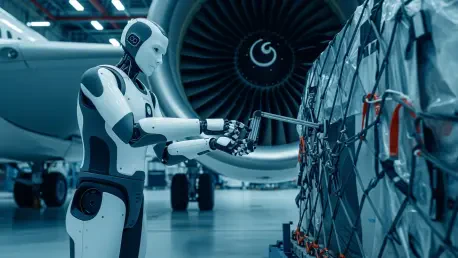

The bustling terminals of Tokyo Haneda Airport have long served as the primary gateway for international travel, yet beneath the polished surface of efficiency lies a mounting demographic challenge that threatens the very core of Japan’s aviation infrastructure. As the nation grapples with a rapidly aging population and a shrinking pool of available workers, the aviation sector has reached a critical inflection point where traditional recruitment methods no longer suffice. In response to this existential threat, Japan Airlines has embarked on a sophisticated multi-year initiative to integrate advanced humanoid robotics into its daily ground handling operations. This ambitious program, which is currently unfolding through 2028, seeks to bridge the widening labor gap by automating the physically demanding tasks that keep a world-class airport functioning. By partnering with technological leaders, the airline is not merely looking for a temporary fix but is instead fundamentally redesigning the workflow of the modern ramp.
Addressing the Demographic Strain in Aviation Operations
The Critical Impact of the Shrinking Workforce
The primary catalyst for this shift toward high-tech automation is the persistent labor shortage that has become a defining characteristic of the Japanese industrial landscape in 2026. With Haneda Airport serving over sixty million passengers annually, the demand for ground handling services, such as baggage loading and cargo transport, has significantly outpaced the supply of human labor. This discrepancy is particularly evident during peak travel seasons when the sheer volume of inbound tourism places an immense burden on the existing staff. Because the work is inherently physical and requires long hours in outdoor environments, attracting younger generations to these roles has become increasingly difficult. Consequently, the reliance on manual labor has become a strategic bottleneck, limiting the capacity of major airlines to expand their flight schedules or improve turnaround times. The integration of robots is therefore seen as a vital necessity to maintain the operational integrity of the nation’s busiest air hub.
The physical toll of ground handling operations cannot be overstated, as workers are routinely required to lift heavy luggage and maneuver bulky cargo in varied weather conditions. Over time, these repetitive and strenuous tasks lead to high turnover rates and a reliance on an aging workforce that is more susceptible to workplace injuries. By introducing humanoid machines capable of performing these “3D” jobs—dirty, dangerous, and demanding—Japan Airlines aims to alleviate the bodily strain on its human employees. This transition allows the human workforce to move into more specialized roles that emphasize safety management and technical oversight rather than raw physical exertion. The strategy is not about replacing people entirely but about creating a hybrid environment where machines handle the heavy lifting while humans ensure the precision and safety of the overall operation. This balanced approach is essential for sustaining a high level of service quality in a market where personnel are becoming a scarce resource.
Strategic Partnerships and Technological Integration
To realize this vision of an automated ramp, Japan Airlines has established a robust partnership with the GMO Internet Group to facilitate the deployment of humanoid units developed by Unitree Robotics. This collaboration combines the airline’s deep operational knowledge with the technical expertise of a leading internet and infrastructure provider, ensuring that the robots are not just functional but also securely connected to the airport’s digital ecosystem. The current trial, which runs from 2026 to 2028, focuses on testing the adaptability of these machines in real-world scenarios that are far more unpredictable than a controlled laboratory setting. Engineers and ground staff work side-by-side to refine the movements of the robots, ensuring they can interact safely with existing equipment and personnel. This phased implementation strategy allows for the identification of technical gaps early in the process, providing a clear roadmap for scaling the technology across other regional airports.
The selection of Unitree Robotics as the hardware provider highlights a significant trend toward utilizing versatile, general-purpose machines rather than highly specialized automation. Unlike traditional conveyor belts or autonomous tugs that can only perform one specific function, these humanoid robots are designed to be multi-functional. During the initial phases of the trial, the focus has been on cargo movement and baggage handling, but the long-term goal includes more intricate tasks like cabin cleaning and exterior inspections. This versatility is crucial because it allows the airline to deploy the same technological platform across various departments, maximizing the return on investment. By centralizing the automation strategy around a single type of agile machine, the partnership simplifies maintenance and training requirements. As the project progresses through its final stages in 2028, the data gathered will serve as a blueprint for how humanoid technology can be successfully commercialized within the broader transportation and logistics industries.
Technical Viability and the Evolution of Ground Handling
Humanoid Design as a Functional Asset
One of the most compelling arguments for the use of humanoid robots in aviation is their inherent compatibility with infrastructure that was originally designed for the human form. Traditional automation often requires expensive and time-consuming modifications to facilities, such as installing tracks or widening doorways to accommodate bulky machinery. In contrast, a humanoid robot can navigate narrow aircraft aisles, climb stairs, and operate manual levers just as a person would. This eliminates the need for massive capital expenditures on structural changes at Haneda, allowing the airline to integrate new technology into its existing fleet and terminals. The ability to function within the constraints of current aircraft cabins is particularly valuable for tasks like deep cleaning and restocking, where space is extremely limited. By mimicking human morphology, these robots can reach into overhead bins and maneuver around seating arrangements with a level of agility that wheeled robots simply cannot match.
Furthermore, the bipedal nature of these machines allows them to traverse the uneven surfaces and varied terrains often found on the airport ramp. Whether moving between the tarmac and the cargo hold or navigating through a crowded baggage sorting area, the humanoid form factor provides a level of mobility that is superior to many specialized autonomous systems. This flexibility is essential in an industry where operational conditions can change in an instant due to weather or flight delays. The robots are equipped with advanced sensors and computer vision systems that allow them to perceive their surroundings in three dimensions, enabling them to avoid obstacles and work alongside human colleagues without incident. This seamless integration into the human-centric environment of the airport is a key factor in the technology’s potential for widespread adoption. As the trial continues, the focus remains on refining these movements to ensure that the robots can perform their duties with the same fluidity and intuition as the workers they support.
Overcoming Operational Constraints and Precision Hurdles
Despite the significant potential of humanoid robotics, the current phase of testing has also highlighted several technical limitations that must be addressed before full-scale deployment. One of the most prominent challenges is the relatively short operational battery life, which currently averages between two and three hours of continuous use. In the fast-paced environment of an international airport, where ground turns must be completed in under an hour, a robot that requires frequent charging could potentially cause delays. To mitigate this, developers are exploring rapid-charging technologies and modular battery swapping systems that would allow the robots to remain in service throughout a full shift. Managing the energy demands of high-torque motors required for lifting heavy cargo remains a primary focus for the engineering teams involved in the project. Balancing power consumption with the physical strength necessary for ramp operations is a complex optimization problem that requires ongoing refinement.
Precision and environmental awareness represent another significant hurdle for humanoid units operating in high-pressure scenarios. While a robot can easily pick up a standard suitcase in a controlled environment, the chaotic nature of a live airport ramp—with its loud noises, flashing lights, and moving vehicles—presents a much more difficult challenge. Ensuring that the machine can accurately identify and grasp various types of luggage without causing damage requires sophisticated machine learning algorithms and high-fidelity tactile sensors. Current efforts are focused on improving the robot’s ability to handle soft-sided bags and irregular cargo, which often behave unpredictably when moved. The trial has moved into more demanding workflows to stress-test these systems, providing the necessary data to improve the software’s decision-making capabilities. As the reliability of these systems improves, the transition from supervised operation to full autonomy will become increasingly feasible, marking a major milestone in the evolution of airport ground handling.
Future Implications for Global Aviation Standards
Shifting Responsibilities and Enhanced Safety Standards
The integration of humanoid robotics into ground handling has necessitated a fundamental shift in how safety and management are approached within the aviation industry. In the past, ground operations relied heavily on physical oversight and manual checks, but the introduction of autonomous units has transitioned the human role toward that of a technical supervisor. Operators now focused on monitoring the fleet of robots via centralized control systems, intervening only when the machines encountered a scenario outside their programmed parameters. This change has led to the development of new safety protocols that prioritize the coexistence of humans and machines on the tarmac. Standardized signaling and geofencing technologies were implemented to ensure that robots remained within designated zones, significantly reducing the risk of collisions with aircraft or personnel. These advancements provided a more structured and predictable operational environment, which ultimately enhanced the overall safety of the ramp.
The workforce itself underwent a period of significant upskilling, as employees moved from labor-intensive roles to positions requiring a higher level of technical literacy. Training programs were established to teach ground crews how to maintain, troubleshoot, and coordinate with their robotic counterparts. This transition not only addressed the labor shortage by making the work more appealing to tech-savvy individuals but also increased the productivity of each individual staff member. By delegating the most repetitive and dangerous tasks to machines, the airline was able to achieve a more consistent level of performance, as robots do not suffer from fatigue or distraction. The data collected during this period demonstrated that the hybrid model of human-robot collaboration was more efficient than either entity working in isolation. This paradigm shift set a new benchmark for how airlines could manage their back-end operations while maintaining the highest standards of safety and reliability.
Actionable Insights for Industry Implementation
The success of the Haneda trials provided several key insights that other sectors of the aviation industry used to guide their own automation strategies. Organizations found that the bipedal design of humanoid robots was particularly effective in legacy environments where the cost of physical infrastructure upgrades was prohibitive. To maximize the impact of these technologies, leaders recommended a phased rollout that began in low-stakes areas before moving to critical flight operations. This approach allowed teams to build confidence in the hardware and refine software controls without risking significant delays. Furthermore, the partnership model proved to be an essential component of the project’s success, as it allowed the airline to leverage external expertise while keeping its internal focus on core aviation tasks. Stakeholders encouraged the establishment of industry-wide standards for robot-to-infrastructure communication to ensure that different technological platforms could work together harmoniously.
Moving forward, the industry began to prioritize the development of more robust energy solutions and advanced haptic feedback systems to further enhance the capabilities of humanoid units. Future considerations focused on the integration of artificial intelligence to allow robots to learn from their environment in real-time, reducing the need for constant human intervention. The lessons learned during the 2026 to 2028 period paved the way for a more resilient and flexible aviation network that was less vulnerable to demographic shifts. Airlines and airport authorities were advised to invest in the underlying digital infrastructure, such as private 5G networks, to support the high bandwidth requirements of autonomous fleets. By taking these proactive steps, the global aviation community ensured that it was well-prepared for a future where robotics and human expertise were inextricably linked. The transition to an automated ramp was no longer viewed as a distant possibility but as a practical solution to the structural challenges of the modern era.