


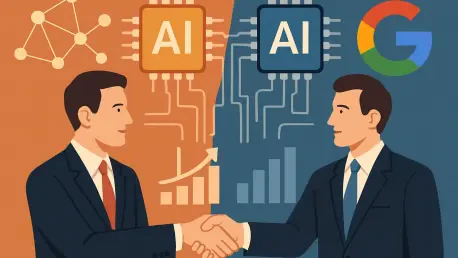

The shift toward predictive engineering in the advertising world marks a definitive end to the era where marketing success was measured only after a campaign had already finished its run. Historically, brand managers and agency executives were forced into a reactive cycle, launching high-budget video assets and waiting weeks for performance data to trickle back from digital platforms. This delay often meant that by the time a creative flaw was identified, a significant portion of the media budget had already been exhausted on underperforming content. However, the strategic alliance between Omnicom and Google has fundamentally altered this workflow by moving the evaluation process “upstream,” allowing for the rigorous testing of assets before they ever reach a consumer’s screen. By utilizing a sophisticated AI-powered creative intelligence system, this partnership enables brands to diagnose potential failures and optimize engagement metrics in a pre-launch environment, effectively bridging the gap between artistic intuition and data-backed precision in a way that was previously impossible.
The Structural Foundation of Predictive Intelligence
Central to this technological shift is the integration of Google’s ABCD framework, a data-driven system specifically engineered to maximize the impact of video content within the YouTube ecosystem. This framework is not merely a set of suggestions but a strict diagnostic tool that evaluates every second of a video against four critical pillars: attention, branding, connection, and direction. The attention metric focuses on the immediate “hook,” ensuring that viewers are captured within the first five seconds, while the branding component checks for the early and frequent integration of visual and auditory brand cues. By establishing these technical benchmarks, the system removes much of the guesswork associated with creative production, ensuring that the foundational elements of a video are optimized to prevent viewer drop-off. This level of granular analysis allows marketers to see exactly where a piece of content might lose its audience, providing a roadmap for technical adjustments that significantly increase the probability of a campaign’s success before the first dollar of media spend is committed.
Furthermore, the ABCD framework operates as a gatekeeper for quality, ensuring that creative ambition does not come at the expense of functional clarity or brand recall. In many traditional creative reviews, the “direction” of a video—specifically the call to action—is often treated as an afterthought or buried too deep within the narrative to be effective. The Google-driven intelligence system highlights these oversights by analyzing whether the viewer is given a clear and actionable path forward after engaging with the content. This structural rigor ensures that every video asset serves a measurable purpose within the broader marketing funnel. When these metrics are applied during the editing phase rather than after the launch, the creative team can refine the pacing and visual hierarchy of the advertisement to ensure that the emotional connection is backed by a solid technical structure. This synergy between creative storytelling and algorithmic validation represents a significant evolution in how global brands maintain consistency and effectiveness across massive, fragmented digital landscapes.
Harmonizing Proprietary Algorithms with Creative Nuance
While technical structure is vital, the alliance goes a step further by incorporating Omnicom’s proprietary AI agent, known as the “Brave Bot,” to handle the more subjective aspects of creative evaluation. This secondary layer of intelligence is designed to look beyond mere timestamps and brand logos, focusing instead on the nuance of storytelling, brand distinctiveness, and innovative narrative techniques. By running video assets through this “double-check” system, agencies can identify if a video that meets all technical requirements still lacks the “spark” or uniqueness necessary to stand out in a crowded market. If the Brave Bot identifies that a narrative is too generic or fails to align with the specific voice of the brand, it provides highly specific feedback to the creative team. This creates a unique feedback loop where the AI acts as a sophisticated editor, offering suggestions on how to sharpen the creative edge of a campaign without sacrificing the technical optimizations required for platform performance.
The interaction between these two AI layers ensures that the final output is both mathematically optimized and creatively resonant, effectively solving the long-standing tension between data and art. For instance, if the Google framework suggests that a video is losing attention at the ten-second mark, the Brave Bot can analyze the creative content at that specific moment to determine if the issue is a lack of visual movement, an uninspired script, or a failure in character development. This level of collaborative intelligence allows for a much more sophisticated refinement process than a simple human review could provide. It empowers editors and directors to make surgical changes to their work, knowing that each adjustment is supported by a dual-layered validation process. By shifting the focus from subjective opinions to objective, AI-driven insights, the alliance allows marketing teams to defend their creative choices with hard data, fostering a more productive and less confrontational relationship between agencies and their clients.
Cultural Resonance in a Globalized Marketplace
The final critical component of this creative intelligence system is its ability to integrate regional and cultural intelligence, a feature that is particularly vital for brands operating in diverse markets like the Middle East or Southeast Asia. Messaging that works in a Western context often fails to land or, worse, causes offense when translated directly into different cultural environments without considering local social norms and consumer behaviors. This localized layer of the AI system filters creative assets through a lens of regional sensitivity, ensuring that the tone, imagery, and language used are perfectly aligned with the target audience’s expectations. This prevents the “one-size-fits-all” approach that has plagued global advertising for years, allowing brands to maintain a global identity while appearing deeply rooted in local culture. By automating this cultural check, the alliance helps brands avoid costly public relations blunders and ensures that their engagement metrics are not hindered by cultural tone-deafness.
Beyond just avoiding errors, this cultural intelligence layer proactively identifies opportunities for deeper engagement by analyzing local trends and audience preferences that might be invisible to a global creative team. It can suggest specific visual cues or linguistic nuances that increase the relatability of the content, thereby maximizing the emotional “connection” pillar of the ABCD framework. In an increasingly fragmented digital economy, the ability to demonstrate genuine cultural understanding is a significant competitive advantage. This localized approach ensures that the sophisticated technology provided by Google and Omnicom is not just a blunt instrument for efficiency, but a precision tool for building brand equity within specific communities. As a result, advertisements are transformed from generic commercial interruptions into culturally relevant content that respects and reflects the values of the people it seeks to reach, ultimately driving higher conversion rates and long-term brand loyalty.
Empirical Validation and the Pilot Program Experience
The practical efficacy of this integrated AI system was put to the test during a comprehensive pilot program with the telecommunications provider ‘du,’ where ten distinct video assets were subjected to the full diagnostic process. The results were illuminating, revealing a massive disparity in creative quality that had previously been undetected by traditional human-led review processes. The AI-generated effectiveness scores ranged from a low of 44 percent to a high of 80 percent, exposing critical weaknesses in pacing and brand visibility in several of the assets that were otherwise considered “broadcast-ready.” This data allowed the marketing team to “pressure-test” their creative work in a simulated environment, identifying exactly which videos would likely fail to deliver a return on investment. By catching these issues before the campaign went live, ‘du’ was able to re-edit the underperforming assets, ensuring that their media spend was concentrated only on content that had been mathematically proven to be effective.
This pilot program serves as a powerful case study for the broader industry, demonstrating that even high-quality, professionally produced content can have significant blind spots. The variance in scores showed that human intuition alone is often insufficient for predicting how an algorithmically driven platform like YouTube will distribute and prioritize content. By using the AI system as a pre-launch optimization engine, the marketing team moved beyond the “wait-and-see” approach that has historically defined the industry. The ability to quantify creative effectiveness before a single viewer sees the ad changes the financial calculus of advertising, turning what was once a gamble into a calculated investment. This shift toward empirical validation does not stifle creativity; rather, it provides a safety net that allows creators to take bolder risks, knowing that they have a robust system to help them course-correct if a particular creative direction misses the mark.
Strategic Shifts in Agency and Marketer Dynamics
The widespread adoption of this creative intelligence framework is fundamentally redefining the role of the modern marketer and the nature of agency-client relationships. For decades, creative decisions were often dictated by the “loudest voice in the room” or the gut feelings of senior executives, a process that was frequently riddled with bias and subjectivity. The introduction of objective, data-driven insights through the Omnicom-Google alliance replaces these internal debates with a structured, transparent evaluation process. Marketing teams can now use specific scores and diagnostic reports to justify their creative strategies, providing a clear rationale for why a particular edit or narrative choice was made. This shift toward objectivity fosters a more collaborative environment where the focus is entirely on performance and brand health, rather than personal preference or hierarchical authority.
Furthermore, this alliance positions artificial intelligence as a vital creative partner rather than a replacement for human talent or a threat to artistic integrity. By delegating the technical optimization of brand cues, pacing, and structural hooks to the software, human creators are freed to focus on high-level storytelling and emotional resonance. The AI handles the “science” of the advertisement—ensuring it functions correctly within the platform’s constraints—while the humans handle the “art” of connecting with the audience on a deeper level. This division of labor allows agencies to produce work that is both more creative and more effective, breaking the old trade-off between artistic quality and commercial performance. As the industry continues to move away from retrospective metrics, the ability to synthesize these automated insights with bold, original creative judgment will become the primary differentiator for successful brands.
Advancing Toward a Universal Creative Standard
Looking toward the immediate future of the industry, the trajectory for this AI-driven evaluation system is set to expand well beyond the confines of YouTube. Plans are already in motion to adapt these diagnostic tools for a wider array of formats, including social video on platforms like TikTok and Instagram, connected TV (CTV), and even digital out-of-home (DOOH) advertising. The ultimate goal is the establishment of a standardized creative effectiveness framework that can be applied across every digital touchpoint in a consumer’s journey. By creating a unified language for creative quality, the alliance aims to bring a level of consistency to global marketing that was previously unattainable. This expansion will allow brands to maintain a coherent narrative and technical standard across all channels, ensuring that the brand experience remains high-quality regardless of where the consumer encounters it.
As these AI tools become standard components of the marketing tech stack, the competitive landscape will shift from who has access to the technology to who can most effectively interpret its findings. Brands must move toward a model of continuous optimization, where every piece of content is treated as a data point that informs the next creative iteration. To thrive in this new environment, organizations should prioritize the training of their creative teams in data literacy, ensuring that directors and editors know how to translate AI diagnostics into actionable creative improvements. The future of advertising lies in this blend of human ingenuity and algorithmic rigor, where the “engineering” of creative quality ensures that marketing remains a reliable driver of business growth. By embracing these tools now, marketers can move beyond the unpredictability of the past and begin building a more precise, impactful, and culturally resonant future for the industry.
Implementing New Standards for Creative Engineering
The successful deployment of the Omnicom-Google alliance has demonstrated that the future of advertising lies in the seamless integration of predictive diagnostics into the creative workflow. To capitalize on this evolution, brands must prioritize the adoption of “upstream” testing protocols, moving away from the outdated practice of relying solely on post-campaign post-mortems to inform their strategies. The first actionable step for any marketing organization is to establish a unified diagnostic framework that bridges the gap between their creative agencies and their data science teams. This involves not only investing in the necessary AI tools but also fostering a culture where data-driven feedback is welcomed as a catalyst for creative excellence rather than viewed as a restriction on artistic freedom. By making these objective insights a core part of the production process, companies can significantly reduce the risk of media waste and ensure that every asset is tuned for maximum impact before it ever goes live.
Furthermore, the industry must prepare for the expansion of these AI standards across all digital channels by developing a more agile approach to content creation and iteration. As predictive systems become more prevalent in connected TV and social video, the speed at which creative teams can respond to AI-generated insights will become a primary competitive advantage. Organizations should consider restructuring their internal teams to include “creative technologists” who can act as translators between algorithmic data and visual storytelling. This ensures that the technical feedback provided by systems like the ABCD framework or the Brave Bot is immediately converted into high-quality revisions. Ultimately, the move toward creative engineering represents a move toward greater accountability and precision in advertising. Those who proactively integrate these predictive tools into their daily operations will be best positioned to navigate the complexities of a fragmented digital landscape, turning creative assets into high-performance engines for sustained brand growth.







