
The release of the Kimi K3 model by Moonshot AI has fundamentally altered the global calculus of machine intelligence by proving that frontier-level capabilities are no longer the exclusive domain of American proprietary laboratories. This emergence of high-performance, open-weight technology from China represents a pivotal shift toward decentralized power in the artificial intelligence sector. While traditional closed-source models operate as guarded digital vaults accessible only via restrictive application programming interfaces (APIs), the open-weight movement provides the underlying neural architecture directly to the end user. This review explores how these developments are disrupting established market hierarchies and creating a complex landscape of geopolitical and operational risk.
Foundations of the Chinese Open-Weight AI Ecosystem
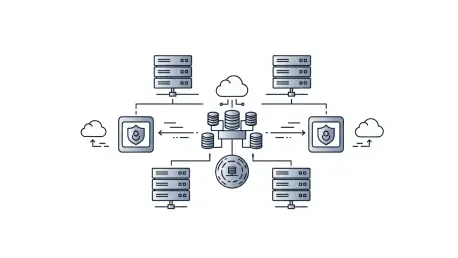
The rise of the open-weight movement in China is characterized by a strategic departure from the “black box” service models favored by Western giants. Unlike traditional software-as-a-service (SaaS) structures, where the user has no visibility into the model’s internal weights, open-weight models allow for local deployment on private infrastructure. This accessibility is not merely a technical convenience; it is a fundamental shift toward data sovereignty. By allowing organizations to host models within their own firewalls, Chinese developers have addressed a primary concern of large-scale enterprises: the potential for sensitive data to leak back to a third-party provider during the inference process.
These models are built on principles of modularity and portability, ensuring that the heavy lifting of training is already completed, yet the final weights are available for fine-tuning. This technical democratization allows smaller firms to leverage state-of-the-art reasoning capabilities without the billion-dollar price tag of original research. Consequently, the Chinese ecosystem has rapidly matured, challenging the market dominance of proprietary labs by offering a high-performance alternative that does not require a permanent, high-cost subscription to a foreign cloud provider.
Technical Milestones: Performance and Architecture
Frontier-Level Architectures: High-Parameter Models
The arrival of landmark architectures such as Moonshot AI’s Kimi K3 demonstrates a massive leap in parameter efficiency and context handling. K3 is frequently described as “token-hungry” due to its ability to ingest and process vast amounts of data simultaneously, rivaling the context windows of the most advanced proprietary systems. This high parameter count allows the model to handle multi-step reasoning and complex linguistic nuances that were previously beyond the reach of open-source projects. By democratizing these high-tier capabilities, Chinese developers have effectively lowered the ceiling for what constitutes “frontier” performance, forcing the entire industry to accelerate its innovation cycle.
The significance of these architectures lies in their ability to perform complex tasks, such as high-level coding and scientific simulation, with minimal degradation compared to closed competitors. This implementation is unique because it combines massive scale with the flexibility of open weights, allowing developers to optimize the model’s internal pathways for specific industrial use cases. The result is a technology that is not just a copy of Western models but a distinct branch of evolution optimized for high-throughput reasoning.
Economic Viability: Inference Optimization
In the current market, the primary challenge for AI adoption is the “arithmetic problem”—the widening gap between the high cost of training proprietary models and the declining revenue per token. Chinese open-weights address this by significantly compressing operational costs for large-scale enterprises. Data from production gateways reveals a stark contrast: while open-weight models are capturing an increasing share of total traffic, they represent a fraction of the spending typically associated with closed-lab alternatives. This economic disruption makes it difficult for proprietary providers to justify their premium pricing when high-quality alternatives are available for the cost of compute alone.
The real-world implication of this trend is a shift toward local inference, where companies trade high upfront hardware costs for long-term operational savings. By eliminating the middleman in the API call, a large organization can potentially save hundreds of millions of dollars over the lifecycle of a project. This financial logic is driving even the largest cloud providers to reconsider their dependency on single-vendor proprietary systems, as the pursuit of the bottom line often outweighs brand loyalty to specific AI laboratories.
Shifting Trends: The Strategy of Regulatory Uncertainty
Recent developments suggest that the global response to Chinese AI is shifting toward the strategic use of “regulatory risk” as a tool of statecraft. Rather than implementing formal, easily challenged prohibitions, federal agencies are increasingly utilizing soft guidance and security advisories to influence industry behavior. This approach capitalizes on the inherent risk-aversion of regulated sectors like finance and healthcare. If an agency suggests that a specific model might contain backdoors or latent vulnerabilities, the resulting uncertainty acts as an invisible barrier, chilling adoption more effectively than a legislative ban ever could.
This trend reflects a broader move away from “platform de-platforming” and toward a more nuanced management of geopolitical tension. Developers and enterprises are finding themselves caught in a landscape where the technical merit of a model is secondary to its “regulatory longevity.” Consequently, there is a visible migration toward models that offer high performance without the looming threat of future federal scrutiny. This atmosphere of uncertainty is shaping corporate procurement strategies, forcing CIOs to consider not just how a model performs today, but whether it will remain legally viable in the coming months.
Global Implementation: The Role of Hyperscalers
The integration of Chinese models into major cloud environments like Microsoft Azure serves as a “transmission line” for global deployment. These hyperscalers facilitate access for international sectors, including banking and telecommunications, where the models provide a critical hedge against vendor lock-in. By offering Chinese open-weights alongside Western proprietary options, cloud providers allow their clients to maintain operational flexibility, ensuring that a single policy change or price hike from one lab does not paralyze their entire AI strategy.
In sectors such as international banking, these models are being utilized for localized fraud detection and customer service, where data residency laws prohibit the use of cross-border APIs. The cloud infrastructure acts as a neutral ground, allowing the technical benefits of Chinese innovation to reach a global audience while maintaining the security protocols expected of a major Western platform. This role of hyperscalers is essential for the continued expansion of the open-weight ecosystem, as it provides the massive compute power necessary for hosting high-parameter models.
Technical Constraints: Security and Hardware Vulnerabilities
Despite their performance, Chinese open-weight models face significant hurdles, particularly the “un-patchable” nature of immutable weights. Once a model is downloaded and deployed on a local server, the original developer has no mechanism to update its behavior or patch security vulnerabilities. This creates a persistent risk, as any discovered backdoor or bias remains present until the user manually replaces the entire model. Security findings by organizations like NIST have highlighted potential vulnerabilities, which continue to hinder widespread adoption among security-conscious enterprises.
Furthermore, the hardware requirements for hosting models like Kimi K3 are substantial, often requiring massive amounts of storage and a fleet of high-end accelerators. For many organizations, the cost of the necessary internal server management and the physical space for the hardware offsets the savings gained from moving away from API fees. These technical constraints, combined with the difficulty of securing adequate specialized chips under current export restrictions, create a “hardware ceiling” that limits the true decentralization of high-tier AI.
Strategic Outlook: Future Projections
The trajectory of Chinese AI development will likely be defined by a delicate balance between rapid technical innovation and mounting geopolitical pressure. As models become more efficient, they may eventually bypass current hardware limitations, allowing high-performance reasoning to run on less restricted, consumer-grade hardware. This potential breakthrough would represent a significant shift, as it would render current export controls on high-end chips less effective at slowing the spread of advanced AI capabilities.
The long-term impact on the industry will be shaped by how companies navigate the risk of “platform de-platforming.” Future corporate procurement will likely prioritize hybrid strategies that combine various open-weight and proprietary models to minimize exposure to any single political or regulatory shock. This diversification is becoming a necessity in an era where technological choices are inextricably linked to national security and global trade policy.
Summary of Findings and Final Assessment
The research into the Chinese open-weight landscape revealed that the technical merit of these models was often indistinguishable from their proprietary Western counterparts. The assessment showed that while the cost-saving potential was enormous, it was consistently weighed against the high operational risk of political volatility. Decisions regarding adoption were found to be driven more by a need for vendor diversification than by a simple comparison of benchmarks.
The investigation into regulatory trends confirmed that the strategy of uncertainty functioned as a significant deterrent for risk-averse enterprises. Ultimately, the analysis concluded that the long-term viability of Chinese models in the global market depended on the resilience of cloud “transmission lines.” The study suggested that organizations should have prioritized geopolitical risk management as a core component of their AI strategy. These findings indicated that the era of choosing technology solely on performance metrics had ended, replaced by a complex environment where legal longevity and political stability became the primary metrics of success.