


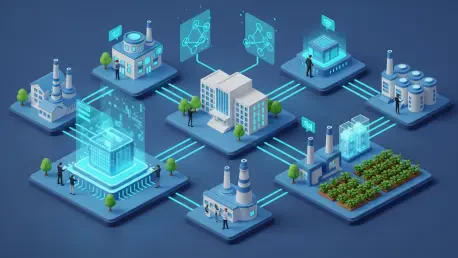

The transition from manual data computation to automated analysis has fundamentally altered the landscape of regional economic development in Eastern North Carolina, where East Carolina University serves as a critical engine for technological integration. By positioning itself at the vibrant intersection of human creativity and generative technology, the institution is effectively bridging the historical gap between traditional academic foundations and the rapidly shifting demands of the modern global workforce. This strategic focus transforms the university into a vital gateway for artificial intelligence applications across the region’s core sectors, spanning agriculture, biotechnology, and advanced healthcare. As students and faculty navigate these complexities, they are no longer just studying the digital revolution but are actively participating in its implementation. The integration of high-performance tools such as ChatGPT and Microsoft CoPilot has sparked a radical shift in how complex problems are approached within the university’s labs and classrooms. Tasks that once required days of painstaking manual computation, such as the analysis of aerodynamic data or wind tunnel results for engineering projects, are now being processed in mere seconds. This evolution marks a significant transition in the regional labor market, where the primary human role is moving away from tedious data crunching toward high-level verification and strategic oversight, ensuring that the local economy remains robust and competitive in an increasingly automated world.
Institutional Strategy and Economic Vitality
Bridging the Gap: Research and Industry
To lead this monumental transformation, East Carolina University established the Center for AI in Business, an entity that operates on three foundational pillars: applied research, experiential learning, and industry-focused workshops. By prioritizing real-world industrial problems, the university ensures that students gain indispensable hands-on experience while simultaneously assisting local business leaders in integrating automated systems into their existing daily operations. This collaborative approach turns the traditional classroom environment into a dynamic laboratory for regional economic development, where theoretical knowledge is immediately tested against the friction of actual market needs. The center serves as a hub for small businesses and mid-sized manufacturing firms that might otherwise lack the capital to invest in dedicated research and development departments. Through this symbiotic relationship, the university provides the intellectual horsepower necessary to refine logistics, optimize supply chains, and enhance customer engagement strategies. The result is a more agile business community that can pivot as quickly as the technology itself, ensuring that the regional economy is not merely reacting to change but is actively driving it through informed, research-backed implementation of generative models.
Furthermore, the emphasis on experiential learning ensures that the upcoming cohort of graduates enters the professional world with a portfolio of completed projects rather than just a list of attended courses. Students working within the Center for AI in Business engage directly with stakeholders from various industries, ranging from hospitality to aerospace manufacturing, to identify bottlenecks that can be mitigated through algorithmic solutions. This direct engagement fosters a culture of innovation that extends beyond the university’s campus borders, creating a ripple effect of technological literacy throughout Eastern North Carolina. By educating regional business leaders on how to responsibly deploy these tools, the university demystifies the complexities of machine learning and large language models, making them accessible to organizations of all sizes. This democratization of high-level technology is crucial for maintaining a level playing field in a market often dominated by larger urban tech centers. As these industry workshops continue to proliferate, the region is seeing a tangible increase in operational efficiency, with local firms reporting significant reductions in administrative overhead and a renewed focus on creative problem-solving that leverages the best of both human and machine intelligence.
Cultivating Economic Resilience: Local Impact
University leadership recognizes that while massive urban tech hubs often dominate national headlines, rural and mid-sized markets must become “AI-ready” to remain economically viable in the long term. By fortifying essential industries like pharmaceutical manufacturing and commercial agriculture with automated efficiencies, the institution acts as a vital shield against economic stagnation and rural brain drain. This localized strategy ensures that the region’s traditional strengths are enhanced and modernized rather than being replaced or rendered obsolete by the digital revolution. For instance, in the agricultural sector, the application of predictive analytics and autonomous systems allows for more precise resource management, which is essential for maintaining profitability in an era of fluctuating global commodity prices. By focusing on these specific regional needs, the university creates a specialized niche that protects local jobs while attracting new investments from companies looking for a workforce that is already proficient in the latest technological advancements. The goal is to build a self-sustaining ecosystem where technological innovation is deeply rooted in the practical realities of the local landscape, providing a stable foundation for growth.
The conceptual framework of “augmented intelligence” serves as the primary guiding philosophy for this institutional push toward modernization. Rather than viewing machine learning as a direct substitute for human labor, faculty members and university administrators frame it as a powerful extension of inherent human capability. This nuanced perspective encourages a symbiotic relationship where technology handles the immense complexity and scale of modern data sets, while human workers provide the necessary ethical framework, cultural context, and creative direction to drive meaningful regional growth. This approach minimizes the fear of displacement often associated with automation and instead fosters a spirit of collaboration. By training the workforce to see these tools as partners in productivity, the university is preparing individuals to manage more complex systems and take on higher-level responsibilities that require critical thinking and emotional intelligence. This shift in mindset is essential for regional resilience, as it ensures that the economic benefits of automation are shared across the community, leading to a more prosperous and technologically integrated society that values human oversight as much as algorithmic speed.
Navigating the Educational and Ethical Landscape
Pedagogical Challenges: Balancing Automation and Fundamentals
As these powerful tools become more prevalent within the academic environment, educators are carefully navigating a complex pedagogical tug-of-war regarding the nature of learning itself. There is a growing and valid concern among faculty that if a system can instantly generate functional code or solve intricate mathematical equations, students might inadvertently bypass the essential cognitive processes required to understand the underlying logic behind a solution. To combat this potential intellectual atrophy, the university curriculum is being meticulously redesigned to ensure that automated tools reinforce human skill sets rather than serving as a convenient shortcut that diminishes overall intellectual rigor. Professors are shifting their assessment methods away from final outputs and toward the process of discovery, requiring students to document their reasoning and explain the “why” behind the results produced by the machine. This ensures that the foundational principles of engineering, mathematics, and logic remain at the core of the educational experience, even as the tools used to apply those principles become more sophisticated and autonomous in their execution.
One of the most critical lessons currently being integrated into the classroom is the reality that generative systems are inherently fallible and require constant, meticulous human skepticism. Students are frequently encouraged to “use their melons” to audit outputs, as the technology is known to occasionally provide incorrect or “goofy” answers that lack a basis in physical reality. Maintaining a firm and unwavering grasp of fundamental principles remains the most important safeguard against the errors and hallucinations often found in large language models. By teaching students how to identify these anomalies, the university is cultivating a generation of “expert auditors” who can verify the integrity of automated work products. This skill is becoming just as valuable as the ability to perform the work manually, as it prevents the blind acceptance of algorithmic suggestions that could lead to catastrophic failures in high-stakes fields like healthcare or structural engineering. The focus is on creating a workforce that is technically proficient but also intellectually independent, capable of overriding a machine’s suggestion when it contradicts established scientific laws or common sense.
Cognitive Integrity: Preventing Over-Reliance on AI
Beyond the immediate concerns of accuracy, there is a recognized risk that an over-reliance on automated systems could lead to diminished free thought and a significant loss of lateral thinking capabilities. Because generative models are primarily trained on existing data sets, they may inadvertently suggest that there is only one “correct” or standard approach to a specific problem, based on historical precedents. Educators at the university are actively working to ensure that students remain capable of developing unique, creative solutions that have not been pre-recorded in a machine’s training set. This involves designing assignments that reward unconventional thinking and require students to tackle problems that the technology cannot easily solve using existing templates. By emphasizing the importance of human intuition and the ability to think outside the box, the institution is protecting the very creative spark that drives true innovation. The goal is to produce graduates who view technology as a starting point for exploration rather than the final destination, allowing them to push the boundaries of what is possible in their respective fields.
Furthermore, the university is addressing the ethical implications of using these tools in a way that respects intellectual property and maintains academic integrity. This involves open dialogues between students and faculty about the boundaries of collaboration with machines and the importance of original contribution. As these systems become more integrated into the research process, the ability to discern where the machine’s work ends and the human’s contribution begins is becoming a vital professional competency. By fostering a culture of transparency and accountability, the university is setting a standard for the ethical use of technology that students will carry into their professional careers. This ensures that the regional workforce is not only technically skilled but also ethically grounded, capable of navigating the complex moral landscape that accompanies the widespread adoption of artificial intelligence. The emphasis remains on the human as the ultimate architect of the future, with the machine serving as a sophisticated instrument that must be guided by a clear sense of purpose and responsibility to the broader community.
Future-Proofing the Workforce: Practical Application
Real-World Implementation: Engineering and Beyond
The practical and immediate benefits of these advancements are already clearly visible in a variety of student-led engineering projects and prestigious regional competitions. From researching sophisticated autonomous navigation systems for naval applications to utilizing advanced algorithms for real-time obstacle detection, students are moving from being passive observers of technological change to becoming active architects of new systems. These projects demonstrate that generative technology is no longer merely a theoretical concept discussed in high-level seminars but has become a functional and indispensable component of modern design and project management. For instance, in the context of naval engineering workforce competitions, student teams are using large language models to synthesize vast amounts of technical documentation and to brainstorm innovative hull designs that prioritize both speed and stability. This hands-on application allows them to see the immediate impact of their work and helps them understand how to manage the complexities of modern engineering projects that require the coordination of multiple high-tech systems and tight delivery timelines.
As students engage in these high-stakes projects, they are also learning the nuances of project management in a digital-first environment where timelines are compressed and expectations for precision are higher than ever. The ability to use automated tools to manage these complexities allows for a more iterative design process, where multiple variables can be tested and refined in a fraction of the time it would have taken previously. This shift is not just about speed; it is about the ability to explore a wider range of possibilities and to arrive at more optimized solutions that address specific regional challenges, such as improving the efficiency of coastal transportation or developing more resilient infrastructure for storm-prone areas. By mastering these tools in a project-based environment, students are developing a level of technical fluency that is directly transferable to the workforce. They are graduating with the ability to lead multi-disciplinary teams and to integrate emerging technologies into established workflows, making them invaluable assets to regional employers who are looking to modernize their operations and stay ahead of the competition.
Strategic Evolution: The Path to Complexity Management
As the fundamental nature of work continues to evolve, the global demand for “complexity management” will continue to rise, shifting the regional workforce into roles that prioritize the ability to prompt, guide, and audit automated systems. This trend suggests that while specific job descriptions and daily tasks will inevitably change, the underlying need for human oversight and visionary innovation will persist and perhaps even grow in importance. Historical parallels to the impact of the assembly line illustrate that while individual roles may become more specialized or automated, the overall demand for human ingenuity only increases as systems become more complex. By mastering these sophisticated tools today, the next generation of workers in Eastern North Carolina will be fully prepared to lead a more productive, resilient, and diverse regional economy. The focus on high-level oversight ensures that the human element remains at the center of the production process, providing the critical judgment and emotional intelligence that machines cannot replicate. This strategic evolution is the key to maintaining long-term economic stability in a world where the only constant is the rapid pace of technological change.
To move forward effectively, it is recommended that regional business leaders and educational stakeholders continue to deepen their collaborative efforts to create a seamless pipeline from the classroom to the professional environment. Organizations should prioritize the implementation of “auditing protocols” where human experts are specifically tasked with verifying the outputs of automated systems, ensuring that accuracy and safety are never compromised for the sake of speed. Furthermore, investment should be directed toward continuous learning programs that allow current employees to upskill and adapt to the new realities of augmented intelligence. The transition to a more automated economy was handled with a clear focus on maintaining the integrity of fundamental knowledge while embracing the efficiencies of the digital age. By continuing to prioritize human-centric oversight and creative problem-solving, the region successfully turned a potential technological disruption into a period of unprecedented growth and stability. The future of Eastern North Carolina now rests on the ability of its citizens to remain the primary directors of technology, using these powerful tools to build a more prosperous and sustainable community for everyone.







