
Laurent Giraid is a seasoned technologist specializing in the intersection of Artificial Intelligence and robust data infrastructure. With a deep focus on machine learning and natural language processing, he has spent years navigating the complexities of making AI systems both reliable and ethical for enterprise use. In this discussion, we explore the shifting landscape of Retrieval-Augmented Generation (RAG), examining why organizations are moving toward hybrid architectures, the decline of standalone vector databases, and the evolving metrics for measuring retrieval success in an agentic world.
Hybrid retrieval adoption has tripled recently as organizations combine dense embeddings with sparse keyword search. What specific performance bottlenecks does this hybrid approach solve, and how should engineering teams manage the increased complexity of integrating reranking layers and strict access controls?
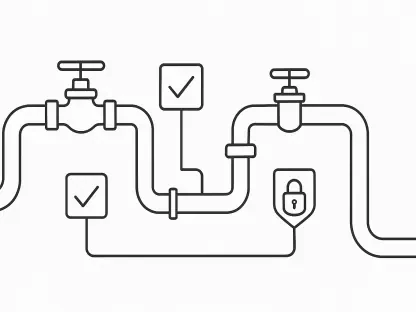
The surge in hybrid retrieval adoption—which skyrocketed from 10.3% to 33.3% in just one quarter—stems from a hard-learned lesson: vector-only search often misses the mark in production. By combining dense embeddings with sparse keyword search, organizations solve the “black box” problem where semantic similarity might overlook specific technical terms or exact product codes that a keyword search catches instantly. Engineering teams are finding that adding reranking layers is the only way to manage the precision required for high-stakes environments, even though it introduces more moving parts into the pipeline. To manage this complexity, teams must treat the retrieval layer as the “ground truth” of the system, ensuring that access controls are baked into the keyword filters to prevent sensitive data from leaking into the model’s context. It is a trade-off where simplicity is sacrificed for the sake of the 33% of enterprises now demanding absolute retrieval accuracy for their agentic workloads.
Many enterprises are transitioning away from standalone vector databases toward custom stacks or provider-native retrieval. What operational trade-offs are driving this consolidation, and in what specific scenarios does a purpose-built, standalone vector layer still remain the superior choice for high-volume production workloads?
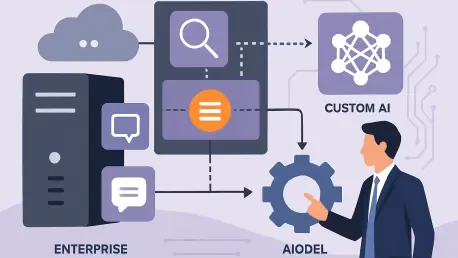
The move toward custom stacks, which now represent 35.6% of the market, is a direct response to “fragmentation fatigue” among data teams. When engineers are forced to manage a separate vector store, a graph database, and a relational system just to power a single AI agent, it creates a DevOps nightmare that is difficult to sustain. However, purpose-built vector layers like Qdrant or Milvus still hold a massive advantage when you are dealing with extreme scale, such as searching across hundreds of millions of documents in patent litigation. In these high-volume scenarios, the specialized performance and reliability of a dedicated layer outweigh the convenience of an integrated solution. For organizations like &AI, the vector database isn’t just a feature; it is the fundamental ground truth that attorneys rely on to ensure every AI-generated insight is rooted in a verifiable source.
Investment priorities are shifting from basic evaluation testing toward deep retrieval optimization and operational reliability at scale. How do you define “good” retrieval when response correctness alone is no longer sufficient, and what metrics are now essential for maintaining user trust in high-stakes environments?
We have reached a point where merely getting a “correct” answer is no longer the finish line; in fact, by March, we saw response correctness, retrieval accuracy, and answer relevance all converge to a shared priority level of 53.3%. This convergence tells us that enterprises now understand that an answer is only as good as the document it came from. To maintain user trust in sectors like healthcare or government, “good” retrieval must be defined by high recall—meaning the system actually finds the best possible information among millions of records. This is why investment in retrieval optimization grew from 19.0% to 28.9%, overtaking basic evaluation for the first time. If the best companies or the most relevant case files aren’t in the results, the user loses trust immediately, regardless of how polished the final answer sounds.
Despite the availability of massive context windows, many organizations find that long-context models cannot fully replace dedicated retrieval systems. What are the practical limitations of using large prompts for massive enterprise datasets, and how do you envision the relationship between context windows and backend retrieval evolving?
There was a brief moment of hype where people thought massive context windows would kill the need for RAG, but that position collapsed from 15.5% adoption intent in January to just 6.7% by March. The practical limitation is that you simply cannot stuff ten million indexed documents into a single prompt without facing astronomical costs and performance degradation. We are seeing a more realistic architecture emerge where the vector database acts as the massive base of the memory stack, while the LLM context window serves as the narrow, high-focus top layer. Caching and compression layers are being built to bridge the gap between these two, but they do not replace the retrieval layer at the base. You need that backend to act as a filter, ensuring the model only spends its limited “attention” on the most relevant slices of data.
As agentic AI matures, the distinction between persistent session memory and document retrieval is becoming critical for reliability. For organizations currently pausing their rollouts or just starting, what foundational architectural steps are necessary to ensure their infrastructure supports both session continuity and high-recall search?
For the 22.2% of organizations that have currently paused their RAG programs, the most important step is recognizing that session memory and document retrieval are two different engineering problems. Persistent session memory is about the agent remembering the user’s preferences from five minutes ago, while document retrieval is about finding a specific needle in a haystack of millions of files. Organizations need to build a tiered architecture where new frameworks like Hindsight or Mastra handle the “observational memory” of the conversation flow. Simultaneously, they must maintain a robust retrieval base that can handle changing enterprise documents without lag. If you don’t separate these concerns, your agent will eventually lose its place in the conversation or, worse, hallucinate facts because it couldn’t distinguish between a past user comment and a factual source document.
What is your forecast for enterprise RAG?
My forecast is that we are entering a period of the “Retrieval Rebuild,” where the simplistic architectures deployed in 2025 are systematically replaced by more resilient, hybrid systems that prioritize reliability over speed of deployment. We will see the 15.6% of respondents who are currently skeptical of large-scale deployments return to the market once they realize that RAG isn’t dead—only the initial, fragile way they built it is. The focus will shift entirely toward deep optimization, with custom-built retrieval stacks becoming the standard for any company dealing with high-stakes data in regulated industries. Ultimately, the winners will be those who treat retrieval as the core “ground truth” of their AI, ensuring that every agentic action is backed by a verifiable and accurate data source.