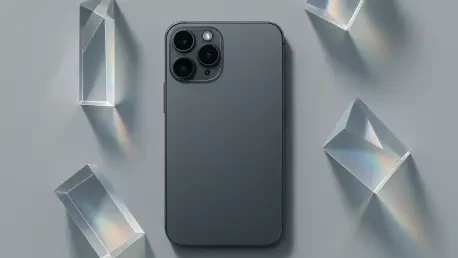

The announcement that Google is transitioning its Tensor Machine Learning Software Development Kit from a restricted experimental phase into a widely accessible public Beta marks a pivotal moment for the mobile industry. For years, the proprietary power of the Google Tensor Processing Unit was a walled garden, utilized exclusively by internal teams to fuel the signature features that defined the Pixel brand. With the arrival of the Pixel 10 family, including the Pro, XL, and Fold models, this specialized hardware architecture is finally being unlocked for the global developer community. This shift is not merely a technical update; it represents a fundamental change in how silicon and software interact on modern smartphones. By providing direct hooks into the silicon, Google is encouraging a surge of innovation that promises to move sophisticated artificial intelligence away from the cloud and directly into the palms of users, ensuring that the latest computational photography and natural language tools operate with unprecedented speed and efficiency.
Unified Workflows and Technical Integration
Central to this technological leap is the deep integration of the Tensor ML SDK with LiteRT, which serves as a sophisticated abstraction layer for machine learning on edge devices. LiteRT effectively bridges the gap between complex hardware-level instructions and high-level application code, allowing developers to bypass the daunting complexities of vendor-specific compilers and runtimes. By using a unified API, creators can maintain their focus on refining user experiences rather than wrestling with the idiosyncratic requirements of the Tensor System-on-Chip. This standardized approach simplifies the process of converting models from popular frameworks like PyTorch or TFLite into optimized binaries that are tailor-made for the Pixel 10’s specific TPU architecture. Consequently, the barrier to entry for high-performance mobile AI has been significantly lowered, fostering an environment where even smaller development teams can implement features that were once considered the exclusive domain of tech giants.
Beyond the initial compilation of models, the Beta SDK introduces a robust distribution and execution ecosystem that ensures reliability across various operating conditions. Through the use of “AI Packs” within the Google Play infrastructure, developers can seamlessly bundle and deliver compiled model files directly to compatible devices without bloating the initial application download size. A critical component of this runtime environment is the sophisticated fallback mechanism, which monitors hardware availability in real time. If the TPU is currently occupied by a high-priority system task or if a specific mathematical operation is not supported by the specialized hardware, the system automatically redirects the workload to the device’s GPU or CPU. This ensures that the end-user experience remains fluid and functional, regardless of the underlying hardware constraints, providing a level of stability that is essential for mission-critical applications such as real-time accessibility tools or secure financial verification systems.
Democratizing Hardware Power Through Model Accessibility
The launch of the public Beta is accompanied by the introduction of an extensive Model Garden, which provides a curated collection of over 100 pre-optimized AI models for immediate deployment. This library includes a wide array of tools, ranging from classic machine learning algorithms to cutting-edge generative systems like the Gemma 3 1B small language model. To further expand this resource, Google has collaborated with the Hugging Face community to host precompiled versions of popular models, eliminating the need for developers to engage in the time-consuming process of manual optimization. This initiative effectively democratizes access to the hardware’s full potential, as creators can now implement advanced text generation or semantic search features by simply integrating these ready-to-use assets. This approach not only accelerates the development cycle but also ensures that third-party applications can match the performance benchmarks previously set by Google’s own first-party software suites.
This strategic opening of the Tensor TPU architecture signals a departure from the historical model where custom silicon was used primarily as a competitive differentiator for internal software. In previous generations, the unique capabilities of the Tensor chip were the driving force behind iconic features like Magic Eraser, Real Tone, and Live Translate, which helped the Pixel line carve out a niche in a crowded market. By sharing these same hardware hooks through the Beta SDK, Google is empowering the broader ecosystem to build upon these foundations and create entirely new categories of intelligent software. This move suggests a long-term vision where the hardware becomes a versatile platform for innovation, allowing the developer community to explore creative uses for the TPU that even its original designers might not have anticipated. The resulting synergy between specialized silicon and a diverse range of third-party applications is likely to redefine what users expect from a modern smartphone.
Redefining User Privacy and Real-Time Interaction
By facilitating high-speed processing directly on the Pixel 10’s TPU, the new SDK enables a move toward “on-edge” AI that prioritizes user privacy and data security. Traditionally, many advanced AI features required data to be sent to remote cloud servers for processing, which introduced latency and potential privacy vulnerabilities. However, with the localized power of the Tensor chip, sensitive tasks such as voice transcription, facial recognition, and text analysis can now be completed entirely on the device. This local execution ensures that personal information never leaves the phone, providing a level of security that is increasingly important to modern consumers. Furthermore, the reduction in server dependency significantly lowers operational costs for developers and allows applications to remain fully functional in environments with poor or non-existent internet connectivity, making advanced intelligence more reliable and accessible in real-world scenarios.
The practical applications of this SDK are vast, spanning across language processing, content creation, computer vision, and audio accessibility. Developers are now equipped to build private, localized chatbots that can assist with app-specific tasks or implement complex vision systems for augmented reality that track motion with minimal lag. In the realm of media, the SDK allows for the creation of sophisticated photo and video filters that process every frame in real time, mirroring the quality of professional editing software. Additionally, the ability to perform end-to-end speech recognition locally opens new doors for accessibility, enabling instant, high-accuracy translation and transcription for users with hearing or speech impairments. These advancements demonstrate that the Pixel 10 is no longer just a communication device, but a powerful personal assistant capable of understanding and reacting to the physical and digital world in real time.
Strategic Implications for the Mobile Ecosystem
The graduation of the Google Tensor ML SDK to Beta status represented a significant shift in the strategic landscape of mobile computing. Developers who embraced this platform early found themselves equipped with the tools necessary to deliver high-performance, private, and localized intelligence that set their applications apart in a saturated market. The integration of specialized AI packs and the LiteRT framework proved to be a successful model for managing the complexities of modern silicon, allowing for a more streamlined transition from experimental concepts to production-ready software. This period saw a notable increase in the sophistication of third-party apps on the Pixel 10, as the hardware’s potential was finally fully realized beyond the constraints of first-party limitations. The move effectively encouraged a new standard for on-device processing, where speed and security were no longer traded for the convenience of cloud-based solutions.
Looking ahead, the widespread adoption of these tools suggested a future where mobile hardware and software are more deeply intertwined than ever before. Organizations that prioritized the implementation of these on-edge features were able to offer superior user experiences characterized by lower latency and enhanced data protection. For those looking to capitalize on this trend, the focus shifted toward optimizing existing models for the TPU and exploring the creative possibilities offered by the expansive Model Garden. The lessons learned during this Beta phase provided a blueprint for how other hardware manufacturers might eventually open their own specialized silicon to the public, fostering a more open and innovative ecosystem. As a result, the mobile industry moved closer to a reality where every device is a self-contained hub of intelligent processing, capable of handling the most demanding computational tasks without ever needing to connect to an external server.