
The rapid expansion of artificial intelligence into the corporate landscape has reached a critical juncture where the simple completion of text-based queries is no longer a sufficient metric for determining the operational readiness of digital workers. As developers move from chat interfaces to autonomous agents, the industry is grappling with a stark realization: the benchmarks that once crowned leaders now fail to capture the nuances of high-stakes, multi-step professional workflows. The introduction of the “Agents’ Last Exam” (ALE) by researchers at UC Berkeley’s Center for Responsible, Decentralized Intelligence has sent ripples through the tech community by exposing the vast chasm between academic test-taking and actual economic utility. By collaborating with hundreds of industry experts, the creators of this rigorous evaluation have established a new baseline that targets the “last mile” of labor—those complex, specialized tasks that define a human professional’s value in a modern economy. This shift signals a departure from the era of hype, forcing a confrontation with the limitations of current generative architectures.
The Performance Gap in Modern AI
Confronting the Reality of Leaderboard Failures
Recent results from the ALE benchmark have provided a sobering reality check for the world’s leading AI laboratories, revealing that even the most advanced systems struggle with basic professional continuity. OpenAI’s GPT-5.5, which many anticipated would breeze through complex logic, secured the top position with a surprisingly low pass rate of only 24.0%. This figure is not an anomaly but a trend across the board, with Anthropic’s Claude Fable 5 trailing slightly behind at 22.0%, suggesting that the current generation of models has hit a significant plateau in long-horizon reasoning. For engineers and stakeholders who have grown accustomed to seeing near-perfect scores on traditional datasets, these results serve as a wake-up call. The disparity highlights that being able to synthesize a research paper or write an isolated snippet of code does not translate to the ability to manage a cohesive project from start to finish within a professional software environment.
The primary reason for these failures involves the inability of current architectures to maintain focus over long-duration workflows that require precision over several hours. While GPT-5.5 showed a superior ability to follow multi-part instructions compared to its predecessors, many models—including those from Anthropic—frequently suffer from “forgetfulness” during extended sequences. This leads to abandoned steps or logical breaks in critical pipelines, preventing the AI from successfully completing high-value tasks that require sustained reasoning and attention to detail. As the agent progresses through a pipeline, early constraints are often discarded or logical contradictions are introduced, leading to the total abandonment of the primary objective. This phenomenon suggests that current transformer architectures may require a radical redesign if they are to ever handle the intricacies of a standard eight-hour workday without constant human intervention or oversight.
Assessing the Economic Impact of Model Limitations
Beyond the technical scores, the ALE results underscore a significant economic gap that prevents artificial intelligence from becoming a truly autonomous force in the labor market. When a model like Google’s Gemini records a 0.0% pass rate in the most difficult tiers, it indicates that the software is effectively useless for high-value engineering or medical tasks that demand zero-error tolerances. The financial implications for enterprises are substantial, as the cost of monitoring and correcting these failing agents often outweighs the benefits of their initial speed. Companies that have invested heavily in integrating AI into their core operations are now finding that while these tools are excellent assistants, they are currently incapable of serving as independent operators in sectors like aerospace design or pharmaceutical modeling. This realization is shifting the focus of venture capital from general-purpose models toward specialized “agentic” frameworks that prioritize reliability.
The scope of these tasks is grounded in the U.S. federal occupational taxonomy, covering 55 different non-physical industry sub-domains to provide a comprehensive look at modern labor. Rather than relying on hypothetical scenarios, the exam uses real-world workflows from fields such as 3D engineering, game development, and medical research. By requiring models to operate professional software like Siemens NX or Adobe After Effects, ALE identifies exactly where AI struggles to execute the “last mile” of specialized industry work. This failure is not just about a lack of knowledge but a lack of functional adaptability in environments that were designed by and for humans. The consistent failure of top-tier models to navigate these specialized domains suggests that the next phase of AI development will likely involve a move toward highly verticalized systems that are trained on the granular, step-by-step logic required to execute professional-grade software with human-level accuracy.
A New Framework for Digital Autonomy
Simulating Human Capability via GCUA
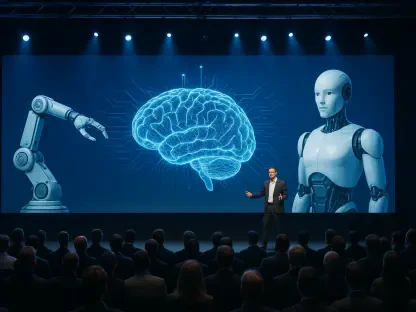
Central to the rigorous nature of the ALE is the Generalist Computer-Use Agent (GCUA) framework, which moves evaluation away from text prompts and toward holistic environmental interaction. This framework conceptualizes an AI agent through five functional layers—Brain, Eyes, Body, Hands, and Feet—each representing a specific capability necessary for digital work. The “Brain” handles reasoning, while the “Eyes” must interpret graphical user interfaces (GUIs) in real-time, often necessitating the processing of complex visual data from professional creative suites. This multi-modal approach forces the model to move beyond simple shell commands and actually “see” the buttons, sliders, and menus that a human user would navigate. By requiring the agent to operate within a sandboxed virtual machine, the benchmark tests whether the AI can coordinate its “Hands” to execute precise clicks and its “Feet” to manage the orchestration of long-term tasks across different applications effectively.
The complexity of the GCUA framework is best illustrated by the types of software the agents are expected to master, such as Siemens NX for 3D engineering or Adobe After Effects for motion graphics. Unlike standard coding benchmarks that rely on clear syntax and predictable outputs, these professional applications require a nuanced understanding of spatial relationships and visual feedback loops. An agent must be able to adjust a 3D mesh, check for structural integrity, and then export the file into a different format for stress testing, all while maintaining the original project specifications. The GCUA results revealed that many models possessed a functional “Brain” but lacked the visual-motor coordination required to use complex software effectively. This disconnect often led to “body” failures where the agent identified the correct action but could not execute it within the UI, or “eye” failures where it misinterpreted a status bar or error message.
Defining the Future of Professional Readiness
To ensure these functional measurements remain accurate over time, the ALE benchmark also addressed the significant hurdle of benchmark contamination and cheating through a rigorous “living benchmark” strategy. In the past, some models were found to have “solved” problems by accessing hidden answer keys within their training data rather than through genuine reasoning. ALE solved this by holding the majority of tasks in a private, rotating pool, preventing developers from training their models specifically on the test questions. This ensured the results were an honest reflection of a model’s problem-solving skills rather than its ability to recall specific examples. Furthermore, the benchmark replaced subjective “LLM-as-a-judge” grading with deterministic, code-based evaluation for nearly all tasks. Instead of a secondary AI guessing if a task was completed, the system checked the actual artifacts generated against an expert-provided ground truth to ensure absolute accuracy and integrity.
The launch of the Agents’ Last Exam represented a turning point where AI development transitioned from theoretical potential to measurable, industry-standard performance. In the months following the release of these results, organizations prioritized the development of specialized visual processors and enhanced long-term memory architectures to address the identified gaps. These advancements set the stage for a more mature relationship between human professionals and their digital counterparts, where the AI functioned less like a novelty and more like a dependable junior associate. Moving forward, the industry consensus shifted toward building “verification loops” where agents were trained to critique their own work and restart failing processes autonomously. This structural change in training methodologies started to bridge the gap between initial pass rates and the higher reliability required for commercial deployment, ultimately proving that functional perfection was the only metric that mattered.