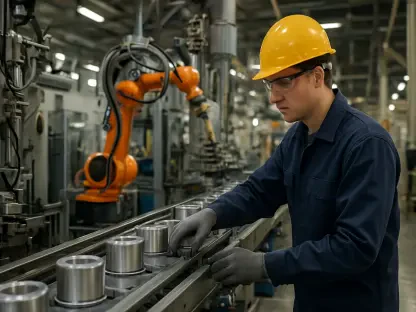

Strategic investments in smart robotic ecosystems are helping manufacturers stay competitive in a global market driven by the demand for sophisticated AI hardware. As the electronics sector navigates the complexities of ultra-high-density assembly, the traditional boundaries of automated inspection are being rewritten by the integration of deep learning and machine learning. In the current landscape of 2026, the push toward Industry 5.0 emphasizes a transition from basic automation to a paradigm of cognitive manufacturing, where machines possess the ability to interpret and act on data in real time. This shift is particularly evident in the way facilities are adopting self-healing production environments designed to mitigate human error and optimize throughput. By focusing on total quality assurance, leaders in vision inspection are providing the technological framework necessary to support the next generation of high-power computing components and complex semiconductor packaging solutions.
Precision Inspection: The Evolution of Optical and X-ray Systems
Establishing a robust first line of defense begins with the implementation of smart 3D solder paste inspection systems that utilize real-time adaptive control mechanisms. The V310Ai XL system exemplifies this by applying machine learning algorithms to verify solder deposition accuracy on large-format circuit boards, preventing potential defects before components are even placed. Moving further down the assembly line, automated optical inspection has evolved through the introduction of AI Smart Programming, which allows for a CAD-less setup and significantly reduces the time required to program new product variants. This level of autonomy is complemented by AI Auto Buy-off features that minimize the need for manual review, thereby accelerating the manufacturing cycle without sacrificing precision. These innovations collectively ensure that high-density assemblies meet the rigorous standards of modern hardware while maintaining the speed required for high-volume production in an increasingly fast-paced global electronics market.
As components become smaller and more layered, the challenge of inspecting hidden solder joints in advanced packaging like System-in-Package and Flip Chip has necessitated more sophisticated x-ray technology. The V810Ai QX1 system addresses this by employing high-resolution tomography combined with AI-based defect classification to detect micro-defects at a 2-micrometer scale. By leveraging deep learning models trained on vast datasets, the system can distinguish between acceptable process variations and critical flaws that might compromise product longevity. This capability is vital for industries where failure is not an option, such as automotive electronics or medical devices, where internal structural integrity is as important as surface-level placement. The integration of such high-fidelity imaging into the standard production workflow represents a major leap forward in non-destructive testing, allowing manufacturers to achieve 100 percent inspection coverage even for the most densely packed and complex architectures currently in production.
Smart Factory Integration: Data Analytics and Human-Centric AI
Modern manufacturing environments generate massive quantities of data, yet the true value lies in the ability to centralize and analyze this information to drive operational excellence. The V-ONE Manufacturing Intelligence Solution acts as the digital backbone of the smart factory, serving as a centralized control tower that aggregates performance metrics from every inspection point. This platform enables proactive predictive maintenance by identifying trends that suggest equipment drift or potential component failures before they result in downtime. By offering a live view of the production floor, manufacturers can transition from a reactive troubleshooting mindset to a model of continuous optimization and root cause analysis. This shift is fundamental to the principles of Industry 5.0, where the focus moves toward creating resilient ecosystems that can adapt to fluctuating market demands. The use of real-time data analytics ensures that every machine in the line is synchronized, reducing waste and maximizing the overall equipment effectiveness of the entire facility.
Beyond the automated line, addressing the human element remained a critical factor in achieving comprehensive quality control across the production lifecycle. The introduction of tools like the VisionSmartGuide utilized AI video processing to validate manual assembly steps in real-time, effectively preventing errors before they moved further downstream. Furthermore, the VisionXpert series secured full traceability through high-speed code reading in restricted spaces, ensuring that every unit could be tracked and verified throughout its entire journey. Manufacturers who adopted these interconnected smart robotic ecosystems successfully positioned themselves at the forefront of the industry by embracing a holistic approach to reliability. Looking ahead, the focus shifted toward deeper integration of these autonomous systems to foster a truly self-sufficient manufacturing environment. By investing in these intelligent frameworks today, organizations ensured that their production capabilities remained agile and robust enough to handle the sophisticated hardware requirements that defined the current technological era.