
The frantic rhythm of a developer’s keyboard often marks the desperate attempt to trace a ghost in the machine before a malfunctioning AI agent creates a PR disaster for a multi-million dollar enterprise. While autonomous agents were marketed as self-sustaining entities, the reality for most engineering teams has been a grueling cycle of manual log tracing and prompt tweaking. LangSmith Engine has emerged as a pivotal shift in this dynamic, moving beyond the passive observation of failures to a proactive model that identifies, diagnoses, and repairs errors autonomously. By automating the debugging loop, this platform addresses the primary bottleneck in the current AI development lifecycle: the exhaustion of human talent on repetitive maintenance.
The End of the Manual Troubleshooting Bottleneck in AI Development
The promise of autonomous AI agents often hits a wall the moment they encounter the sheer unpredictability of live production environments. Developers frequently find themselves trapped in a cycle of manually tracing complex execution paths to fix non-deterministic errors that were never caught in staging. LangSmith Engine enters this landscape as a transformative solution, moving beyond simple monitoring to provide a public beta capability that automates the detection and repair of agent failures. This shift allows engineering teams to scale their workflows without becoming overwhelmed by the compounding maintenance debt that typically follows the deployment of complex autonomous systems.
Furthermore, the transition from human-led debugging to machine-driven repair signifies a maturation of the entire sector. In previous years, a single hallucination might have required hours of forensic analysis; today, the engine streamlines this process into a background task. By offloading the “detect and fix” cycle to an automated layer, companies can redirect their most expensive engineering resources toward innovation and core product features. This efficiency gain is not merely a convenience but a strategic necessity for organizations aiming to maintain a competitive edge in an increasingly automated economy.
Why Observability Alone Is No Longer Enough for Enterprise AI
As enterprises transition from experimental “toy” agents to production-grade deployments, the complexity of managing these systems has outpaced traditional observability tools. While established platforms excel at flagging when something goes wrong, they typically leave the heavy lifting—finding the root cause and coding a fix—entirely to the developer. In a fast-paced market, the time-to-repair has become a critical metric for success. Any significant delay in fixing an agent that is exceeding its scope or providing inaccurate data can result in lost revenue and a total erosion of user trust.
LangSmith Engine addresses this urgency by bridging the gap between identifying a problem and implementing a verified solution. Modern enterprise AI requires more than just a dashboard of red lights; it requires a system capable of interpreting those signals and taking corrective action. As agents become more integrated into customer-facing roles, the tolerance for downtime or errant behavior reaches zero. Shifting toward a repair-oriented architecture ensures that systems remain resilient even when faced with edge cases that the original developers could not have anticipated during the initial training phase.
How LangSmith Engine Automates the Repair Pipeline
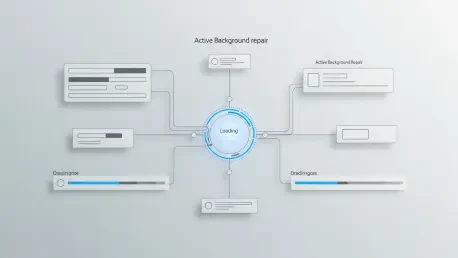
The automated repair pipeline begins with trigger-based failure detection, where the engine monitors production traces for specific anomalies. These triggers range from explicit code errors and negative user feedback to subtle “out-of-bounds” behaviors where an agent attempts tasks outside its defined remit. Once a failure is flagged, the system conducts a deep dive into the live codebase to identify the specific logic or prompt responsible for the deviation. This automated root-cause analysis replaces the traditional “needle in a haystack” search that defines manual debugging.
Following the diagnosis, the platform generates a suggested pull request and creates a custom evaluator to ensure the fix works across all relevant scenarios. This preventatitve measure ensures that a specific regression does not occur again in the future, effectively building a self-improving immune system for the software. By executing the entire troubleshooting chain autonomously, the engine narrows the human role down to a final review and approval. This “human-in-the-loop” model drastically reduces the engineering hours spent on maintenance while maintaining high standards of governance and safety.
The Strategic Importance of a Vendor-Neutral Layer
Industry experts emphasize that as model providers like OpenAI and Google build their own first-party observability tools, the need for an independent platform becomes even more pronounced. Relying solely on native tools often restricts developers to a single ecosystem, making it difficult to switch providers as model performance and pricing evolve toward new standards. A neutral layer like LangSmith provides a centralized governance view that model-specific tools cannot replicate, allowing for a more flexible approach to model selection and deployment.
Moreover, most modern enterprises employ a multi-model strategy, perhaps using GPT-4o for complex reasoning and Claude 3.5 Sonnet for creative tasks. Managing these disparate systems through a single, unified audit trail is essential for compliance and quality control. While first-party tools are excellent for early-stage prototyping, independent platforms are indispensable for long-term governance. They provide the necessary transparency to ensure that an organization’s AI stack remains robust and interchangeable, protecting the company from the risks of technological lock-in.
Implementing Automated Debugging in Your AI Stack
Integrating these automated capabilities starts with connecting existing tracing projects to the engine to begin high-fidelity data collection. Once the data flows, linking the relevant code repositories allows the system to generate pull requests and perform deep code analysis. This setup creates a foundation where the engine can understand the context of the application it is tasked with repairing. From there, teams define custom evaluation triggers to set specific parameters for what constitutes a failure, such as latency thresholds or prohibited response types tailored to their specific industry.
Finally, the most effective implementations integrate the engine’s output directly into existing CI/CD pipelines. This ensures that every automated fix undergoes a rigorous review by senior developers before it ever reaches the production environment. By establishing this structured approval workflow, organizations balanced the speed of automated repair with the safety of human oversight. The result was a more resilient AI infrastructure that could adapt to changing user needs and environmental conditions without the constant intervention of a manual maintenance crew. This proactive stance paved the way for a more sustainable and scalable approach to agentic automation.