


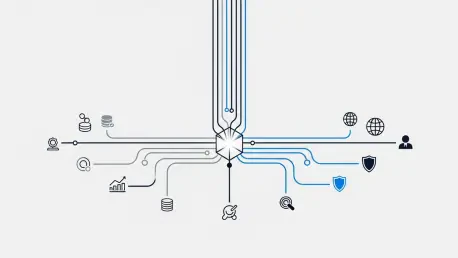

Large-scale corporate environments have recently transitioned from experimental artificial intelligence proofs of concept to integrated production systems that require absolute architectural resilience. The move away from isolated laboratory settings toward functional, high-traffic ecosystems has revealed that the underlying data path is the most common point of failure. Organizations are finding that while a model might perform admirably in a controlled test, it often falters when exposed to the erratic demands of real-world enterprise traffic.
This transition involves more than just increasing compute power; it requires a fundamental reimagining of how data reaches the inference engine. The focus has shifted from the complexity of the neural network itself to the robustness of the infrastructure that feeds it. As a result, the industry is witnessing a massive push to stabilize the connection between storage and compute, ensuring that artificial intelligence remains a reliable asset rather than a fragile experiment.
The Global State of Enterprise AI and Data Infrastructure
The current landscape of global business is defined by an urgent migration from experimental pilot programs to operational environments that can support thousands of concurrent users. This shift is particularly evident in sectors like finance and healthcare, where the reliability of Retrieval-Augmented Generation and agentic AI systems is now a top priority. Companies are no longer satisfied with simple demonstrations of capability and are instead demanding systems that can integrate seamlessly into their existing business workflows.
Technological influences such as high-density compute requirements are forcing a reevaluation of the role of data delivery layers. Infrastructure providers like F5 and Dell are playing a pivotal role in this evolution by offering integrated hardware and software solutions that manage the heavy flow of data required by modern models. This ecosystem is maturing rapidly, with a clear emphasis on creating a unified stack that can handle the massive throughput necessary for sustained AI operations across diverse industrial sectors.
Examining Market Dynamics and Technological Shifts
Emergent Trends in RAG and Agentic AI Architecture
Architectural trends are moving decisively away from simplistic, point-to-point connections that lack the intelligence to handle network congestion. Instead, enterprises are adopting robust, first-class infrastructure layers that provide a more structured approach to data movement. This change is fueled by a growing demand for real-time interactions, as users and internal systems now expect AI to provide contextually accurate responses with minimal latency across all touchpoints.
Programmable traffic management has become a cornerstone of this new architecture, allowing for precise control over how requests are routed and processed. Observability tools have also become essential, providing the visibility needed to identify bottlenecks before they impact the user experience. By making the infrastructure more intelligent and adaptable, organizations can support sophisticated agentic systems that operate with a level of autonomy and reliability that was previously impossible to achieve.
Quantifying the Economic Value of Production-Ready AI
The economics of artificial intelligence are closely tied to the efficiency of the data path, particularly regarding the utilization of expensive graphics processing units. Stalled pipelines, which occur when compute nodes wait for data from storage, result in significant financial losses and inflated unit economics. To maintain a competitive edge, businesses must ensure that their high-cost hardware assets are constantly engaged in productive work rather than sitting idle due to delivery delays.
Growth projections for enterprise spending indicate a significant shift toward the infrastructure necessary for scaling beyond the pilot phase. Market share is increasingly determined by the reliability and uptime of these services, as enterprise clients prioritize stability over experimental features. A forward-looking investment strategy now emphasizes the underlying network and storage layers, recognizing that these components are the primary drivers of return on investment in the modern AI era.
Overcoming Technical Barriers and Infrastructure Fragility
Simpler architectures that rely on direct client-to-storage connections are proving to be major liabilities in production environments. Under the strain of concurrent traffic, these point-to-point links often break, leading to service outages and degraded performance. The lack of a middle layer to manage these connections means that even a minor failure in a single storage node can cause a cascading effect that disrupts the entire inference pipeline for the organization.
To mitigate these risks, engineers are building failure-aware systems that can detect and respond to localized disruptions in real time. Dynamic routing and automated failover have become standard requirements for any system intended to operate at scale. These technologies ensure that data is always directed toward healthy storage clusters, effectively shielding the compute layer from the inherent instabilities of a large-scale network and preventing costly idle time for hardware resources.
The shift from best-case scenario design to worst-case scenario engineering is the hallmark of a mature AI operation. This approach assumes that failures will happen and builds the necessary redundancy and intelligence into the infrastructure to handle them without manual intervention. By prioritizing resilience, enterprises can ensure that their AI services remain functional and efficient even during periods of extreme load or unexpected network degradation across their global data centers.
Managing Compliance and Security in Heterogeneous Environments
The regulatory landscape is becoming more complex, with a specific focus on ensuring the integrity of data and preventing the generation of incorrect or biased information. Grounded context is a vital tool for meeting these compliance requirements, as it ensures that AI responses are based on verified, internal data sources. This requires a highly secure and reliable data delivery path that can guarantee the accuracy and provenance of every piece of information fed into the model.
Security challenges are amplified when scaling AI across hybrid and multicloud environments where controls are often inconsistent and fragmented. Application Delivery Controllers serve as a critical defense mechanism in these scenarios, protecting internal storage clusters from accidental or malicious overloads. By implementing unified security policies across all cloud providers, organizations can maintain a consistent posture and protect their sensitive data from a wide range of emerging threats.
Unified observability is necessary for maintaining rigorous data governance and meeting the strict standards set by global regulators. It allows for a comprehensive view of how data is accessed and moved throughout the organization, providing a clear audit trail for compliance purposes. This level of oversight is fundamental for building trust with both customers and regulators, ensuring that the expansion of AI capabilities does not come at the cost of security or integrity.
Forecasting the Next Wave of AI Innovation and Global Expansion
The next major wave of innovation will likely involve closed-loop feedback systems that allow infrastructure to optimize its own performance based on the specific requirements of the workload. These self-optimizing systems will use sophisticated algorithms to adjust routing and resource allocation in real time, further reducing latency and improving efficiency. This move toward autonomous management will fundamentally change how IT departments operate, making them more agile and responsive to business needs.
Global economic factors and the availability of specialized hardware will continue to influence the speed at which different regions scale their AI capabilities. While some markets may experience rapid growth, others might face constraints due to hardware shortages or different regulatory approaches. However, as hybrid-cloud technology matures, the barriers to entry will lower, making enterprise-grade AI more accessible to a wider range of businesses and accelerating global adoption of the technology.
Reliability and accessibility will be the primary metrics for success as AI becomes a standard component of business operations. The maturation of the cloud ecosystem will allow organizations to deploy their models closer to the end-user, reducing latency and improving the overall experience. This global expansion will depend on the continued development of reliable, programmable infrastructure that can support the diverse needs of a truly interconnected and intelligent business landscape.
Synthesis of Findings and Strategic Roadmap for Scaling
The findings of this report indicated that the most significant difference between successful production environments and perpetual pilots was the focus on infrastructure resilience. Leading organizations moved away from fragile architectures and invested heavily in programmable data delivery layers that offered high levels of observability. This strategic shift allowed them to maintain high GPU utilization and deliver consistent, high-quality experiences to their users while keeping operational costs within sustainable limits.
Leaders who prioritized data path engineering were able to navigate the complexities of multicloud environments more effectively than those who focused solely on model performance. The roadmap for scaling demonstrated that failure-aware systems and automated traffic management were the primary tools used to achieve long-term reliability. By treating infrastructure as a first-class priority, these organizations secured their position in the market and created a stable foundation for the next generation of AI-driven innovation.
The future of global business looked increasingly dependent on the ability to turn artificial intelligence into a fundamental and reliable utility. Successful teams shifted their organizational mindset toward resilience and sustainable economics, recognizing that the era of experimentation had ended. These actions prepared them for a world where AI was not just a competitive advantage but a necessary pillar of the global economy, driven by robust infrastructure and a relentless focus on operational excellence.







