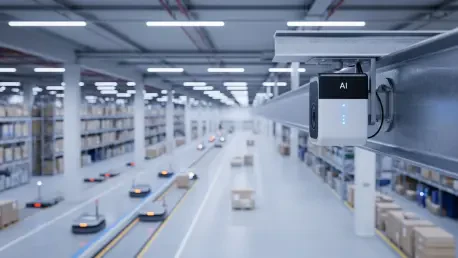

The rapid disintegration of the traditional centralized surveillance architecture has reached a critical tipping point as modern organizations systematically dismantle their server rooms in favor of distributed edge intelligence. For decades, the industry relied on the Network Video Recorder as the undisputed anchor of security operations, but this legacy hardware is now widely recognized as a form of technological debt that drains financial resources through excessive energy consumption and physical space requirements. By shifting the primary computational workload directly to the silicon within the camera housing, facilities are effectively eliminating the latency and bandwidth bottlenecks that once hampered real-time response capabilities. This transition represents a fundamental departure from the reactive “record and review” cycle that defined the previous era of security, replacing it with a model where every individual sensor acts as an autonomous decision-making engine. This shift enables a level of operational agility that was previously impossible to achieve with a centralized system.
The Transformation of Surveillance from Security to Intelligence
This fundamental evolution in hardware placement is driving a significant shift in how corporate leadership views the value proposition of visual data within their broader operational frameworks. Rather than treating surveillance as a necessary but passive insurance policy, modern enterprises are deploying edge-capable cameras to generate high-fidelity behavioral insights that directly influence the bottom line. For instance, large-scale logistics providers are currently utilizing on-device inference to monitor vehicle loading patterns and autonomously alert floor managers to potential bottlenecks before they result in detention fees or supply chain delays. This proactive approach relies on the camera’s ability to process complex visual metadata locally, ensuring that only relevant, actionable signals are transmitted across the network. By reducing the reliance on massive data streams sent to a central hub, organizations can maintain high-speed operations without the need for the constant infrastructure upgrades that characterized the early years of the digital video transition.
Moreover, the shift toward localized processing allows for a level of granular analysis that centralized servers often struggle to manage at scale without incurring prohibitive costs. In the competitive retail sector, grocery chains are leveraging these edge-AI sensors to conduct real-time shelf analysis, identifying out-of-stock items or misplaced products with a degree of precision that manual audits cannot match. This capability transforms the camera from a security tool into a sophisticated business optimization asset that informs seasonal resets and product placement strategies based on actual consumer movement patterns. Because the intelligence resides on the device itself, these systems can adapt to specific environmental variables and unique operational challenges without requiring a complete overhaul of the backend software. This localized adaptability ensures that businesses remain responsive to shifting market demands while simultaneously reducing the total cost of ownership by eliminating the expensive maintenance and cooling needs associated with traditional server racks.
Navigating the Technical Shift in Systems Integration
The migration to edge-based intelligence necessitates a comprehensive reevaluation of the technical skills required to design and maintain modern surveillance networks. Systems integrators, who once focused primarily on physical cabling and the configuration of centralized recording software, are now pivoting toward roles that resemble data science and network architecture. Success in this new landscape requires a deep understanding of model selection and the ability to optimize on-device algorithms for specific lighting conditions or operational environments. While the reduction in bandwidth usage is a clear advantage, it introduces a new set of complexities regarding the remote deployment of firmware updates and the management of decentralized security patches. Ensuring that thousands of individual edge devices remain synchronized and secure requires a robust orchestration layer that can handle the complexity of distributed computing. This transition is forcing a consolidation in the market, as vendors who cannot provide seamless remote management tools are quickly being sidelined.
Building on this foundation, the industry is moving toward a hybrid model that balances the immediate responsiveness of on-device inference with the long-term analytical power of the cloud. While the “brains” of the operation have moved to the camera for real-time detection, the cloud remains the essential repository for deep trend analysis and historical benchmarking. This synergy allows organizations to achieve a localized reaction time measured in milliseconds while still maintaining a global view of their operations across multiple sites. The challenge for modern stakeholders lies in establishing interoperability standards that allow different brands of edge-AI hardware to communicate effectively within a single management ecosystem. As the market matures, the focus is shifting away from raw hardware specifications like resolution or storage capacity and moving toward the quality of the insights produced. Businesses are increasingly prioritizing hardware that offers a clear return on investment through quantifiable improvements in safety, compliance, and general operational efficiency, rather than just simple video recording.
Practical Steps for Achieving Sustainable Operational Growth
The transition to edge intelligence provided a clear roadmap for organizations seeking to modernize their infrastructure while maximizing their capital expenditures. Stakeholders moved beyond the pilot phase by identifying specific operational pain points where real-time visual data could provide immediate relief, such as reducing shrinkage in retail or enhancing safety protocols in heavy manufacturing environments. By prioritizing the deployment of devices with open architectures, technical leaders ensured that their systems remained flexible enough to incorporate new AI models as they were developed throughout the year. This strategy allowed companies to avoid the pitfalls of proprietary lock-in, which had previously plagued the centralized recorder market. Decision-makers also invested heavily in training for their technical teams, ensuring that the personnel responsible for these systems were equipped to handle the nuances of decentralized data management and on-device model optimization. This shift in human capital proved just as vital as the hardware transition in securing long-term success.
Ultimately, the focus of successful implementations shifted toward the measurable outcomes derived from visual metadata rather than the mere accumulation of video footage. Organizations that flourished during this period were those that integrated their edge-AI data directly into their existing enterprise resource planning systems, creating a unified flow of information that informed every level of the business. By treating the camera as a sophisticated data sensor, these companies achieved significant reductions in operational costs and improvements in employee safety. Moving forward, the industry was expected to continue refining these distributed models, focusing on enhancing the energy efficiency of on-device processors and expanding the complexity of the analytical tasks performed at the edge. The era of the centralized video recorder was effectively closed, replaced by a more agile, intelligent, and cost-effective paradigm that empowered businesses to act on their data in the moment it was created. Future considerations now center on the ethical use of this localized data and the continued advancement of autonomous system health monitoring.