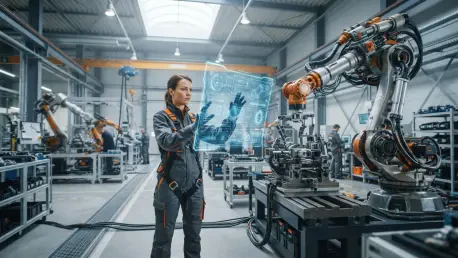

Industrial sectors such as welding and automotive production are increasingly moving away from manual instruction to adopt Augmented Reality systems that guide workers with precision digital overlays. This fundamental shift marks a departure from traditional pedagogy, where novices spent weeks shadowing experienced veterans or deciphering dense technical manuals. In the high-stakes environment of 2026, the demand for precision and rapid onboarding has necessitated a more immersive approach. By integrating digital simulations into the training cycle, manufacturers are effectively bridging the gap between theoretical knowledge and practical execution. This transition is not merely a matter of convenience; it is a strategic response to a tightening labor market and the increasing complexity of modern machinery. As the global workforce evolves, these digital tools provide a scalable, safe environment where errors result in a software reset rather than expensive equipment damage or physical injury. The emergence of these technologies represents a broader movement toward the smart factory, where every aspect of production, including human skill acquisition, is optimized through data-driven insights and interactive interfaces. This evolution ensures that the industrial workforce remains resilient and capable of meeting the demands of highly specialized manufacturing processes.
The Technological Landscape of Industrial Training
Currently, the training frameworks within the manufacturing sector are overwhelmingly dominated by Augmented Reality and Virtual Reality. AR serves as a vital bridge between digital data and the physical world, allowing workers to see holographic instructions mapped directly onto the engine blocks or circuit boards they are servicing. This real-time feedback loop drastically reduces the cognitive effort required to translate a 2D diagram into a 3D action. Meanwhile, Virtual Reality offers a fully synthetic environment where trainees can practice high-risk procedures, such as handling hazardous chemicals or operating heavy foundry equipment, without any actual danger. While these two modalities lead the market, more specialized formats like Mixed Reality and serious games remain relatively untapped. The industry is currently observing a period of experimentation where the boundaries between these technologies are blurring, yet the focus remains largely on procedural task mastery. This concentration on specific hardware suggests that while the industry has embraced the technical side of digital training, it is still refining the logistical application across the broader manufacturing ecosystem. These platforms allow for repeatable, high-fidelity practice that was previously impossible without significant investment in physical prototypes and dedicated training facilities.
Collaborative Development: The Value of Co-Design
A recurring challenge identified in current deployments is the expert-designed nature of most training platforms. Historically, these systems have been developed in isolation by software engineers and technical researchers who, despite their coding proficiency, often lack firsthand experience on a noisy, fast-paced factory floor. This disconnect can lead to software interfaces that are aesthetically pleasing but practically cumbersome or irrelevant to the daily pressures faced by workers. To rectify this, forward-thinking organizations are moving toward a co-design methodology. This approach involves embedding developers within production teams to observe workflows and solicit direct feedback from the veterans who understand the nuances of the machinery. By involving the end-user in the iterative development of training modules, companies ensure that the resulting technology is authentic to the job. This collaborative process not only improves the usability of the tools but also fosters a sense of ownership among the workforce, making them more receptive to the transition from legacy training methods to advanced digital solutions. Ultimately, co-design transforms the training tool from a management-imposed requirement into a valuable asset that genuinely simplifies the worker’s daily tasks.
Sector-Specific Adoption and High-Tech Integration
The application of immersive technology now spans an impressively wide array of sub-sectors, ranging from the intricate world of medical device fabrication to the massive scale of marine shipbuilding. High-tech production areas like additive manufacturing and electric motor assembly have become the primary testing grounds for these tools, largely due to the high costs of materials and the precision required in these fields. Interestingly, while the technology is highly versatile, much of the existing research and implementation remains focused on general industrial settings. This leaves specific niches, such as the food and beverage industry or high-speed textile production, as fertile ground for future expansion. These sectors present unique challenges, such as hygiene requirements and rapid-fire decision-making, which could benefit significantly from the structured guidance provided by immersive overlays. As hardware becomes more rugged and software more adaptable, the sector-blind nature of these tools is expected to vanish, giving way to highly specialized training modules tailored to the unique physical and safety constraints of every manufacturing vertical. This specialization will allow for even greater efficiency gains as the software begins to account for the specific environmental variables of each factory floor.
Operational Focus: Assembly and Maintenance Tasks
Within these diverse industries, assembly remains the most prominent operational domain for immersive integration. This is largely because assembly tasks are inherently sequential and benefit immensely from step-by-step visual guidance. By using virtual overlays to lead a trainee through the correct order of components, companies can ensure that the golden standard of assembly is maintained regardless of the instructor’s personal habits. Beyond simple component placement, these systems are increasingly being used for complex tool operation and preventative maintenance. For example, a technician can use an AR headset to identify a faulty valve and receive immediate, animated instructions on how to bleed the line safely. This focus on assembly-heavy roles highlights a core strength of the technology: its ability to break down complex, multi-stage mechanical processes into manageable, interactive chunks. This modular approach to learning reduces the initial intimidation factor for new hires and allows for self-paced mastery, ensuring that every worker reaches a baseline proficiency level before they ever touch live production equipment. The ability to simulate rare or critical failures also prepares maintenance crews for high-pressure scenarios without risking an actual system shutdown.
Performance Metrics: Speed and Efficiency Gains
The empirical data supporting the shift toward immersive training is increasingly undeniable, with recent studies highlighting dramatic improvements in nearly every relevant performance metric. One of the most striking benefits is the sheer acceleration of the learning curve; some VR-based programs have demonstrated that trainees can complete complex assembly sequences up to 72% faster than those who relied on traditional classroom instruction or physical mock-ups. This speed does not come at the cost of quality. In fact, error rates in high-precision tasks, such as wiring electrical panels or installing intricate aerospace components, have seen reductions of over 90% in some environments. This level of accuracy is achieved because the digital system provides instantaneous feedback, correcting a mistake the moment it happens rather than allowing a bad habit to form. By tightening the feedback loop, manufacturers can produce highly competent operators in a fraction of the time, which is essential for maintaining production quotas in an era defined by rapid product cycles and frequent design changes. These gains directly translate to a higher return on investment, as the time saved in training is immediately funneled back into active production, bolstering the overall throughput of the facility.
Knowledge Retention and Enhanced Safety Protocols
Beyond the immediate metrics of speed and accuracy, immersive technologies are proving to be superior tools for long-term knowledge retention and safety awareness. Traditional safety briefings often struggle to convey the true gravity of industrial hazards, but a VR simulation can place a worker in the middle of a simulated foundry failure or a high-voltage arc flash incident. This consequence-free exposure to danger builds a level of hazard awareness and reflexive troubleshooting that a textbook simply cannot replicate. For instance, workers trained in robotic welding through immersive platforms have shown significantly higher information recall months after the initial training session compared to their traditionally trained peers. The sensory-rich environment of a headset engages multiple learning pathways, making the experience more memorable and the skills more durable. This enhanced retention is particularly valuable for low-frequency, high-risk tasks that a worker might only perform once or twice a year but must execute perfectly to ensure plant safety. By providing a safe space to fail and learn, manufacturers are cultivating a more confident and safety-conscious workforce that is better prepared for the unpredictable realities of industrial work.
Addressing the Barrier: Workforce Readiness and Cost
Despite the clear operational advantages, the path to universal adoption is blocked by several significant hurdles, chief among them being workforce readiness and technological literacy. While younger generations may find digital interfaces intuitive, a significant portion of the current manufacturing workforce requires preliminary training just to operate the headsets and navigate the software menus. This pre-training adds a layer of complexity to implementation that many companies overlook. Additionally, the financial barrier remains steep for small-to-medium enterprises. While the cost of hardware has decreased, the expense of developing high-quality, custom-tailored software remains a major investment. For many smaller shops, the return on investment is difficult to calculate in the short term, leading to a hesitation that allows larger, better-funded competitors to pull ahead. Overcoming this divide will require more standardized, off-the-shelf training modules that can be easily customized for different factory layouts, making the technology accessible to businesses that lack a dedicated software development budget. Addressing these economic and educational gaps is crucial for ensuring that the benefits of immersive training are shared across the entire manufacturing sector.
Human Factors: Ergonomics and Privacy Concerns
Beyond the technical and financial constraints, there are critical physical and psychological factors that must be addressed to ensure long-term success. Physical discomfort, such as neck strain from heavy headsets or motion sickness caused by latency issues, remains a primary complaint among workers who are expected to use these systems for extended periods. On the psychological side, the data-tracking capabilities of these platforms have introduced new anxieties regarding worker privacy. Because modern immersive systems can track eye movements, hand precision, and even heart rates in real-time, some employees fear that this data will be used for punitive performance evaluations rather than for educational support. This fear of constant surveillance can lead to resistance and a lack of engagement with the training material. To build a sustainable digital culture, manufacturers must be transparent about how data is collected and used, ensuring that the focus remains on personal development and safety rather than just monitoring. Addressing these human-centric concerns is as important as the technological refinement of the software itself, as the ultimate efficacy of any training tool depends on the willingness of the human operator to embrace it fully.
Strategic Integration: Task-Driven Training Frameworks
To fully realize the potential of immersive technology, industrial leaders must move away from a tech-first mentality—where gadgets are purchased simply for the sake of modernization—and instead adopt a task-driven alignment strategy. This involves a rigorous analysis of each role within the factory to determine which specific training tool is most appropriate for the required skills. For example, a serious game might be the most effective way to teach logistical coordination or sustainability management, while a high-fidelity VR simulation is better suited for technical welding certifications. Strategic investments in hybrid models, which combine gamified elements with personalized, AI-driven learning paths, are expected to become the new standard. These systems can adapt the difficulty of a task in real-time based on the trainee’s performance, ensuring that they are constantly challenged without becoming overwhelmed. This personalized approach not only boosts engagement but also ensures that the training is efficient, focusing only on the areas where the specific worker needs improvement. By aligning technology with the unique cognitive and physical demands of each task, manufacturers can create a more agile and highly skilled workforce prepared for any challenge.
Future Implementation: Sustainable Human-Centric Growth
The ultimate success of immersive technology in the manufacturing sector depended on a holistic integration of human factors and technical precision. Organizations that prioritized the alignment of software with the actual needs of the shop floor found that they could achieve a level of operational agility that was previously impossible. The conclusion of recent industrial reviews suggested that the most effective next steps involved the formalization of co-design partnerships between educational institutions and technology developers. These collaborations ensured that the training modules remained grounded in pedagogical best practices while pushing the boundaries of what was possible in a digital environment. Furthermore, the industry recognized the need for longitudinal research to track the career-long benefits of these initial training interventions. By focusing on data transparency and the ergonomic comfort of the workforce, manufacturers successfully created a tech-enabled ecosystem that empowered employees. This proactive approach transformed training from a static, one-time event into a continuous, data-informed process that drove long-term industrial efficiency and safety. Moving forward, the industry must remain committed to these human-centric principles to ensure that the digital transformation of the workforce remains both productive and sustainable.