


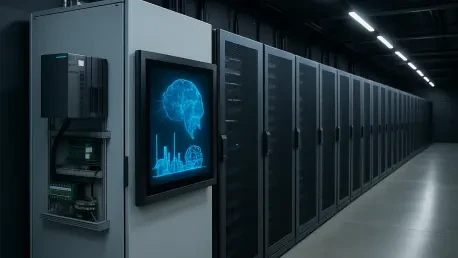

The convergence of artificial intelligence and physical manufacturing has reached a critical inflection point where the demand for real-time data processing often exceeds the capabilities of traditional factory floor infrastructure. As manufacturers transition from experimental pilot programs to full-scale automated operations, the need for a robust bridge between information technology and operational technology has never been more pressing. Siemens has addressed this systemic challenge by launching its enhanced Industrial Automation DataCenter, a solution that shifts away from custom-configured silos toward a turnkey, AI-ready platform. This evolution ensures that the complex requirements of high-performance computing are no longer an obstacle to industrial digitalization. By providing a standardized infrastructure, the platform allows enterprises to integrate advanced software and hardware from a single source, effectively removing the logistical friction that has historically slowed the adoption of cutting-edge edge computing in modern factories.
Bridging the Gap in Industrial AI Deployment
Strategic Synergy: The Partnership Ecosystem
The strategic expansion of this data center environment is supported by a powerful collaboration between Siemens, NVIDIA, and Palo Alto Networks, representing a unique fusion of automation, accelerated computing, and cybersecurity. This partnership addresses the multifaceted nature of modern production where data is not just collected but must be processed with extreme speed and secured against increasingly sophisticated digital threats. Siemens brings its deep domain expertise in factory floor operations, ensuring that the technology remains relevant to the physical realities of manufacturing. Meanwhile, NVIDIA provides the specialized hardware necessary to run intensive artificial intelligence models at the edge, where every millisecond counts for process control. Palo Alto Networks completes the trifecta by embedding intelligence into the security layer, creating a defense mechanism that evolves alongside the production environment to maintain total operational integrity.
This collaborative framework enables a unified processing environment that is specifically tuned for the rigors of the factory floor while maintaining the agility of the cloud. By pooling these diverse resources, the three companies have redefined the standard for industrial infrastructure, moving beyond simple connectivity to create a platform capable of handling the “new industrial revolution.” The consensus among these industry leaders is that true digitalization requires a seamless marriage of processing power and protective measures. This approach ensures that as manufacturers deploy more sensors and autonomous systems, the underlying infrastructure can scale accordingly without introducing bottlenecks. The result is a robust ecosystem where high-performance computing becomes as reliable and accessible as the electricity powering the assembly line, allowing for a level of innovation that was previously reserved for specialized research and development labs.
Overcoming Complexity: The Turnkey Advantage
Historically, the deployment of high-performance computing in industrial settings was marred by significant engineering hurdles, often requiring upwards of eighty hours of manual labor for installation and system integration. This labor-intensive process created a massive barrier to entry, particularly for firms that lacked specialized in-house IT expertise capable of navigating the complexities of operational technology environments. The new Industrial Automation DataCenter eliminates these inefficiencies by arriving on-site as a pre-installed and pre-configured unit that has undergone rigorous testing within a controlled factory environment. This approach allows manufacturers to bypass the traditional trial-and-error phases of deployment, moving directly from delivery to operation with minimal disruption. By streamlining the engineering lifecycle, companies can now realize the benefits of real-time insights and optimized production cycles in a fraction of the time.
Beyond the reduction in manual labor, the turnkey nature of the platform mitigates the inherent risks associated with custom-built industrial systems, such as compatibility issues and unforeseen downtime. By delivering a system that is already validated for industrial use, Siemens provides a reliable foundation that functions immediately upon connection. This predictability is vital for high-stakes manufacturing environments where even minor technical glitches can lead to cascading failures and significant financial losses. The standardized nature of the solution also simplifies future upgrades and expansions, as every component is part of a verified stack. Consequently, manufacturers can focus their resources on developing unique AI applications and improving their production efficiency rather than struggling with the underlying hardware. This shift toward “out-of-the-box” industrial computing marks a significant milestone in the democratization of advanced manufacturing technologies.
Advanced Hardware and Security Integration
Computational Power: Accelerating the Edge
At the heart of this technological shift are the NVIDIA Graphic Processing Units and BlueField Data Processing Units, which provide the raw power and specialized logic required for modern factory AI. The GPUs are specifically tasked with executing latency-sensitive applications such as high-speed visual inspection and predictive maintenance, where the system must identify anomalies in real time to prevent machine failure. This capability transforms the factory floor into an intelligent ecosystem that can self-optimize without constant human intervention. Conversely, the BlueField DPUs introduce a fundamental change in how network traffic is managed within the industrial stack. By offloading networking and security tasks from the main processing units, the DPUs ensure that the massive data throughput required for AI does not interfere with the deterministic performance of automation controllers. This separation of duties is essential for maintaining the high precision required in heavy industry.
The implementation of these advanced chips allows for the processing of massive datasets directly where the data is generated, reducing the need to transmit sensitive information to remote cloud servers. This localized processing not only improves response times but also enhances data privacy and reduces bandwidth costs. For example, a high-speed assembly line can now utilize complex neural networks to monitor product quality in real time, making split-second decisions that prevent defects from moving further down the line. The architecture is designed to handle the environmental stresses of a factory, such as temperature fluctuations and electromagnetic interference, ensuring that the high-performance components remain stable under demanding conditions. By bringing data center-class performance to the machine level, Siemens has enabled a new tier of operational intelligence that bridges the gap between digital models and physical production reality.
Zero-Trust Security: Protecting the Core
As industrial facilities become more interconnected, the attack surface for potential cyber threats expands exponentially, necessitating a shift toward more sophisticated, AI-powered protection strategies. To meet this challenge, the system incorporates Palo Alto Networks’ Prisma AIRS technology, which creates a dedicated security layer optimized for the protection of sensitive intellectual property and proprietary manufacturing data. This integration allows for the implementation of a zero-trust architecture, where every data packet and connection is verified in real time before it can access critical industrial assets. Furthermore, the inclusion of an industrial demilitarized zone establishes a secure boundary between the corporate IT world and the sensitive production network. This logical separation is vital for preventing the lateral movement of threats, ensuring that an issue in the back office does not compromise the safety or productivity of the assembly line during operations.
The security framework goes beyond traditional firewalls by utilizing machine learning to identify behavioral anomalies that might indicate a sophisticated cyberattack or internal breach. By constantly learning the “normal” traffic patterns of the industrial network, the system can flag deviations instantly, allowing for rapid intervention before any damage occurs. This proactive stance is critical in an era where industrial espionage and ransomware target manufacturing hubs with increasing frequency. The combination of hardware-level isolation via DPUs and software-level intelligence via Prisma AIRS creates a multi-layered defense that is both robust and flexible. This ensures that as new threats emerge, the security stack can be updated without requiring a complete overhaul of the physical infrastructure. Ultimately, this integrated approach provides the peace of mind necessary for manufacturers to embrace the full potential of cloud connectivity and remote data analysis.
Sustaining Operations Through Lifecycle Services
Non-Intrusive Monitoring: Real-Time Resilience
A significant innovation within the cybersecurity framework of the platform is the ability to conduct non-intrusive security analysis, a feat made possible by the synergy between Prisma AIRS and the BlueField units. Traditional security measures often sit directly in the data path, which can introduce microscopic delays that are catastrophic for synchronized manufacturing processes where timing is everything. To avoid this, the system analyzes high-fidelity copies of network traffic in a parallel environment, identifying malicious activity without ever slowing down the primary production stream. This allows manufacturers to maintain the highest levels of security without sacrificing the operational speed that defines their competitive advantage. It ensures that threat detection is a silent, constant presence that supports rather than hinders the flow of materials and data. This methodology represents a new standard for operational technology security in a high-speed world.
By utilizing this out-of-band monitoring approach, the system provides total visibility into the network without risking the stability of the industrial control systems. Engineers can observe every interaction between devices on the shop floor, identifying potential bottlenecks or unauthorized access attempts in real time. This level of transparency is essential for compliance with evolving industrial regulations and for maintaining the integrity of the digital twin models used in modern production planning. Moreover, the data collected during this monitoring process can be used to further optimize network performance, ensuring that the infrastructure is always operating at its peak efficiency. The integration of these tools into a single platform means that security is no longer an afterthought or a separate project, but a fundamental component of the factory’s operating system, providing a resilient environment for the next generation of industrial applications.
Lifecycle Management: Future-Proofing Production
Recognizing that many industrial organizations face a persistent shortage of specialized technical staff, Siemens has introduced comprehensive Remote Industrial Operations Services to manage the data center lifecycle. These services provide around-the-clock monitoring from a dedicated Security Operations Center, where experts oversee both the IT and OT health of the infrastructure to ensure peak performance. Proactive preventive maintenance is a core component of this offering, with regular software updates and hardware health checks performed to mitigate the risk of unplanned downtime before it occurs. This management model is designed to be inclusive, extending its reach beyond Siemens-branded hardware to cover third-party components within the broader manufacturing environment. By providing this holistic support, the system allows plant managers to focus on their core production goals while a team of experts handles the underlying digital complexity of the automation stack.
The successful implementation of this AI-ready infrastructure provided a blueprint for how future-oriented manufacturing sites can scale their digitalization efforts without compromising security or reliability. It was observed that companies which moved toward these standardized platforms achieved a more resilient posture against market fluctuations by leveraging real-time data for rapid decision-making. To replicate this success, industrial leaders should prioritize the consolidation of their IT and OT silos by adopting turnkey solutions that integrate security directly into the hardware architecture. Establishing a continuous monitoring protocol and investing in remote lifecycle management allowed firms to bypass the technical debt associated with fragmented systems. Moving forward, the focus shifted toward utilizing these high-performance environments to support even more complex autonomous agents on the factory floor, ensuring that every production node remained a secure and intelligent participant in the global supply chain.







