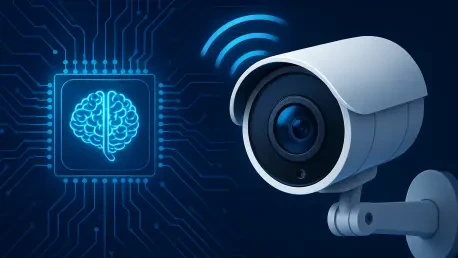

The transition from passive video recording to active cognitive interpretation marks the most significant leap in optical technology since the invention of the digital sensor itself. In this new landscape, cameras are no longer just “eyes” that dump raw data into a storage bin; they have become decentralized “brains” capable of making split-second decisions without any human intervention. This evolution is spearheaded by the Neural Processing Unit (NPU), a specialized silicon architecture designed to mimic the neural pathways of the human brain. As global infrastructure becomes more complex, the demand for decentralized intelligence has pushed these processors to the forefront of the imaging industry. By moving computational tasks from the cloud directly to the device, NPUs are solving the long-standing issues of latency and data overload that have historically hindered the large-scale deployment of truly smart systems. Consequently, the industry is witnessing a total paradigm shift where understanding a scene is just as important as capturing it, leading to a future where vision and intelligence are inseparable.
The Economic Trajectory of Intelligent Vision
Market Growth: Analyzing the Valuation Surge
The financial landscape of the smart camera sector is currently experiencing a period of unprecedented expansion, driven by the rapid commoditization of high-performance AI chips. As of early 2026, the global market valuation for NPU-enabled smart cameras has reached approximately $11.28 billion, reflecting a steady adoption curve across both enterprise and consumer sectors. However, this is merely the baseline for a much larger movement; industry forecasts suggest that by 2035, the market will balloon to an estimated $76.79 billion. This projected growth indicates a compound annual growth rate of over 11%, signaling that intelligent vision is no longer a niche luxury but a foundational requirement for modern digital frameworks. This massive influx of capital is being funneled into the development of more efficient neural architectures that can perform complex calculations with minimal power draw, making them ideal for battery-operated security devices.
Investment patterns also reveal a shift toward specialized hardware that can handle the heavy lifting of deep learning models at the point of ingestion. For the period spanning 2026 to 2035, analysts expect that the cost of NPU integration will continue to drop, allowing mid-range and even entry-level cameras to feature advanced detection capabilities. This democratization of technology means that smaller businesses and residential users will soon have access to the same level of analytical power previously reserved for high-security government installations. The expansion is further supported by a robust supply chain that has prioritized the manufacturing of AI-specific semiconductors. As these processors become more integrated into the standard imaging pipeline, the distinction between a traditional camera and an intelligent sensor will likely disappear entirely. This economic momentum provides the necessary resources for manufacturers to experiment with more sophisticated algorithms, further fueling the cycle of innovation and adoption.
Drivers of Global Adoption: Smart Cities and Industrial Trends
The current push toward urban modernization is perhaps the most significant catalyst for the widespread implementation of NPU-based vision systems. Local governments across the globe are integrating these cameras into “smart city” infrastructures to manage everything from traffic flow to public safety. For instance, intelligent traffic cameras can now analyze vehicle patterns in real-time to adjust signal timings, reducing congestion and lowering carbon emissions without needing to send massive video files to a central server. This immediate local processing allows for a more responsive urban environment that can adapt to changing conditions in seconds. Furthermore, the integration of these systems into public transportation networks helps in monitoring passenger density and identifying potential safety hazards before they escalate. The ability of an NPU to filter through hours of mundane footage and highlight only the relevant events makes it an indispensable tool for modern municipal management.
Beyond the urban landscape, the Fourth Industrial Revolution is creating a high demand for vision systems that can keep pace with high-speed manufacturing lines. In modern factory environments, smart cameras equipped with NPUs are utilized for real-time defect detection and predictive maintenance. These systems can identify microscopic anomalies in products as they move along a conveyor belt, ensuring quality control at a level of precision that human inspectors cannot match. Moreover, these cameras play a vital role in workplace safety by monitoring the proximity of human workers to heavy machinery and automatically halting operations if a hazardous situation is detected. The consumer market also plays a pivotal role, as homeowners increasingly seek security solutions that can differentiate between a delivery person and a stray animal. This granular level of detection reduces the “notification fatigue” caused by false alarms, making smart security more practical and effective for the average user in 2026 and beyond.
The Shift to Edge Autonomy
Enhancing Processing Power: The Rise of Edge AI
The fundamental innovation driving this transformation is the relocation of the “intelligence” from remote data centers to the physical device itself. Historically, smart cameras acted as simple data conduits, streaming high-definition video to the cloud where external servers would perform the necessary analysis. This old model was plagued by high latency, as the time required to upload data, process it, and send a response back could be several seconds long. By integrating an NPU directly into the camera’s circuitry, the device can now handle facial recognition, behavioral analysis, and object tracking locally. This capability, often referred to as Edge AI, ensures that the most critical functions are performed instantaneously. This is particularly vital in 2026 for applications like autonomous drone navigation or emergency response systems, where every millisecond counts and a delayed reaction could result in a failure of the entire operation.
Furthermore, the hardware architecture of an NPU is specifically optimized for the parallel processing tasks required by neural networks, making them far more efficient than traditional CPUs or even GPUs for these specific workloads. While a general-purpose processor might struggle to manage multiple AI models simultaneously, a modern NPU can run complex detection, classification, and segmentation tasks in a single pass. This efficiency also translates to lower power consumption, which is a critical factor for the growing fleet of wireless, solar-powered, or battery-operated cameras being deployed in remote locations. By reducing the reliance on external computational power, these devices gain a level of autonomy that allows them to function reliably even in areas with poor or intermittent internet connectivity. This shift toward edge autonomy represents a move away from centralized control toward a more resilient and distributed intelligence network that can scale infinitely.
Prioritizing Privacy and Performance: The Decentralized Advantage
As data privacy regulations become increasingly stringent around the world, the ability to process video locally has become a major competitive advantage for camera manufacturers. By analyzing footage on the device, NPU-equipped cameras can extract necessary metadata—such as the number of people in a room or the license plate of a car—and then discard the raw video feed immediately. This approach ensures that sensitive visual information never leaves the premises, significantly reducing the risk of data breaches or unauthorized access to private livestreams. This “privacy by design” philosophy is essential for deployments in sensitive areas like hospitals, schools, and private residences, where the continuous uploading of video to the cloud would be a major liability. In 2026, the move toward edge processing is not just a technical preference but a strategic necessity for legal compliance and consumer trust.
In addition to privacy benefits, the reduction in bandwidth consumption offered by edge processing is a significant relief for global network infrastructures. As the number of connected cameras grows into the billions, the internet simply cannot sustain the traffic required to stream 4K or 8K video from every device for cloud-based analysis. NPUs solve this problem by acting as a sophisticated filter; the camera only uses network resources when it detects an event of genuine importance. This “exception-based” reporting model allows organizations to deploy much larger camera networks without needing to invest in massive bandwidth upgrades. Moreover, the lack of reliance on the cloud means that the system remains functional even if the primary network goes down. This operational continuity is critical for security-critical environments where a loss of connection could leave a facility vulnerable. The result is a more robust, private, and efficient ecosystem that can handle the massive data demands of the modern world.
Innovation Leaders and Technological Synergy
Hardware and Infrastructure Pioneers: Pushing the Limits
The competitive landscape of the smart camera market is currently defined by a group of industry giants and specialized firms that are rapidly iterating on NPU technology. Surveillance leaders such as Hikvision and Dahua have solidified their positions by developing proprietary deep learning platforms that focus on intelligent threat detection. Their latest systems are designed to ignore environmental “noise”—such as moving shadows, heavy rain, or animals—and focus exclusively on human and vehicle-related events. This level of precision is made possible by the high-performance NPUs that can run multiple detection layers in real-time. Similarly, companies like Axis Communications and Bosch Security Systems are tailoring their solutions for high-stakes enterprise and infrastructure environments. These firms utilize advanced on-device analytics to provide predictive alerts, allowing security teams to intervene before an incident actually occurs rather than just reviewing the footage afterward.
On the imaging side, Sony and Samsung are revolutionizing the market by integrating AI capabilities directly into the image sensors themselves. This hardware-level synergy allows the sensor to begin processing visual data before it even reaches the main processor, further reducing latency and power consumption. Sony’s latest vision sensors are designed for ultra-low power operation, making them perfect for mobile devices and smart home applications that need to be “always-on” without draining the battery. Meanwhile, Samsung’s AI vision processing technologies are focusing on enhancing image quality in challenging lighting conditions, using neural networks to reconstruct details in near-darkness. These innovations at the sensor level are creating a new generation of “intelligent pixels” that can interpret light and motion with unprecedented clarity. The collaboration between sensor technology and neural processing is ensuring that the cameras of 2026 are more capable and more versatile than anything seen in the previous decade.
The Role of Silicon Powerhouses: The Brains of the Operation
While the camera manufacturers provide the final product, the true engines of this revolution are the semiconductor companies that design the underlying silicon. NVIDIA has maintained its leadership position with its Jetson platform, which has become the industry standard for autonomous robotics and multi-camera deployments. Their recent focus on bringing generative AI to the edge allows smart cameras to not only identify objects but also to describe complex scenes in natural language and predict the future movements of objects within the frame. This level of sophisticated reasoning is essential for the next generation of autonomous vehicles and industrial robots that must navigate unpredictable environments. By providing the software toolkits and hardware needed to run these models, silicon powerhouses are democratizing access to high-level AI, allowing even smaller developers to build highly advanced vision applications.
Other major players like Intel and Ambarella are focusing on making high-performance AI more accessible and energy-efficient. Intel’s OpenVINO toolkit is designed to optimize AI workloads across a variety of hardware configurations, making it easier for enterprises to upgrade their existing camera systems with NPU capabilities. Ambarella, on the other hand, specializes in low-power System-on-a-Chip designs that are specifically optimized for the constraints of battery-operated devices and automotive systems. These chips are essential for the rollout of 5G-connected cameras, which will allow for a seamless ecosystem where multiple devices can share data and intelligence in real-time. As 5G networks become more ubiquitous through 2026 and beyond, the synergy between high-speed connectivity and on-device NPUs will enable a “vision mesh” where cameras work together to provide a comprehensive, 360-degree understanding of entire cities or industrial complexes.
The integration of Neural Processing Units into the smart camera ecosystem has fundamentally changed the relationship between data collection and data interpretation. In the past, the industry focused on increasing resolution and storage capacity, but the focus has now shifted toward localized intelligence and autonomous decision-making. These advancements were driven by a clear need for lower latency, higher data privacy, and more efficient use of network resources. As these technologies matured, they provided the foundation for a more responsive and secure digital infrastructure that could handle the complexities of modern urban and industrial life. The transition from simple video recording to sophisticated scene understanding allowed organizations to move from a reactive posture to a proactive one, where technology could anticipate needs and prevent incidents in real-time.
Looking forward, the next logical step involves the deeper integration of multi-modal AI, where cameras will combine visual data with other sensor inputs like audio and thermal imaging to create a more holistic view of the environment. Stakeholders should prioritize investments in “edge-first” architectures and focus on developing custom neural models that are optimized for specific industrial or municipal tasks. As generative AI continues to migrate to the edge, the ability of cameras to provide real-time verbal descriptions and predictive analysis will become a standard requirement. The industry must also continue to refine its approach to data ethics, ensuring that as these systems become more powerful, they remain transparent and accountable to the public. Ultimately, the successful deployment of NPU-enabled systems will depend on a balanced approach that values both technological performance and the protection of individual privacy.