
Apple’s leadership transition has put the spotlight back on the company’s AI strategy. The appointment of John Ternus as CEO places a seasoned hardware leader at the helm, raising questions about the balance between devices, services, and AI partnerships. The most pressing question? How these upcoming changes will create value for organizations that build on Apple’s ecosystem, and whether this can disrupt competitors.
One likely path forward is a measured, hardware‑anchored AI strategy that leans on external models while Apple advances silicon and system design.
This article examines how the appointment could shape Apple’s AI course across product planning, investment expectations, and user experience. It also evaluates whether a devices‑first plan can still create outsized influence in the AI era.
Apple’s AI Strategy, Then and Now
Instead of building a leading foundation model, Apple’s recent AI approach has favored platform control and distribution while integrating third‑party models. The company introduced Apple Intelligence in 2024 with features such as image generation, text rewrites, and notification summaries, and integrated ChatGPT to meet user demand for advanced assistants. This allowed Apple to expand AI utility on iPhone without committing to outsized data‑center spending. Moreover, it made privacy its key differentiator in the AI race.
This approach remains evident in Apple’s reliance on external models for near‑term capability and speed. Apple is counting on Google’s Gemini to power AI features, with a major Siri upgrade expected later this year. The tactical benefit is faster model iteration without losing control of the on‑device experience.
The strategy is also tied to Apple’s services economics and install‑base leverage. CNBC reports that when users upgrade to paid versions of ChatGPT, Claude, and other AI services on iOS, Apple receives a cut, which strengthens the case for routing top models through its platform. This services dynamic complements Apple’s hardware base and encourages a multi‑model environment.
A central pillar of Apple’s plan is the long‑term shift of heavier workloads onto device chips. With heftier AI tasks expected to run on a chip inside the phone within a few years, investing in AI‑capable silicon creates additional benefits down the line.The biggest impact is expected in product planning and user experience. Teams can expect priority to be placed on latency, privacy, and battery impact as on‑device AI matures, with selective cloud calls for complex tasks. That operational model becomes the backdrop for interpreting what the leadership change signals.
Entering the John Ternus Era: What this Leadership Choice Means
As a 25‑year Apple veteran who led engineering across iPhone, iPad, and Mac, John Ternus’s background suggests that devices will remain Apple’s primary AI delivery vehicle.
Timothy Hubbard, assistant professor of management at the University of Notre Dame, agrees: “By choosing a hardware leader in John Ternus, Apple may be signaling that it still believes the future of AI will run through tightly integrated devices, not just software.”
The leadership choice aligns with Apple’s history of winning through system‑level design. To some extent, this could be why some industry experts do not perceive Ternus as a risk-taking visionary. According to Patrick Moorhead, the CEO of tech research firm Moor Insights & Strategy, “What the streets should expect is tight operational execution, margin management, and incremental product iteration.”
A measured, device‑anchored delivery of AI features may be the best option given operational headwinds, including an intricate global supply chain and soaring memory prices driven by AI demand. CNBC also points to geopolitical uncertainty, the latest of which is the war in the Middle East, as well as Apple’s sustained reliance on China for manufacturing.
Still, investor expectations remain high and oriented toward disciplined execution and near‑term proof points on the AI front. In other words, there will be a great deal of pressure on Ternus to deliver success as soon as possible.
Forrester Research analyst Thomas Husson summed it up like this: “The challenge for the new CEO is really to make sure Apple is able to crack AI as the new user interface and reinvent human-machine interaction.” Meeting that challenge will not be easy, but Apple and their CEO seem to have a strategy in place.
Devices First, AI Forward: The Core Elements of Apple’s AI Strategy
Hardware remains Apple’s economic engine and the logical anchor for an AI strategy built on distribution and integration.
Business Insider reports that hardware represented roughly 80% of Apple’s $143.8 billion in revenue in the December quarter, reinforcing that devices drive the profit pool. This context strengthens the rationale to compete on device‑level AI that enhances value across iPhone and adjacent categories.
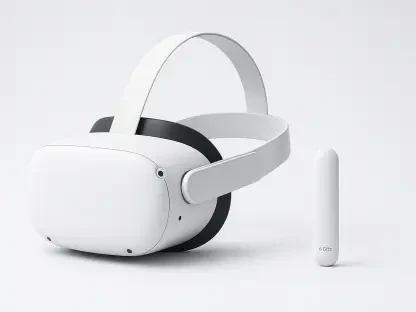
Analysts expect Apple to push hardware innovation across new form factors that center on AI experiences. As noted by Gil Luria, a tech analyst at D.A. Davidson, “that means that a lot of the path ahead has to do with hardware innovation. So glasses, pins, folding phones. At some point, a less expensive virtual reality device than Vision Pro.”
Apple is indeed accelerating the development of AI wearables built around Siri, including smart glasses, a pendant, and AirPods with cameras, while also preparing a foldable phone. These moves concentrate AI where Apple can differentiate through industrial design, sensors, and custom silicon.
As previously mentioned, Siri’s AI enhancement is the near‑term litmus test for Apple’s AI progress and the bridge between partner models and device integration. Apple is counting on Google’s Gemini to power AI features, including a major Siri upgrade expected later this year after a delay, while Fortune notes the Google partnership aims to make Siri more conversational and versatile.
The showcase at the Worldwide Developers Conference (WWDC) in June this year will be pivotal for Apple to demonstrate faster, more capable, and context‑aware Siri interactions. It will also provide more concrete confirmation of the company’s overall AI strategy.
Ben Wood, chief analyst at CCS Insight, remarked that “a big strategic question is how far Apple will invest in building its own AI platform versus relying on other companies’ models and platforms.”
That question sits at the center of both investor narratives and partner planning. Sustained advantage will require a thoughtful balance between privacy and personalization as on‑device AI matures. Apple must decide whether to maintain a strict privacy‑first stance or lean into AI‑driven personalization, while services monetization benefits from users who subscribe to premium AI tools on iOS.
Conclusion
Apple’s AI strategy under John Ternus is sure to remain a hotly debated topic across multiple industries. So far, several experts highlight a hardware-first plan that leverages model partnerships and on‑device processing.
It’s clear that Apple’s advantage lies in controlling the full stack from silicon to software, then routing leading third‑party models through experiences that feel native to iPhone users.
Three key milestones will indicate traction over the next year. First, the quality and reliability of the Gemini‑powered Siri upgrade, and how well it handles complex tasks with low friction. Second, credible evidence that heavier workloads are moving to devices, with gains in speed, privacy, and battery life that users can notice. Third, signs of a reinvigorated hardware roadmap, including AI wearables.
If Apple executes to these markers, integrated devices can remain the center of gravity in the AI era.