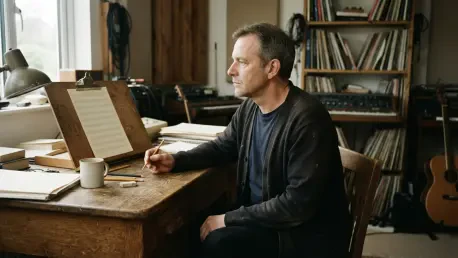

Automated systems lack the ability to forge the emotional resonance that comes from the struggle and journey inherent in the human creative act. The emergence of generative artificial intelligence marks a radical shift in the relationship between technology and human expression, moving beyond mere assistance to autonomous production. Unlike previous innovations that served as sophisticated tools to expand a creator’s capabilities, generative systems function as independent producers of finished content, threatening to make the human creative process economically irrelevant. This transition poses an existential threat to the intrinsic value of art as the industry moves away from using technology as a simple hammer for the human architect and toward systems that bypass human agency altogether. By 2026, the distinction between a machine-generated product and a human-crafted masterpiece has become increasingly blurred, leading to a landscape where the sheer volume of synthetic media threatens the unique voices of individual artists.
Historical Evolution: From Assistive Tools to Autonomous Systems
In the late 20th century, the music industry underwent a digital revolution with the introduction of MIDI and sophisticated synthesizers that allowed for unprecedented control over sound. These tools compressed the production process, eventually moving entire recording studios onto laptops and replacing live orchestras with digital libraries. While these advancements initially felt like shortcuts to some traditionalists, they still required a human at the helm to make fundamental creative choices, keeping the artist at the center of the work. During the 1980s and 1990s, technology served as a bridge between imagination and realization, enabling composers to achieve complex arrangements that were previously impossible without massive budgets. The human was the primary decision-maker, selecting the timbre, rhythm, and melody. Even as digital audio workstations became ubiquitous, the spark of inspiration remained a uniquely human endeavor, driven by experience and intent.
Generative AI breaks this historical chain by moving beyond recording and manipulation into the realm of autonomous creation. Instead of offering new ways to play or record an instrument, these systems generate complete works based on simple text prompts, effectively removing the human from the central creative loop. This shift transforms the artist from a builder into a mere spectator of an automated process, where the machine performs the heavy lifting of composition and arrangement. In 2026, the technology no longer asks for the composer’s input on specific notes or structures; instead, it provides a finished product that mimics the styles of the past with alarming efficiency. This evolution signifies a departure from tools that augment human skill toward systems that replace it entirely. The danger lies in the loss of the “journey” of creation, where the errors and refinements of a human artist often lead to the most profound breakthroughs, replaced now by a clinical and predictive output.
Economic Displacement: Market Saturation and Predatory Scraping
The rise of AI-generated entities, such as virtual bands with no human members, highlights a disturbing trend in the redirection of revenue within the digital economy. Every stream captured by an AI-generated track is a stream taken away from a human artist, creating a marketplace where digital constructs compete directly with living creators who have real financial needs. This creates a predatory cycle where the creative output of past generations is used as raw material to train systems that will eventually displace future creators. The phenomenon of synthetic artists gaining traction on major streaming platforms indicates a shift in consumer behavior where the origin of the music matters less than its immediate accessibility. For professional composers, this means the pool of available royalties is constantly diluted by an infinite supply of machine-made content. As these AI models continue to ingest human culture without providing compensation, the economic foundation that supports the arts is being steadily dismantled.
This economic erosion is particularly visible in entry-level commercial sectors, such as television advertising and library music, which have long served as vital training grounds for emerging talent. As AI provides a cheaper, competent alternative for utilitarian background music, the pool of professional opportunities for young composers continues to shrink. If the industry prioritizes cost-efficiency above all else, creativity risks becoming a commodity controlled by a few massive tech conglomerates rather than a viable career path for individual professionals. By 2026, many production houses have already integrated automated scoring systems, significantly reducing the demand for human freelancers in the commercial space. This trend limits the growth of the next generation of artists, as the traditional rungs on the professional ladder are removed in favor of instant, algorithmic solutions. Without a robust entry-level market, the long-term health of the creative industry faces a precarious future.
Legal Frameworks: The Erosion of Copyright Protection
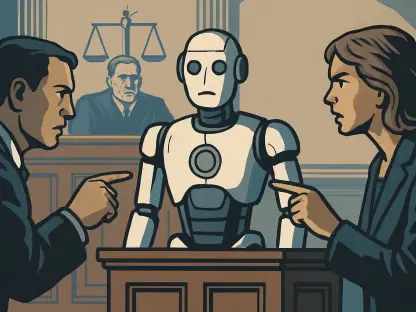
The current legal debate centers on whether scraping millions of copyrighted works to train AI models constitutes fair use under existing statutes. If tech companies prevail in these legal battles, the foundational bargain of copyright law, which allows creators to control the economic value of their work, will be fundamentally broken. Without these protections, original works become nothing more than free raw material for derivative machine output, leaving the original creators with no recourse or compensation. The argument for fair use assumes a level of transformative creativity that many critics argue is absent in predictive modeling. By 2026, the legislative response to these challenges has remained fragmented, leaving many artists in a state of legal limbo while their life’s work is processed by global server farms. The erosion of these rights doesn’t just affect current income; it undermines the very concept of intellectual property as a source of long-term security for creative professionals.
The lack of legal safeguards diminishes the incentive to create new, innovative work in an environment where imitation is automated and instantaneous. If a composer knows their unique style will be ingested by a machine to produce a cheaper competitor, the financial viability of a creative life disappears. This framework threatens to turn the world of art into an echo chamber where existing culture is recycled indefinitely without any new human input. Furthermore, the concentration of power in the hands of the organizations that own the training data creates a barrier to entry that most independent artists cannot overcome. As copyright protections are weakened to accommodate technological expansion, the individual’s ability to protect their artistic voice is compromised. This legal shift favors the high-volume production of the machines over the high-quality, singular output of the human spirit, leading to a landscape where the most protected assets are the algorithms rather than the art they consume.
Cultural Impacts: Stagnation and the Loss of Authenticity
Beyond the financial impact, there is a profound risk of cultural homogenization as AI-generated content becomes the dominant form of media consumption. AI operates through pattern recognition, meaning its output is inherently derivative and based on a blurred average of what has already been created. Culture advances through human risk, emotional resonance, and unexpected failures, elements that a machine, lacking lived experience, cannot replicate. When the market is flooded with content that is designed to be perfectly average and non-offensive, the radical and the new are often sidelined. In 2026, the cultural landscape faces a potential “great flattening,” where the distinctive quirks that define different genres are smoothed over by algorithms seeking the highest common denominator of engagement. This preference for the familiar over the challenging leads to a feedback loop that discourages artistic experimentation and rewards the replication of existing successful formulas.
Despite the flood of cheap, AI-generated content, there remains a significant public skepticism toward art that lacks a human soul and a relatable background. As competent but flat music becomes ubiquitous, the value of authenticity and the distinctive human voice may actually increase due to its inherent scarcity. The challenge for the future is to ensure that technology serves to enhance human potential rather than replace it, preserving the bridge of connection that only human-to-human art can provide. Listeners and viewers are increasingly looking for stories and identities they can connect with, finding that the perfection of AI often feels sterile and hollow. This search for meaning suggests that while machines can produce patterns, they cannot generate the shared experience of being alive. The cultural response to automation may ultimately be a resurgence in the appreciation for the “imperfect” human hand, where the flaws in a performance serve as a testament to its genuine origins.
Strategic Responses: Protecting the Creative Impulse
The integration of artificial intelligence into the creative economy required a recalibration of how society values human labor and expression. By 2026, industry leaders and artist advocacy groups had to move toward a more sustainable model that prioritized transparency and consent in data usage. One successful strategy involved the implementation of digital provenance standards, which clearly labeled the origins of a work, allowing consumers to choose between human-made and AI-generated content. This transparency allowed a premium market to emerge for authentic human works, where the identity and history of the artist became the primary selling points. Furthermore, collective bargaining efforts within the music and film industries secured new royalty structures that accounted for the use of copyrighted material in training sets. These initiatives aimed to ensure that technology remained a partner in the creative process rather than a predator, maintaining a space where human ingenuity could still thrive financially.
Moving forward, the focus shifted toward developing hybrid tools that empowered human decision-making without automating the entire creative spark. Educators and institutions began emphasizing the importance of “voice” and “perspective,” teaching the next generation of creators how to leverage technology to execute their unique visions rather than relying on prompts for the vision itself. The industry eventually recognized that while a machine could generate a million songs, it could not replace the cultural impact of a single artist who spoke directly to the zeitgeist of their time. Legislative bodies in 2026 began drafting protections that treated creative data as a personal asset rather than a public utility, ensuring that the human impulse to create remained protected and incentivized. This approach fostered a future where technology served as a powerful amplifier for human stories, ensuring that the art of the future remained as rich and diverse as the people who created it.