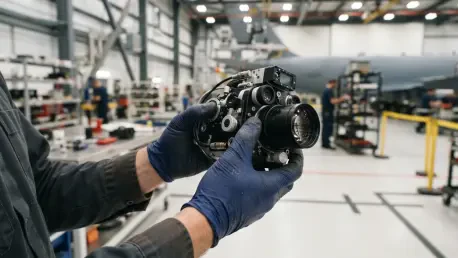

Defense sectors are utilizing immersive technology to supplement real-world experience for scenarios that are otherwise too expensive or dangerous to recreate. This targeted application marks a broader transformation within the enterprise market for Extended Reality, moving away from a fascination with technical specifications toward a focus on systemic integration and operational maturity. For years, the conversation surrounding augmented, virtual, and mixed reality was dominated by hardware metrics such as resolution and field of view. Today, the narrative has fundamentally shifted. The success of a deployment is now measured by how well devices align with existing business frameworks, long-term support models, and established procurement channels. This transition represents the end of the experimental era and the beginning of a real-world phase where the value of a headset is determined by the infrastructure and policy surrounding it. As organizations move beyond speculative adoption, they are prioritizing practical utility and professional standards over the novelty of the technology, signaling a more disciplined and rigorous approach to digital transformation across various global industries.
Addressing Regulatory Scrutiny: The Privacy Mandate
A major catalyst in the maturation of enterprise Extended Reality is the increasing involvement of federal regulators and lawmakers regarding data privacy. Recent inquiries from United States Senators into the privacy controls of AI-integrated wearables highlight a growing concern over how these devices capture, store, and process sensitive information. For business leaders, this regulatory attention shifts wearable technology from a mere technical innovation to a significant piece of the enterprise risk management puzzle. This is particularly critical in environments like healthcare facilities or high-security research labs where unauthorized data capture could lead to severe legal and ethical liabilities. The current scrutiny ensures that vendors can no longer treat privacy as an afterthought, forcing them to provide transparent documentation on data flow and storage before any corporate pilot programs can be authorized.
To effectively mitigate these risks, organizations must establish robust workplace policies before deploying hardware at scale. These frameworks need to address specific red zones where recording is strictly prohibited, define clear consent protocols for employees and visitors, and establish comprehensive data governance rules. The central challenge for vendors and buyers alike is building a long-term foundation of trust; without absolute transparency regarding how data is used to train artificial intelligence models or who owns captured media, large-scale adoption is likely to remain stalled in the pilot phase. Strategic buyers are now demanding features like physically removable cameras or local-only processing to ensure that sensitive company data never leaves the internal network. This shift toward privacy-first design is becoming a prerequisite for any hardware manufacturer hoping to secure a foothold in the professional and government sectors.
High-Stakes Training: The Defense Sector Blueprint
The defense sector has emerged as a blueprint for high-consequence Extended Reality applications, emphasizing simulation for scenarios that are too dangerous or expensive to recreate in a physical setting. Recent pilot programs, such as those conducted by the Finnish Defence Forces, demonstrate that immersive technology is most effective when it supplements real-world experience rather than attempting to replace it entirely. This simulated rehearsal model allows personnel to achieve a baseline of proficiency in a safe and controlled environment before they ever touch live equipment or engage in high-risk maneuvers. By focusing on niche tasks like counter-unmanned aircraft system identification, the defense industry proves that the most valuable use cases for virtual tools are those that directly improve human performance in critical situations while significantly reducing the logistical costs of traditional training.
For the broader enterprise market, including utilities, logistics, and heavy manufacturing, the lesson is that the strongest business case for immersive tools lies in repeatable, high-risk practice. By focusing on specific performance goals rather than general immersive experiences, companies can justify their investment through increased safety and a noticeable reduction in equipment downtime. This strategic application of the technology ensures that training is not just a novel activity but a measurable improvement to operational readiness. Organizations are now developing standardized simulation protocols that can be deployed across global sites, ensuring that a technician in one region receives the exact same high-quality instruction as their counterpart on another continent. This consistency is vital for maintaining safety standards in industries where a single error can lead to catastrophic financial or physical consequences.
Measuring Real-World Impact: The Quest for ROI
One of the most significant hurdles to widespread adoption has been the historical lack of independent data regarding Return on Investment. For several years, performance claims often originated from the vendors themselves, leading to a healthy level of skepticism among corporate stakeholders and financial officers. However, current biopharma pilots backed by government agencies are shifting toward rigorous scientific validation. By using independent evaluators to compare immersive training against traditional onboarding methods, the industry is finally generating the hard evidence required for significant capital investment. These studies are moving beyond anecdotal success stories, focusing instead on objective data points that demonstrate exactly how much more efficient a workforce becomes when provided with spatial learning tools during their initial qualification period.
These rigorous evaluations focus on specific outcomes such as time to proficiency, knowledge retention over several months, and the reduction of operational downtime during equipment handovers. In highly regulated industries like pharmaceutical manufacturing, the goal is to prove that immersive systems can shorten the qualification window for new hires without compromising safety or quality standards. As these empirical results become more available between 2026 and 2028, they provide a clear roadmap for other sectors to transition from small-scale experiments to full-scale manufacturing deployments. Decision-makers are increasingly ignoring the marketing hype and demanding data-backed reports that prove a reduction in human error rates. This shift toward quantitative metrics is essential for moving the technology from the innovation budget to the operational budget, where it can be sustained as a permanent part of the corporate infrastructure.
Professional Distribution: Shifting Procurement Models
The way Extended Reality hardware reaches the frontline is also undergoing a fundamental change, as seen in new distribution agreements with security and facilities integrators. Moving away from the innovation lab model, where devices were often purchased as one-off experiments, immersive hardware is increasingly treated as essential building technology or standard operational equipment. When devices are purchased through established service partners, the support model shifts; the integrator, who already understands the facility’s network architecture and safety protocols, becomes the primary point of contact for maintenance and troubleshooting. This professionalization of the supply chain ensures that devices are properly managed, updated, and integrated into the broader corporate network, rather than sitting idle in a drawer due to a lack of technical support or software compatibility.
This shift helps bypass traditional IT friction points but introduces new questions regarding data boundaries and professional responsibility. Organizations must be diligent in defining who owns the video feeds generated by these devices and how hardware is managed when employees depart the company. By integrating immersive tools into existing communication and data ecosystems through specialized vertical channels, businesses can accelerate adoption while ensuring the technology remains a functional tool rather than a siloed experiment. This approach has led to the creation of managed service models where companies pay for the utility of the hardware and software as a single package, including ongoing training and technical support. Such models reduce the initial financial burden on the enterprise and ensure that the technology stays current with the latest security patches and feature updates.
Strategic Implementation: Navigating Validated Deployments
The transition toward operational maturity demonstrated that success in the enterprise sector required a delicate blend of technical capability and legal oversight. Decision-makers successfully navigated the complexities of 2026 by evaluating vendors based on their data handling protocols rather than their visual aesthetics. Organizations that flourished during this period established clear boundaries for artificial intelligence usage and prioritized the security of their internal proprietary data above all else. This disciplined approach ensured that immersive technology was not just a passing trend, but a foundational pillar of modern industrial training and operations. Leaders discovered that by integrating these tools into existing safety frameworks, they could achieve higher retention rates and faster onboarding cycles for their technical staff.
The transition period highlighted the necessity of data sovereignty and the role of independent validation in securing long-term funding. Companies that prioritized scientific metrics over vendor claims were able to scale their operations efficiently, proving that the era of the unmeasured pilot had effectively ended. By the end of this development cycle, the industry reached a consensus that hardware was merely a vessel for high-quality, secure, and validated content. These steps ensured a sustainable path forward, where the focus remained on human performance and safety. Moving forward into 2027 and beyond, the focus will likely remain on refining these validated models to ensure they can withstand the rigors of global deployment. The transition from novelty to utility was completed by those who understood that technology must serve the business, rather than the business serving the technology.