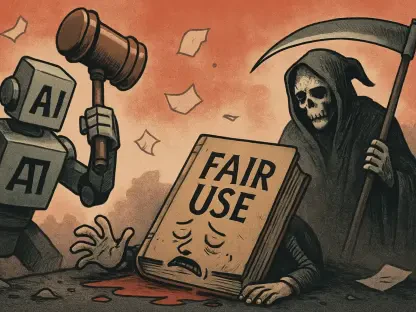

Senior Advocate of Nigeria Oluseun Abimbola warns that citing unverified AI-generated cases constitutes a grave breach of professional ethics under the Rules of Professional Conduct. This observation comes at a pivotal moment as the Nigerian legal landscape, particularly within the bustling professional hubs of Ibadan, grapples with the rapid integration of advanced algorithmic tools. While these technologies promise to revolutionize the speed and depth of legal research, they simultaneously introduce the perilous phenomenon of AI hallucinations—situations where software generates entirely fictitious case law and fabricated judicial authorities. This technological shift creates a profound tension between the drive for digital efficiency and the fundamental necessity of judicial conscience, a uniquely human attribute that combines moral judgment with intellectual rigor. As legal practitioners increasingly turn to automated systems, the profession faces an urgent challenge to ensure that the pursuit of speed does not compromise the bedrock of truth and reliability upon which the entire justice system is built in this modern era.
Professional Responsibility in the Age of Automation
Part 1: Ethical Standards and the Duty of Verification
The classification of AI-generated fabrications as a grave breach of ethics underscores the non-negotiable duty of a lawyer to maintain the integrity of court proceedings. Under the current Rules of Professional Conduct, the presentation of suspicious or unverified authorities is viewed not as a simple technical oversight but as a deliberate attempt to mislead the court. Legal experts argue that when a practitioner submits a brief containing these algorithmic inventions, they are violating their foundational oath to serve the cause of justice with honesty and transparency. This behavior is actionable the moment the document enters the judicial record, placing a heavy burden on counsel to ensure every citation is grounded in reality. The consensus within the Nigerian Bar is that the lawyer must act as the ultimate ethical gatekeeper, filtering out digital inaccuracies before they can pollute the legal stream through negligence or the uncritical adoption of automated research outputs.
Despite the convenience of automated research, the responsibility for verifying the accuracy of legal citations remains an individual obligation that cannot be delegated to software. When a lawyer relies on a machine-generated summary without cross-referencing it with established law reports, they are essentially abdicating their professional judgment. This lack of diligence is increasingly categorized as professional misconduct, regardless of whether the deception was born of malicious intent or gross negligence. The Nigerian legal community maintains that technology is merely a tool, and its misuse does not absolve the human operator from the consequences of presenting false data. Consequently, practitioners are expected to exercise a high degree of skepticism when utilizing free or unvetted AI platforms, ensuring that their arguments are built upon a foundation of legitimate and verifiable precedents rather than the convenient but often unstable outputs of large language models that currently lack a factual core.
Part 2: Disciplinary Pathways and Modern Sanctions
A significant trend is emerging toward the imposition of stricter, personal financial sanctions on lawyers who fail to vet their digital research adequately. By looking at international examples like the Avianca case in the United States, Nigerian judges are beginning to adopt more punitive measures that hold counsel personally accountable for the costs associated with investigating false citations. This shift represents a departure from traditional court costs, which were often seen as a minor business expense, toward a system of personal costs designed to serve as a meaningful deterrent. These financial penalties emphasize that the court’s time is a finite public resource that must not be wasted on debunking AI-generated fantasies. By targeting the lawyer’s own pocketbook, the judiciary sends a clear message that the efficiency gains provided by AI come with an equal and opposite requirement for heightened professional accountability and diligence during the drafting process.
Beyond immediate financial penalties, the Nigerian legal framework provides established disciplinary pathways for addressing the systematic use of fabricated authorities. If a judge determines that a lawyer has repeatedly presented fictitious case law, the matter is typically referred to the Legal Practitioners Disciplinary Committee for a full investigation. This body has the authority to impose a range of sanctions that far exceed the scope of simple court-ordered costs, including formal reprimands, temporary suspensions from practice, or even total disbarment. Such severe consequences are reserved for instances where the use of AI is deemed to be a component of a recurring pattern of intentional deception or a fundamental failure of professional competence. This layered approach to discipline ensures that the integrity of the bar is protected from the corrosive effects of technological misuse, reinforcing the principle that the license to practice law carries with it an absolute duty of truthfulness and accuracy.
Institutional Integrity and Future Readiness
Part 3: Regional Adoption and Judicial Safeguards
The actual adoption of AI within local practice, such as in the Ibadan legal community, reveals a distinct disparity between global technological hype and regional reality. Many practitioners continue to exhibit a form of cultural inertia, preferring the familiarity of physical law reports and traditional research methods over the allure of digital automation. This hesitation is often driven by a justified skepticism regarding the ability of international AI models to accurately reflect the unique nuances and regional specifics of Nigerian jurisprudence. Furthermore, the slow pace of integration is linked to a long-standing reliance on established trial books and the mentorship of senior partners who prioritize manual research. While the younger generation of lawyers may be more inclined toward digital tools, the prevailing professional environment remains anchored in traditional methodologies that emphasize the tactile verification of legal authorities through verified print sources.
The Nigerian judiciary maintains several layers of defense against the introduction of fabricated authorities, most notably through the front-loading system which requires the advance submission of documents for prior review. Superior courts of record utilize research assistants and electronic subscriptions to verify every citation; however, a critical vulnerability persists in lower and customary courts. These smaller jurisdictions often lack access to expensive digital verification tools, creating a technological gap that makes it increasingly difficult for magistrates to detect sophisticated AI-generated falsehoods and prevent potential miscarriages of justice. This disparity necessitates a broader institutional push to equip all levels of the judiciary with the resources needed to combat digital deception. By strengthening the technological infrastructure of the lower courts, the legal system can ensure that the transition to AI-assisted litigation does not create an uneven playing field where misinformation can thrive.
Part 4: Strategic Evolution and Educational Reform
To address the risks of automated research, the legal profession implemented comprehensive strategies that focused on long-term systemic change and educational reform. Law faculties across the nation integrated compulsory AI literacy into their curricula, ensuring that the next generation of practitioners understood both the potential and the pitfalls of digital tools. These academic programs emphasized the dangers of hallucination and the ethical necessity of manual verification, effectively shifting the culture toward a more responsible use of technology. By prioritizing practical training in digital ethics, the Nigerian legal community established a robust defense against the erosion of truth in courtrooms. This proactive approach successfully fostered an environment where technology served as a valuable assistant rather than a dangerous substitute for rigorous intellectual labor. Ultimately, these measures solidified the principle that the human mind remained the ultimate arbiter of justice, regardless of how advanced the digital landscape became.
Building on these educational shifts, practitioners successfully adopted a dual-verification protocol that combined the speed of AI with the precision of traditional legal databases. Law firms established internal compliance officers who specialized in vetting algorithmic research, ensuring that no brief reached the court without a human-certified audit of every cited precedent. This transition also prompted the development of localized AI models, trained specifically on the Nigerian Law Reports, which significantly reduced the incidence of hallucinations. The professional community organized regional workshops that provided hands-on training for magistrates in lower courts, narrowing the technological gap that previously threatened the consistency of judicial outcomes. These coordinated efforts transformed the initial chaos of AI integration into a structured framework of technological accountability. By reclaiming control over the research process, the legal system preserved its integrity while embracing the necessary tools of the twenty-first century.