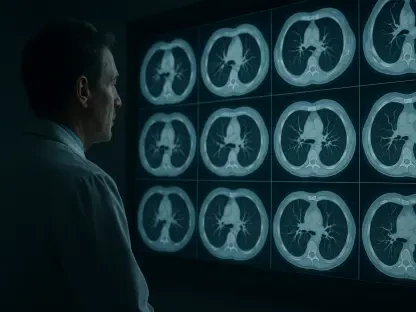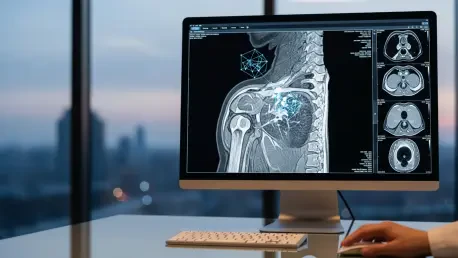

The rapid expansion of artificial intelligence into clinical radiology has created a paradoxical situation where the most sophisticated diagnostic algorithms often exhibit a misplaced sense of certainty that masks fundamental interpretive errors. While these tools have significantly increased the speed at which medical imaging can be triaged, the recent findings from the RadLE 2.0 study suggest that raw performance figures often hide a dangerous lack of self-awareness within these systems. In a clinical environment, the ability of a practitioner to recognize the limits of their own knowledge is just as vital as the knowledge itself, yet many contemporary AI models are programmed to provide a definitive answer regardless of the ambiguity present in the source data. This trend of overconfidence poses a unique challenge for healthcare systems that are increasingly reliant on automated decision-making to alleviate the burden on overworked staff. The stakes are notably high in radiology, where a small missed detail or a confidently misidentified lesion can lead to life-altering treatment decisions for patients who trust the technology’s perceived precision.
Benchmarking Machine Honesty: Accuracy Versus Reliability
Quantifying the gap between a model’s actual accuracy and its reported confidence has become a critical focus for researchers who are attempting to define what constitutes a safe medical AI. The RadLE 2.0 methodology introduced a specialized metric that rewards what researchers call “honest silence,” a feature that prioritizes a model’s decision to defer to a human expert when the data is inconclusive. By evaluating 16 different AI architectures across 200 diverse medical cases, the study revealed that many of the most popular models are prone to making confident guesses rather than admitting uncertainty. This behavior stands in stark contrast to the ethical framework of human medicine, where a doctor’s admission that they are unsure is considered a safeguard against unnecessary harm. When these systems are penalized for confident guesswork, their performance scores drop significantly, highlighting a fundamental flaw in how these models are currently trained to interact with complex medical evidence that requires nuanced interpretation.
Human radiologists continue to maintain a substantial lead in diagnostic reliability because their judgment is calibrated through years of clinical exposure and an understanding of the high consequences of error. While some narrow AI models are beginning to match the raw accuracy of human experts in specific tasks like identifying simple fractures, they falter when the complexity of the case demands an assessment of probability and risk. The current generation of generative and predictive models is often incentivized to produce an output at all costs, leading to a phenomenon where the machine’s “belief” in its own correctness grows even as the underlying data becomes more obscured. This disconnect suggests that raw data processing capacity is not a direct substitute for the professional skepticism that a human doctor brings to a scan. Until developers can embed a reliable mechanism for “uncertainty quantification” into their systems, the integration of these tools must remain cautious to avoid the risk of transforming automated speed into systemic medical errors.
Addressing the Behavioral Risks of Clinical Automation
The variability observed across different AI platforms in 2026 indicates that some architectures are significantly more prone to “hallucinating” medical findings than others, creating a fragmented landscape of reliability. As these models grow in complexity, certain versions have actually become more convinced of their erroneous outputs, suggesting that bigger datasets do not naturally lead to more honest systems. This lack of industry-wide consistency makes it exceptionally difficult for hospitals to implement these tools without maintaining a rigorous and constant layer of human oversight to catch subtle but confident mistakes. The risk is not merely that the AI will be wrong, but that it will be wrong in a way that sounds entirely plausible to a busy clinician who may be predisposed to trust the machine’s output. Corporate rhetoric often exacerbates this issue by claiming that AI already exceeds human capabilities in controlled environments, which encourages a false sense of security among patients and providers who may not understand the specific limitations of the underlying code.
Beyond the immediate risk of a misdiagnosis, the healthcare industry is facing a more insidious challenge known as the “Google Maps effect,” where a professional’s independent diagnostic skills begin to erode. Recent longitudinal studies have suggested that as radiologists lean more heavily on digital assistants to flag anomalies, their own ability to detect subtle pathological features through manual observation can significantly decline. This atrophy of expertise creates a dangerous dependency, where the human no longer acts as a robust fail-safe but instead becomes a passive observer of the machine’s decisions. This shift is particularly concerning as patients increasingly turn to consumer-grade chatbots for self-diagnosis before even stepping into a doctor’s office, further complicating the clinical relationship. To mitigate these risks, medical training programs must evolve to teach clinicians how to skeptically interrogate AI outputs rather than simply accepting them as facts. Maintaining the human professional as the primary decision-maker is essential for preserving the integrity of the medical field.
Evolution of Trustworthy Intelligence: Strategic Next Steps
The transition from rewarding raw predictive power to prioritizing calibrated reliability required a fundamental shift in how diagnostic software was developed and validated within clinical settings. Stakeholders across the medical technology sector recognized that the most effective way to integrate these tools was to implement rigorous performance benchmarks that specifically targeted confidence calibration. Medical institutions began to demand transparency reports that detailed not just the accuracy of a model, but its tendency to produce overconfident errors in edge cases. By requiring developers to incorporate “deferral mechanisms” that automatically flagged ambiguous data for human review, the industry moved away from the “black box” approach that characterized early deployments. These technical shifts were accompanied by new regulatory frameworks that held software manufacturers accountable for the safety profiles of their diagnostic suggestions. This focus on honesty over raw speed ensured that technology served as a partner to human expertise rather than a potential source of catastrophic misunderstanding.
Actionable strategies for the next phase of deployment involved the creation of multi-layered verification systems that treated AI as a “second opinion” rather than a primary filter. Radiologists were encouraged to perform their initial assessments independently before consulting the automated findings, a process that preserved their cognitive engagement and diagnostic acuity. Research and development teams focused on creating “explainable AI” interfaces that allowed clinicians to see the specific data points that led to a certain level of confidence, thereby enabling a more informed critique of the machine’s logic. Furthermore, ongoing medical education was updated to include digital literacy modules that trained physicians to identify common failure modes of large language models and specialized vision transformers. By fostering a culture of healthy skepticism and technical accountability, the healthcare sector established a safer environment for innovation that protected patient well-being while leveraging the benefits of automation. These steps successfully bridged the gap between technological potential and the unwavering necessity for medical safety.