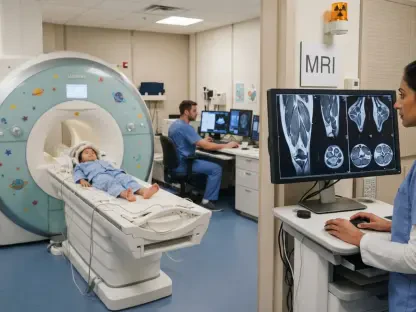

Modern healthcare providers require specialized digital twin modeling and revenue cycle management tools to optimize their daily operational workflows. By 2026, the era of experimental algorithms has ended, replaced by an environment where artificial intelligence is as standard as the electronic health record itself. Organizations no longer ask if they need artificial intelligence; instead, they seek engineering partners capable of navigating the high-stakes intersection of clinical precision and technical scalability. This transition demands a nuanced understanding of how data flows through a hospital network, how a pharmaceutical lab accelerates drug discovery, and how an insurer predicts risk without compromising patient privacy. The difficulty lies in the sheer variety of vendors claiming expertise in this space. While general software houses can build an interface, only a select few possess the medical-grade engineering pedigree required to manage life-critical systems. These elite partners provide the backbone for a digital infrastructure that reduces physician burnout and improves diagnostic accuracy through real-time data analysis. Choosing a partner is therefore not merely a procurement decision but a long-term strategic alignment that determines whether a healthcare provider stays at the forefront of medical innovation or remains tethered to outdated legacy systems.
Navigating Regulatory Landscapes: The Compliance Standard
By 2026, the regulatory framework governing health data has become more stringent, requiring developers to bake security into the very architecture of their solutions. A premier development partner must demonstrate an intimate familiarity with the Health Insurance Portability and Accountability Act (HIPAA) alongside the General Data Protection Regulation (GDPR) for international operations. This knowledge is not just about check-the-box compliance but about implementing advanced encryption, zero-trust architectures, and robust access controls that protect sensitive patient health information from increasingly sophisticated cyber threats. Furthermore, the ability to ensure interoperability is the hallmark of a sophisticated partner. They must utilize Fast Healthcare Interoperability Resources (FHIR) and Health Level Seven (HL7) standards to ensure that new tools can extract and push data to existing systems without causing technical friction. Without this level of deep integration, technology remains a siloed curiosity rather than a functional tool that clinicians can rely on during a patient encounter. The complexity of these protocols requires an engineering team that understands medical terminology and data structures as thoroughly as they understand core programming languages and database management.
Beyond initial compliance, the most successful healthcare development partners are those that address the lifecycle of a model through dedicated Machine Learning Operations (MLOps). The shift from a successful pilot program to a full-scale clinical deployment often reveals hidden challenges in data drift and model decay, where an algorithm’s accuracy degrades as patient demographics or treatment protocols change. Top-tier development firms establish continuous monitoring pipelines that alert administrators to these shifts before they impact clinical outcomes. This operational rigor is especially critical in the 2026 landscape, where the FDA has increased its oversight of Software as a Medical Device (SaMD), requiring constant validation of performance. These partners provide the technical infrastructure to maintain high-performance software across distributed hospital networks, ensuring that an assistant in a rural clinic performs with the same reliability as one in a metropolitan trauma center. By focusing on scalability and long-term maintenance, these developers prevent the technical debt that often occurs when organizations rush to implement flashy technology without a sustainable plan for governance and updates.
Leading Firms in Enterprise Transformation: The Strategic Giants
Large healthcare systems often require a top-down transformation that touches every department, from oncology to accounting. In this space, firms like Accenture have established themselves by providing high-level business consulting paired with aggressive technical implementation. Their approach focuses on clinical workflow automation and the creation of digital twins—virtual replicas of hospital operations that allow administrators to test staffing changes or emergency scenarios in a simulated environment. These projects often involve strategic alliances with major cloud providers and hardware manufacturers to ensure that the underlying infrastructure can handle the massive computational loads required for real-time predictive analytics. By 2026, these large-scale partners have specialized in the life sciences sector, helping pharmaceutical companies integrate generative models into the drug discovery process to shave years off the traditional research cycle. The value proposition here is one of total organizational overhaul, where the partner does not just deliver a piece of software but helps redefine the entire operational philosophy of the healthcare provider through the lens of digital-first efficiency and automated decision-making.
For institutions that prioritize risk management and ethical governance above all else, the major global consulting firms like Deloitte and PwC provide a different but equally vital service. These organizations excel at navigating the legal and ethical complexities inherent in automation, such as bias mitigation and transparency in clinical algorithms. In 2026, patient trust is a currency that must be protected, and these partners focus on building responsible frameworks that ensure decisions are explainable and fair across diverse patient populations. They work closely with legal departments to ensure that every implementation meets the evolving standards of healthcare law while maintaining a focus on data privacy. This is particularly important for insurance providers and public health agencies that must justify their data usage to both regulators and the general public. While their focus may lean more toward strategy and governance than pure-play coding, their involvement is often a prerequisite for large-scale institutional adoption, providing the necessary oversight to ensure that innovation does not result in regulatory penalties or a loss of public confidence in the healthcare system.
Specialization and Custom Engineering: Targeted Product Development
In contrast to the broad consulting models of the global giants, specialized engineering firms like Appinventiv focus on the granular details of product ownership and custom software development. These partners are often the preferred choice for organizations that have a clear vision for a specific tool—such as a remote patient monitoring platform or a custom diagnostic assistant—and need a team capable of taking that vision from a concept to a production-ready reality. Their strength lies in full-cycle development, encompassing everything from user experience design tailored for busy clinicians to the back-end engineering required for high-speed data processing. By 2026, these agile firms have perfected the art of building native integrations with existing hospital infrastructures, allowing their tools to function as seamless extensions of the clinician’s current toolkit. This hands-on approach is particularly valuable for health-tech startups and specialized medical departments that require rapid deployment and high levels of customization that a larger, more bureaucratic firm might struggle to provide. The focus here is on tangible outcomes: a specific problem solved by a specific, high-performance digital product that fits perfectly into the daily clinical routine.
The middle ground between consulting and product engineering is occupied by firms that leverage proprietary technology and deep modernization expertise. IBM Consulting, for instance, utilizes its specialized portfolios to help hospitals develop digital biomarkers—subtle physiological changes detected by software that can predict the onset of chronic conditions. Meanwhile, firms like Cognizant and Tata Consultancy Services (TCS) have focused their 2026 initiatives on modernizing the backbone of healthcare. They assist legacy organizations in migrating their fragmented on-premise systems to unified cloud-first architectures, which is a necessary precursor for any successful digital implementation. This modernization work often involves the use of automated platforms to bridge the gap between healthcare providers and payers, streamlining claims processing and reducing administrative friction. For the MedTech sector, partners like Capgemini bridge the physical and digital worlds by integrating intelligence directly into medical devices, such as smart imaging machines or wearable sensors. This technical synergy ensures that the hardware is not just capturing data but is actively analyzing it to provide immediate, actionable insights to the healthcare team, thereby enhancing the precision of both diagnosis and treatment.
Strategic Evaluation: Matching Partners with Organizational Needs
Selecting the ideal development partner in 2026 requires an honest assessment of an organization’s current technical maturity and long-term goals. A large university hospital network seeking to overhaul its entire patient journey—from initial scheduling to post-operative care—will likely find the most success with an enterprise-level partner capable of managing large-scale integration and change management. These massive institutions need the stability and global resources of a firm that can provide constant support across multiple time zones and handle the immense data sovereignty requirements of a global health network. In these cases, the partner acts as a lead architect, coordinating a complex symphony of cloud providers, software vendors, and internal IT teams to achieve a unified vision. The decision-making process must weigh the cost of these large-scale engagements against the potential for significant operational savings and improved clinical outcomes at scale. It is a game of endurance, where the partner’s ability to sustain a multi-year transformation project is just as important as their initial technical proposal, as the true value of these systems often takes several cycles to manifest fully.
The successful integration of these systems was ultimately achieved by those organizations that viewed their development partners as clinical allies rather than simple service providers. Leaders recognized that the most effective path forward involved a dual strategy: prioritizing rigorous compliance frameworks while simultaneously investing in specialized products that addressed specific pain points in the physician workflow. By 2026, the industry had moved away from generalist solutions in favor of niche expertise that understood the nuance of medical data and the urgency of clinical decision-making. Future initiatives focused on the refinement of these partnerships, ensuring that every tool was backed by a team capable of maintaining its accuracy and ethical integrity over time. Organizations that prioritized this level of technical and regulatory depth managed to lower their operational risks while significantly accelerating the adoption of life-saving technologies. The focus transitioned from merely acquiring technology to fostering long-term collaborative ecosystems where engineers and clinicians worked in tandem to solve the most pressing challenges in modern medicine. This shift paved the way for a more resilient, data-driven healthcare landscape that finally realized the full potential of advanced automation and data analysis.