
The official recognition of DiUS and V2 AI by AWS marks a fundamental shift from experimental generative models to autonomous agents integrated into live production environments. This transition signals a major maturation in the Australian and Asia-Pacific technology sectors, where organizations

The distinction between the standard chat experience and specialized work environments suggests that OpenAI views professional automation as a category requiring unique controls. This shift marks the moment when artificial intelligence moves from a reactive novelty into a proactive executive

Adapting a model with over 124 million parameters was successfully achieved using only 1.2 million parameters during the comprehensive SentiMatrix experiments at Eötvös Loránd University. This milestone represents a significant departure from the traditional methods that have dominated the natural

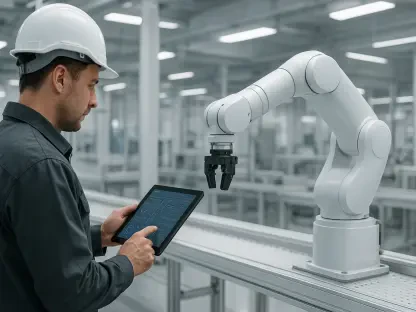
Real-time decision-making on the jobsite is being revolutionized by the ability of machines to interpret complex observations without human intervention. This fundamental shift marks the transition from pre-programmed automation to genuine physical artificial intelligence. As industrial sectors
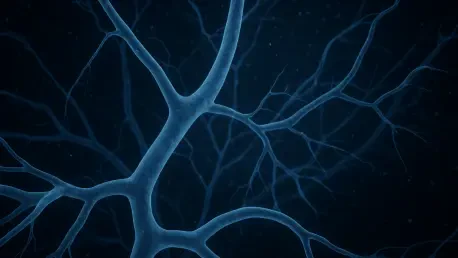
The system identifies an ambiguity field to concentrate corrections exclusively on contested regions, such as thin vessel boundaries, without corrupting areas where the ensemble is already unanimous. In the specialized arena of pulmonary research, particularly in the study of pulmonary

Benchmark tests against sixteen internal datasets reveal that language-driven segmentation can outperform specialized architectures like nnU-Net and DeepLabV3+ in complex morphological tasks. This technological leap, spearheaded by the development of PathSegmentor, represents a paradigm shift in