
Seequent addresses industry skepticism by ensuring geologists maintain manual override authority over any AI-generated interpretations within the digital record. The quest for mineral resources in the current 2026 operational landscape relies on the accuracy of observations made at the edge of a

Standard 120 kVp images often lack the necessary contrast to expose the physiological differences between well-differentiated and poorly-differentiated neoplasms. This inherent limitation in conventional imaging makes the differentiation of pancreatic neuroendocrine neoplasms one of the most
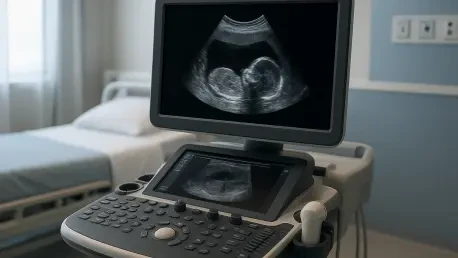
The effectiveness of synthetic medical data is validated when a classifier trained on artificial images maintains high accuracy on entirely unseen, real-world clinical scans. This principle stands at the forefront of modern oncology, where the integration of artificial intelligence is
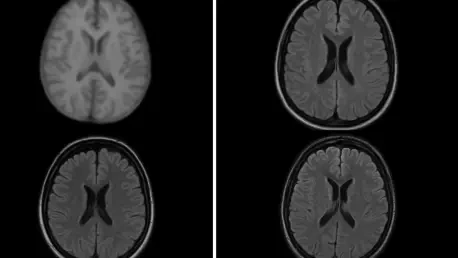
The clinical potential of artificial intelligence is currently hindered by a severe shortage of high-quality, labeled medical datasets for training diagnostic models. This scarcity often results in a "data bottleneck" that restricts the evolution of automated radiology tools, particularly during

Recent testing on the IP102 benchmark dataset revealed that graph-based deep learning achieves a 97% accuracy rate, significantly outperforming general-purpose architectures like VGG16. This breakthrough arrives at a critical juncture for global agriculture, where traditional pest management
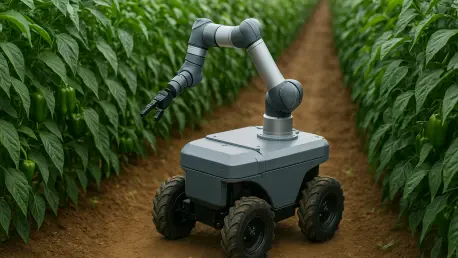
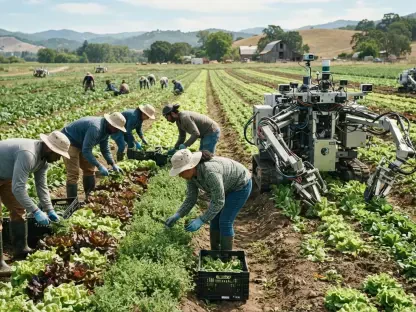
While standard deep-learning models often lose fine-scale information, a specialized small-target detection branch allows robots to identify fruit from much greater distances. This breakthrough is particularly significant as the global agricultural sector in 2026 continues to struggle with an