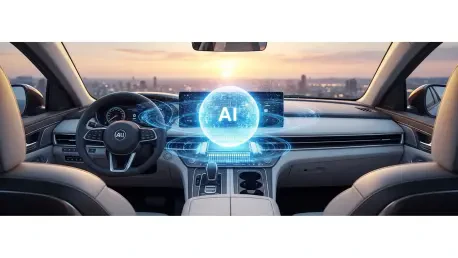

The landscape of the Chinese automotive industry is currently undergoing a radical transformation as digital infrastructure and vehicular hardware merge into a singular, cohesive user experience. Alibaba has taken a significant lead in this evolution by embedding its Qwen large language model directly into the dashboard of modern electric vehicles, a move that was officially debuted at the prestigious Beijing Auto Show. This initiative marks a definitive pivot away from the era of personal handheld devices, signaling a new age where the primary focus of artificial intelligence development resides within the integrated systems of the automobile. By converting vehicles into sophisticated, voice-activated digital assistants, Alibaba is not merely providing a new feature but is fundamentally redefining the car as an active participant in the daily logistics and lifestyle management of the modern consumer. This strategy is specifically designed to secure dominance in the highly competitive and tech-driven Chinese electric vehicle market, where software intelligence has become the ultimate differentiator for discerning buyers seeking seamless connectivity between their digital and physical lives.
The Strategic Advantage of Integrated Ecosystems
Connectivity and Market Dominance
The core of Alibaba’s strategy lies in its massive and multifaceted service ecosystem, which provides a level of vertical integration that Western competitors like Tesla or Google find difficult to replicate within the Chinese market. Through the Qwen AI interface, drivers can execute complex commands using natural language, such as ordering lunch through the food delivery platform Ele.me or managing travel itineraries via Fliggy while still in transit. This seamless connectivity establishes the vehicle as a truly smart space, allowing users to handle a wide range of professional and household tasks hands-free. Unlike standalone voice assistants that merely perform basic navigation or media control, Qwen acts as the connective tissue between the driver and a vast array of logistical services. This deep integration ensures that the vehicle remains a productive environment, effectively extending the office or home into the cabin. As hardware specifications across the electric vehicle industry become increasingly standardized, this unique software-driven ecosystem emerges as the primary method for brands to establish a distinct identity.
As the integration of AI becomes more sophisticated, the boundary between a mobile device and a vehicle continues to blur, creating a competitive environment where the user interface is the most valuable asset. Alibaba’s approach recognizes that the modern driver values convenience and time-management above traditional performance metrics like horsepower or acceleration. By positioning the Qwen model as a central hub for all digital interactions, Alibaba ensures that the vehicle becomes an indispensable part of the user’s daily routine rather than just a means of transport. This strategy also leverages the Cainiao logistics network, allowing drivers to track e-commerce shipments in real-time and redirect deliveries with simple voice prompts. Such functionality creates a high barrier to entry for rivals who lack a comparable logistics and retail backbone. Consequently, the battle for automotive supremacy is shifting from the factory floor to the software development lab, where the ability to provide a comprehensive and intuitive lifestyle experience determines market success.
The Automotive AI Battleground: China as Ground Zero
China has emerged as the definitive central battleground for automotive artificial intelligence, with conversational interfaces now considered a core value proposition rather than a secondary add-on. While international manufacturers have historically treated voice control as a luxury feature, Chinese automakers are positioning generative AI as a fundamental component of the modern driving experience. Alibaba holds a distinct home-field advantage in this arena, benefiting from a deep understanding of local consumer habits and a regulatory environment that favors domestic innovation and data sovereignty. For many Chinese automakers, leveraging Alibaba’s established AI infrastructure is a far more cost-effective strategy than investing billions into developing proprietary large language models from scratch. This allows even smaller manufacturers to offer cutting-edge intelligence to their customers almost immediately. By providing the underlying AI architecture, Alibaba effectively controls the most valuable real estate in the modern car, which is the digital layer where the user interacts with services and spends their time.
The trend toward domestic AI solutions is also driven by the specific linguistic and cultural nuances of the Chinese market, where Western models often struggle to provide the same level of accuracy and local relevance. Alibaba’s Qwen model is specifically tuned to understand regional dialects and the specific service-oriented language of the Chinese consumer, providing a much smoother interaction than generic global alternatives. This localization is a critical factor in consumer adoption, as a digital assistant that fails to understand local slang or specific location-based services quickly becomes a source of frustration. Furthermore, the collaboration between Alibaba and various automotive partners creates a feedback loop that allows for rapid iteration and improvement based on real-world driving data. As this technology matures, it becomes clear that the company that manages the interface layer will be the one to dictate the future of the automotive industry. This shift places a premium on software partnerships, making traditional mechanical engineering expertise just one part of a much larger, more complex technological puzzle.
Technical Realities and Economic Implications
Navigating Implementation and Data Synergy
While the long-term vision for the Qwen AI rollout is undeniably ambitious, its practical success remains contingent upon overcoming several significant technical and operational hurdles. A major concern for engineers involves the delicate balance between cloud-based processing and on-device computing power, a factor that directly affects system latency and hardware costs. If the system relies too heavily on cloud connectivity, the user experience may suffer in areas with poor cellular coverage, leading to delayed responses or complete service interruptions. Conversely, running a sophisticated large language model locally within the vehicle requires high-end onboard processors, which can increase the manufacturing price and impact the overall energy efficiency of the electric vehicle. Furthermore, while Alibaba has confirmed the rollout across multiple brands, the specific timelines and the depth of integration for individual vehicle models remain somewhat vague. These uncertainties suggest that while the strategic roadmap is clearly defined, the execution phase will require navigating complex engineering challenges to ensure a consistent experience.
Beyond the immediate goal of consumer convenience, the integration of Qwen into the automotive ecosystem represents a massive strategic data play that positions Alibaba to capture deep insights into consumer behavior. Every interaction recorded by the system—from a simple request for navigation to tracking a package or booking a hotel—feeds back into a larger data loop that strengthens Alibaba’s other business arms. This platform-as-a-service approach mirrors the high utility of home assistants but adds the unique mobility of the automotive environment, where consumers spend a significant portion of their day. This data synergy allows Alibaba to create highly personalized profiles that can predict consumer needs before they are explicitly stated, offering a level of service that was previously impossible. However, this dynamic creates an inherent tension for automakers, who must decide if the benefits of offering cutting-edge AI are worth the risk of losing their direct relationship with the customer. If the AI provider owns the interaction and the data, the car manufacturer risks becoming a simple hardware supplier in a software-dominated world.
Strategic Outcomes and Future Mobility Considerations
Ultimately, Alibaba is betting that software intelligence will become the new global standard for luxury and utility in the automotive market, moving the conversation far beyond basic transportation. By offering a context-aware assistant that understands a user’s specific history, habits, and preferences, the company has set a new benchmark for what a connected vehicle should be in the modern era. The long-term viability of this project will be rigorously tested by increasing data privacy demands and fierce competition from domestic rivals like Huawei, as well as global players like Tesla. These competitors are also racing to develop their own integrated systems, creating a fragmented landscape where the winner will be determined by the quality of the user experience and the breadth of the available services. As the industry moves toward a digital-first future, Alibaba’s role as an infrastructure provider could make it indispensable to the evolution of mobility, provided it can maintain its lead in AI research and successfully navigate the shifting geopolitical landscape of technology.
The integration of generative AI into the automotive sector established a new precedent for how technology companies and vehicle manufacturers collaborated to meet shifting consumer expectations. Industry leaders recognized that the value of the vehicle had shifted from its physical components to the intelligence of its operating system and the depth of its service integration. To remain competitive, manufacturers prioritized the adoption of flexible software architectures that could support rapid updates and new AI capabilities throughout the vehicle’s lifecycle. Stakeholders focused on developing robust data privacy frameworks to address growing consumer concerns regarding the collection and use of personal information within the cabin. These efforts ensured that the transition to AI-driven mobility remained sustainable and trusted by the public. Moving forward, the focus shifted toward optimizing the synergy between hardware and software, ensuring that the next generation of smart vehicles functioned as seamless extensions of the user’s digital identity. This evolution underscored the necessity for continuous innovation in both artificial intelligence and integrated logistics.