
Laurent Giraid has spent his career at the intersection of machine learning and human wellness, navigating the complex ethics of how we hand over our most personal data to algorithms. As a technologist who has watched the evolution of natural language processing and diagnostic AI, he brings a grounded perspective to the hype surrounding high-stakes medical ventures. With Neko Health recently securing a massive $700 million Series C round—bringing its total funding to over $1 billion—and eyes set on a New York expansion, the conversation around preventive care is shifting from theoretical to deeply physical. In this discussion, he explores the logistical, technological, and ethical architecture required to turn a 60-minute body scan into a sustainable pillar of modern healthcare.
With over $1 billion raised and a planned expansion into New York, what logistical hurdles do you foresee in scaling a clinic-based model that relies so heavily on custom-built hardware and physical presence?
Expanding into a market as dense and complex as New York requires more than just capital; it demands a seamless integration of high-end real estate and precision engineering. Unlike software startups that can scale globally with the push of a button, Neko Health’s model is tethered to the physical world, requiring seven-room clinics like the one in Covent Garden which are designed to support tens of thousands of scans annually. The sheer logistical weight of deploying proprietary equipment like the Derma-2 and Spectrum-2 systems across multiple US cities involves navigating a labyrinth of local building codes and medical facility regulations. There is also the human element to consider, as each site must be staffed with medical professionals who can provide in-person consultations to discuss the results immediately following the scan. Building this infrastructure from scratch while maintaining the sterile, high-tech aesthetic that high-paying customers expect is a monumental task that will test their operational efficiency.
The concept of a 60-minute, radiation-free full-body scan sounds like something out of science fiction, but what is actually happening behind the scenes to make this a reality for the 100,000 people who have already used it?
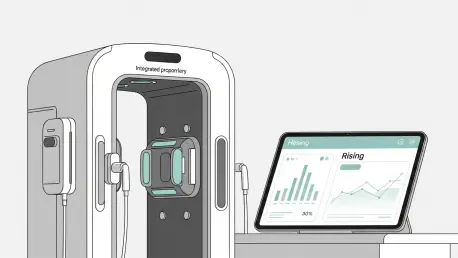
When a customer walks into one of the eight clinics currently operating across the UK and Sweden, they are stepping into a highly orchestrated symphony of data collection. The process involves capturing more than 2,000 high-resolution images to map the skin, while proprietary sensors conduct an electrocardiogram and take arterial measurements to assess cardiovascular health. It is a sensory-heavy experience where the hum of the machinery and the quick processing of blood samples—done right there at the clinic—create a feeling of immediate, comprehensive insight. By the time the hour is up, the AI has assisted in summarizing medical records and scan data so a clinician can walk the patient through their risk factors for conditions like stroke, heart attack, and metabolic syndrome. This immediacy is a far cry from the traditional healthcare experience where patients often wait weeks for lab results to trickle in through a digital portal.
Neko Health has managed to attract a “who’s who” of investors, from Mark Zuckerberg to Maria Sharapova, but how does the company balance this high-profile celebrity backing with the rigorous clinical evidence required by the medical community?
The involvement of high-profile backers like Thierry Henry and Zoë Saldaña certainly provides a level of cultural “cool” and visibility that most medical tech firms lack, but the scientific community operates on data, not star power. While the company has completed 100,000 scans and has a massive waitlist of 350,000 people, the public clinical materials have yet to include a peer-reviewed study that proves this combined approach improves long-term outcomes compared to standard care. There is a delicate tension here between the rapid-fire “move fast and break things” mentality of tech and the slow, methodical pace of clinical validation. They are currently running trials, such as one registered to evaluate skin-imaging for Raynaud’s phenomenon, but the full “Neko Health Scan” as a single service remains an area where more evidence is needed to satisfy the skeptics. For a company valued at a reported $7 billion, the pressure to produce real-world performance figures for every AI algorithm used in the process will only intensify as they enter the scrutiny of the US market.
With a 75% re-booking rate among current customers, what does this tell us about the emotional or psychological value that patients are finding in these scans?
A 75% retention rate is staggering in the healthcare world and suggests that the service is tapping into a profound desire for agency and peace of mind. For many, the traditional medical system feels reactive—you only see a doctor when something is already wrong—whereas this model feels like a proactive ritual, much like an annual physical but with a futuristic upgrade. There is an emotional weight to seeing your own health data visualized through 2,000 high-resolution images; it turns abstract risks into something tangible that you can track year over year. The repeat-booking model allows clinicians to compare measurements like blood pressure and cholesterol over time, creating a narrative of one’s health journey. This sense of being “seen” by both a human professional and a sophisticated AI creates a level of trust and satisfaction that clearly keeps people coming back, even if they have to pay out of pocket.
How does the recent introduction of updated hardware like the Derma-2 and the integration of wearable-device data change the depth of the insights being provided to the patient?
The evolution from the first generation of sensors to updated versions like the Derma-2 and Spectrum-2 represents a shift toward capturing a much larger volume of health data with even more automation. By cleared devices through the FDA’s 510(k) pathway as telethermographic systems and oximeters, Neko is building a foundation of regulatory-compliant hardware that can be deployed across their expanding clinic network. The inclusion of body-composition measurements and data from a user’s own wearable devices means the scan is no longer just a snapshot in time, but a piece of a larger puzzle that includes daily activity and sleep patterns. This holistic view allows the AI dictation system to summarize a much richer story, though it still relies on a clinician to review the reports and provide the final human touch. It is this marriage of constant wearable monitoring and the deep-dive periodic scan that could eventually redefine what we consider a “baseline” for human health.
The decision to operate as a “wellness provider” rather than a full-service medical practice in the US is a strategic one, but how does this affect the patient’s journey if a scan actually finds something serious?
By positioning themselves as a wellness provider and not participating in health insurance plans, Neko Health maintains a level of operational freedom, but it places the burden of follow-up squarely on the consumer. Their privacy notice is very clear that customers should continue seeing their existing clinicians for diagnosis and treatment, even for conditions flagged by the AI body scan. While the company does provide referral letters and introductions to outside specialists when a Neko clinician recommends it, the hand-off between a high-tech boutique clinic and the often-clunky traditional insurance-based system could be a jarring experience. There is a risk of generating “false positives” or identifying “clinically unimportant” abnormalities that lead to unnecessary and expensive downstream procedures. Navigating that transition—from a $400 wellness scan to a complex diagnostic pathway—is where the real-world utility of the service will be tested for the average American patient.
What is your forecast for the future of preventive AI imaging in the consumer market over the next decade?
I believe we are entering an era where the “black box” of the human body will become increasingly transparent, and within ten years, these types of comprehensive scans will be seen as an essential data point rather than a luxury for the elite. We will see a shift where the data from 100,000 initial scans grows into a database of millions, allowing AI to identify subtle patterns in skin abnormalities or arterial stiffness long before they manifest as disease. However, the success of this industry will depend on whether companies like Neko can prove that their interventions lead to measurable health improvements, similar to the small-scale analysis of 1,469 Stockholm customers who saw better blood pressure and glucose levels. If they can move from being a high-end wellness perk to a validated tool that saves the healthcare system money by preventing chronic illness, we will see insurance companies racing to subsidize these scans. The ultimate goal is a world where health is not a mystery we solve once we are sick, but a metric we manage with the same precision as a professional athlete.