
The traditional image of a factory where humans pull levers and machines follow rigid scripts is rapidly dissolving into a landscape where silicon-based intelligence operates with its own agency and judgment. For decades, manufacturers treated artificial intelligence as a sophisticated calculator—a tool designed to crunch numbers for predictive maintenance or optimize logistics schedules without ever stepping outside its digital cage. However, the current industrial climate is witnessing a fundamental transformation as AI transitions from a passive instrument into a functional teammate that actively participates in complex workflows. This evolution signifies a move away from isolated software modules toward comprehensive agentic systems capable of understanding business goals and executing tasks alongside human colleagues in real-time. This shift is not merely a technical upgrade but a philosophical change in how production environments are structured and managed across the globe. By redefining the relationship between human labor and machine capability, organizations are unlocking levels of productivity and flexibility that were previously considered impossible, moving toward an era where the distinction between digital and physical work begins to blur.
The Rise of Agentic Intelligence: Moving Beyond Passive Automation
The primary driver behind this organizational shift is the emergence of agentic AI, which differs significantly from the generative models that dominated the industrial landscape only a few years ago. While previous iterations of the technology focused on summarizing data or suggesting actions, agentic systems are explicitly built for execution, possessing the ability to navigate various software platforms and make operational decisions independently. In a manufacturing context, this means an AI agent can identify a shortage in the supply chain, communicate with alternative vendors, and update the production schedule without requiring a human to manually intervene at every step. This capability allows the technology to function as a persistent worker rather than a temporary fix, creating a scenario where the AI is responsible for long-term outcomes and continuous improvement. The goal is to move beyond simple automation toward a state where machine intelligence can interpret high-level objectives and translate them into a series of logical, actionable steps that align with the company’s overall strategy and profitability goals.
Integrating these active agents requires a departure from siloed automation where robots and software lived in isolation from one another. Historically, a robotic arm on an assembly line had no awareness of the sales data coming from the corporate office, nor did the accounting software understand the physical limitations of the machinery on the shop floor. Agentic systems bridge this gap by acting as a connective tissue that understands both digital and physical constraints, allowing for a more fluid exchange of information and action. This integration forces companies to establish sophisticated frameworks for governance, determining exactly where an AI’s authority begins and where human oversight is mandatory. By setting these boundaries early, manufacturers can create a predictable environment where hybrid teams operate with high levels of trust and efficiency. The performance of these teams is no longer measured solely by machine uptime but by the collective ability of humans and AI to adapt to changing market conditions. This holistic view of the workforce ensures that every asset, whether biological or digital, is utilized to its maximum potential.
Digital and Physical Integration: Deploying Autonomous Agents Across the Enterprise
Digital workers represent the first major wave in this evolution, taking over complex administrative and engineering roles that were once the sole domain of human specialists. These systems are being integrated into corporate structures in stages, often beginning as assistants that handle basic data entry or document processing before evolving into managed parts of the staff. At the highest level of maturity, these AI agents are treated like virtual employees within the company’s HR systems, complete with their own defined responsibilities, performance metrics, and clear instructions on when to escalate a problem to a human supervisor. This approach allows a manufacturing firm to scale its administrative and technical capacity almost instantly, ensuring that the back-office functions can keep pace with the rapid changes occurring on the production floor. By automating the cognitive load of routine management, these digital teammates free up human professionals to focus on high-stakes strategy and innovation, which are essential for maintaining a competitive edge in a globalized market.
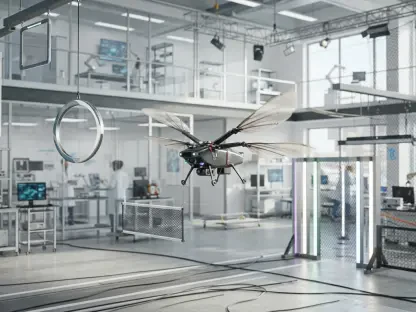
On the factory floor, the focus is shifting toward physical AI, where machines use advanced sensors and computer vision to adapt to their surroundings in real-time. Unlike traditional industrial robots that follow a set of rigid, pre-programmed instructions and require safety cages to prevent accidents, these new systems are designed to operate in less structured environments alongside people. While this technology is currently undergoing rigorous testing for long-term safety and reliability, it represents the next frontier of mass production where machines can perceive their environment and adjust their motions to avoid obstacles or assist a human colleague. This level of physical autonomy is achieved through deep learning and tactile feedback, allowing robots to handle delicate materials or perform assembly tasks that vary slightly from one unit to the next. As these machines become more capable of navigating the chaos of a busy shop floor, they transition from being dangerous tools that must be avoided into collaborative partners that enhance the physical capabilities of the entire workforce.
Architecture of a Hybrid Workflow: Connecting Digital Decisioning to Physical Action
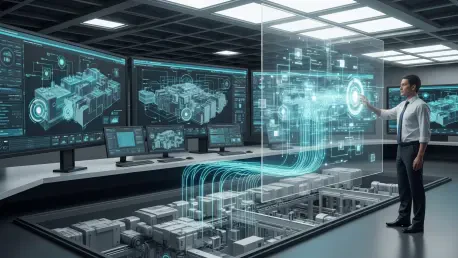
Successfully building an AI workforce requires a ground-up redesign of existing manufacturing processes rather than simply layering new technology on top of old habits. It is not enough to install the latest software and expect immediate results; instead, leaders must balance the organizational logic used in the office with the operational logic required on the shop floor. This ensures that every part of the production cycle is aligned with safety standards, quality control protocols, and overall company goals. A cohesive hybrid workflow model connects digital and physical systems to create a seamless operation where information flows directly into physical action without constant human intervention. For instance, a digital AI agent might analyze a sudden shift in consumer demand and immediately update the instructions for a physical robot on the assembly line to change production priorities or modify a product’s design. This end-to-end execution capability turns a manufacturing plant into a highly responsive organism that can react to external stimuli with incredible speed and precision.
The creation of these workflows also involves the standardization of communication protocols between different types of intelligence. For a hybrid team to function effectively, the digital worker managing the inventory must be able to “speak” the same language as the physical robot moving the pallets. This requires a centralized data architecture that provides a single source of truth for the entire organization, preventing the data silos that often lead to errors or delays. Furthermore, these workflows must be designed with built-in redundancies and fail-safes to ensure that the system remains stable even if one component fails. By treating the entire factory as a unified system of agents, manufacturers can optimize for global efficiency rather than local performance. This systemic approach allows for the implementation of complex logistics and production strategies that would be too difficult for a human-only team to manage, providing a significant boost to both throughput and resource utilization while reducing the environmental footprint of the operation.
Evolution of Human Roles: Managing the Shift From Operator to Orchestrator
A common concern in the industry is that the rise of an AI workforce will lead to widespread displacement of human labor, but the reality is that it often elevates the human role. As machines take over routine, repetitive, and dangerous tasks, humans are free to move into higher-level positions that require emotional intelligence, complex problem-solving, and ethical judgment. These new roles focus on guiding adaptive systems, managing hybrid teams, and making high-stakes decisions that machines are currently unable to process. The modern manufacturing employee is becoming a system orchestrator rather than a manual laborer, responsible for defining the parameters within which the AI operates and ensuring that the output meets the company’s standards for excellence. This shift not only improves the quality of work for the employees but also ensures that the organization retains the flexibility and creativity that only human workers can provide, particularly when dealing with unique challenges or new product launches.
New skills are becoming essential for survival in this modern manufacturing environment, requiring workers on the front lines to learn how to collaborate effectively with smart robots. This does not mean that every factory worker needs to become a computer scientist, but they do need a fundamental understanding of how these systems perceive the world and how to troubleshoot them when they encounter a problem. Managers, meanwhile, must focus on system design and supervision, learning how to lead a team that is half-human and half-machine. The ability to step in when an AI encounters a scenario it has not been trained for ensures that the factory remains flexible and resilient in the face of uncertainty. Humans remain the essential link in the chain, providing the necessary oversight to keep the system running smoothly and effectively while ensuring that the technology serves the needs of the business rather than the other way around. This partnership between human intuition and machine efficiency is the true driver of modern industrial success.
Strategic Foundations: Designing the Future of Industrial Collaboration
The shift toward an integrated AI workforce was driven by a fundamental realization that technological advancement must be matched by organizational maturity. Leading manufacturers recognized that the successful deployment of autonomous agents required more than just cutting-edge code; it demanded a culture of transparency and a commitment to continuous upskilling. These pioneers treated the implementation process as a series of experiments, validating each new capability in a controlled environment before scaling it across the enterprise. By the time these systems became standard, the focus had already moved toward refining the interaction between human intuition and machine precision. This historical progression demonstrated that the most effective factories were not the ones with the most robots, but the ones with the most cohesive communication between their human and digital employees. The results showed that companies focusing on long-term integration over short-term cost-cutting achieved far more sustainable growth and a more resilient supply chain.
To maintain this momentum and ensure future success, organizations should prioritize the development of internal standards for AI governance and invest in training programs that bridge the gap between engineering and operations. The most resilient companies were those that fostered a sense of partnership between their human staff and their digital counterparts, ensuring that the entire workforce remained aligned with the company’s long-term vision and values. It is vital to establish clear lines of accountability for every decision made by an autonomous system, as the legal and ethical responsibility for production must always remain in human hands. Manufacturers who took the time to build these foundations early are now the ones defining the standards for the rest of the industry. Moving forward, the focus should remain on creating a transparent environment where every worker understands their role within the hybrid team and feels empowered to contribute to the system’s evolution. This human-centric approach to high-tech integration will continue to be the most critical factor for long-term industrial leadership.