
The global manufacturing landscape is currently navigating a period of unprecedented strain as an aging workforce and shifting consumer expectations converge to create a production bottleneck that traditional automation cannot solve alone. For decades, the industry relied on rigid, programmed machines designed for high-volume, low-variety production, but the modern market demands a level of agility that these legacy systems simply lack. This shift has paved the way for the emergence of Physical AI, a sophisticated integration of machine learning and robotics that allows hardware to perceive, reason, and act in real-world environments without constant human oversight. Unlike the static robots of the past, these new systems are software-defined, meaning their capabilities are constantly evolving through digital updates rather than mechanical overhauls. As factory floors become increasingly complex, the role of Physical AI has transitioned from a futuristic novelty to a fundamental necessity for maintaining operational continuity. By bridging the gap between digital intelligence and physical labor, this technology offers a viable path forward for a sector that is struggling to fill millions of specialized roles. The current focus remains on developing systems that are not only efficient but also intuitive enough to work alongside a human workforce that is becoming more diverse and less specialized in traditional mechanical engineering.
Evolution of the Factory Floor: Moving Beyond the Cage
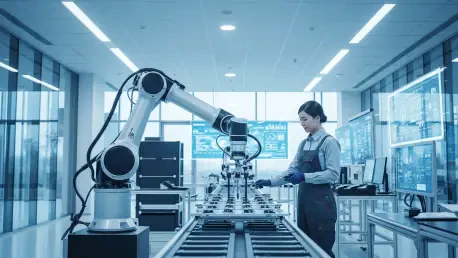
The traditional image of a factory involves massive robotic arms bolted to the floor and surrounded by high steel cages to prevent accidental injury to human workers who happen to wander too close. This era of isolation is rapidly coming to an end as the industry adopts collaborative robots, commonly known as cobots, and autonomous mobile robots that share the same workspace as their human counterparts. These machines are equipped with advanced sensors and Physical AI that allow them to detect movement and adjust their speed or trajectory in real-time, ensuring a safe and fluid environment. This transition has turned the factory floor into a dynamic ecosystem where robots are no longer just tools for repetitive motion but are active participants in a coordinated workflow. The ability of these machines to navigate around obstacles and adapt to changing layouts allows manufacturers to reconfigure their assembly lines in hours rather than weeks, a capability that was once considered impossible under the old paradigm of fixed automation. Furthermore, the synchronization of entire fleets of autonomous vehicles ensures that material handling is optimized across the entire facility, reducing the time parts spend sitting in transit or waiting for a human operator to move them.
The development of these advanced robotic systems is being accelerated by the use of generative AI and high-fidelity simulations that allow robots to learn through synthetic data before they ever touch a physical product. By creating a virtual mirror of the factory floor, developers can run millions of training cycles in a matter of days, teaching a robot how to handle delicate components or navigate high-traffic areas with precision. This software-defined approach to hardware means that a robot’s intelligence is no longer static; it can be improved through over-the-air updates that refine its motor skills and decision-making logic based on collective data from across the industry. This method of training significantly reduces the risk of expensive hardware damage during the calibration phase and ensures that when a machine is finally deployed, it already possesses a high level of proficiency. The shift toward simulation-based learning also allows for the testing of rare and dangerous scenarios that would be impossible to replicate safely in a live factory setting. Consequently, the machines arriving on assembly lines today are more resilient, more versatile, and capable of handling a wider array of tasks than any previous generation of industrial equipment, effectively serving as a force multiplier for the existing workforce.
Democratizing Technical Expertise through Conversational Interfaces
One of the most significant barriers to entry in high-tech manufacturing has always been the steep learning curve associated with operating and maintaining complex industrial machinery. In many regions, the talent gap is widened by the fact that senior technicians are retiring, taking decades of tribal knowledge with them and leaving a void that younger workers are not always prepared to fill. Physical AI addresses this challenge by acting as a bridge for technical democratization, using natural language processing to make expert-level information accessible to everyone on the shop floor. Instead of requiring a worker to possess a deep background in robotics or programming, AI-enabled systems allow them to interact with machines through simple verbal or written commands. This shift changes the fundamental nature of factory work, moving the emphasis away from rote memorization of technical manuals and toward high-level problem-solving and oversight. By lowering the technical barriers to entry, manufacturers can more easily recruit from a broader pool of talent, ensuring that the labor shortage does not become a permanent bottleneck for growth and innovation in the sector.
The practical application of this democratization is most visible during troubleshooting and maintenance cycles, where every minute of downtime translates into significant financial losses for the company. In a traditional setup, a broken machine might sit idle for hours or even days while waiting for a specialized engineer to arrive or for a technician to pore through thousands of pages of technical documentation. Today, a factory worker can simply engage with an AI interface to describe the symptoms of the malfunction and receive an immediate, step-by-step guide for the repair process. This conversational AI has been trained on every technical manual, service record, and engineering schematic related to the equipment, allowing it to synthesize complex data into actionable advice. This capability not only reduces the duration of unplanned outages but also empowers junior employees to perform tasks that would have previously required a team of experts. By decentralizing this technical knowledge, the AI ensures that the factory remains operational even when specialized staff are unavailable. This shift essentially transforms the role of the industrial worker into that of a system supervisor, where their primary value lies in their ability to direct and manage the intelligent systems that perform the physical labor.
Agentic AI and the Shift Toward Autonomous Operational Planning
Standard artificial intelligence often fails in a manufacturing context because it lacks the specific context of a particular factory’s vocabulary, safety standards, and proprietary production methods. To solve this, the industry has moved toward the deployment of Agentic AI, which consists of specialized digital agents that are designed to operate autonomously within a specific set of parameters to reach a company’s production goals. These agents are not merely chatbots; they are sophisticated planners that understand the nuances of the local language, the specific quirks of individual machines, and the unique priorities of the manufacturing site. They can monitor live data feeds from the production line to identify inefficiencies that might be invisible to a human observer, such as a slight delay in a conveyor belt or a minor fluctuation in energy consumption. By operating with a degree of autonomy, these agents can make real-time adjustments to the workflow, ensuring that the entire system remains optimized for both speed and quality. This level of specialized intelligence allows manufacturers to maintain high levels of customization without the massive overhead typically associated with small-batch production.
Beyond basic monitoring, these autonomous agents are increasingly responsible for complex planning tasks that traditionally required extensive human management and coordination across multiple departments. Human planners are often forced to juggle competing interests, such as urgent customer deadlines, machine maintenance schedules, and the varying skill levels of the available workforce, which can lead to fatigue and errors. Agentic AI can analyze these variables simultaneously, processing millions of data points in a fraction of a second to recommend a production sequence that maximizes output while minimizing waste and energy use. This allows for a much more responsive supply chain, as the AI can instantly re-route tasks if a specific machine fails or if a high-priority order arrives unexpectedly. The result is a factory that is far more resilient to external shocks and internal disruptions, as the digital agents are constantly recalibrating the operational plan to ensure the best possible outcome. This shift toward autonomous planning represents a move away from the “top-down” management style of the past and toward a more decentralized, data-driven approach that prizes agility and precision above all else.
Balancing Human-Centric Design with Cybersecurity Realities
As the industry moves deeper into the era of Industry 5.0, the focus has shifted toward a human-centric partnership where technology is designed to augment human capabilities rather than replace them entirely. This philosophy recognizes that while robots are excellent at performing the “3Ds”—tasks that are dull, dirty, or dangerous—humans remain superior in areas requiring emotional intelligence, complex ethical judgment, and creative strategy. To support this partnership, governments and industrial hubs have established digital testbeds where Physical AI systems can be thoroughly vetted in a virtual environment before being introduced to a live workforce. These “digital twins” of entire factories allow engineers to simulate various scenarios, ensuring that robotic behaviors are predictable and that safety protocols are robust enough to handle any potential malfunction. This proactive approach to safety ensures that the integration of AI does not come at the cost of worker well-being, fostering a culture of trust between the human employees and their robotic counterparts. By keeping the human at the center of the technological narrative, manufacturers can ensure that their digital transformation is sustainable and socially responsible.
While the benefits of connected, intelligent robots are clear, the integration of these systems into a factory’s internal network creates significant cybersecurity risks that must be managed with extreme caution. A robot that is connected to the internet is a potential entry point for hackers who could cause physical damage, disrupt production lines, or steal highly sensitive proprietary data and trade secrets. Because of these risks, there is a growing movement away from cloud-based AI in favor of edge computing, where the processing power is located directly on the factory floor. This localized approach ensures that the “brain” of the machine remains within the physical walls of the facility, providing faster response times and preventing a total production shutdown in the event of an internet outage. By prioritizing edge infrastructure, manufacturers can embrace the power of Physical AI while maintaining a hardened security posture that protects their intellectual property and the safety of their personnel. The path forward required a strategic investment in local processing hardware and a commitment to upskilling the current workforce to manage these new, high-tech environments. Companies that successfully navigated this transition found that they could maintain a competitive edge by combining the speed of AI with the localized security of a closed-loop system.