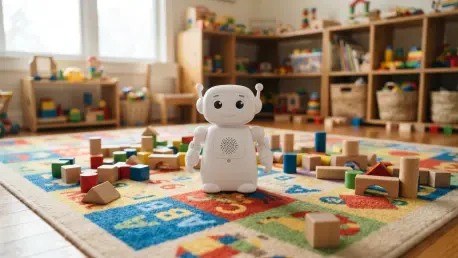

Young learners often interact with classroom robots as genuine friends, unaware that their biometric data and vocal cadences are being recorded for permanent storage. This unsettling reality sits at the core of a deep-seated tension between the rapid expansion of artificial intelligence and the fundamental rights of the world’s most vulnerable demographic. As AI systems become ubiquitous in preschools and early elementary settings, the gap between technological capabilities and protective oversight has widened into a chasm. A comprehensive scoping review conducted by esteemed researchers Ilene R. Berson, Michael J. Berson, and Wenwei Luo has shed light on this precarious intersection. Published in the journal AI, Brain and Child, their investigation provides a rigorous examination of the ethical, developmental, and governance challenges inherent in the current educational landscape. This study serves as a critical warning, noting that the deployment of AI in early childhood education has significantly outpaced the development of necessary ethical safeguards and regulatory frameworks. By synthesizing nearly a decade of academic and policy discourse, the researchers highlight a reality where children from birth to age eight are being subjected to experimental technologies that may fundamentally alter their development. This investigation is timely, as the industry continues to prioritize standardized academic metrics and operational efficiency over the sensory-rich, relational, and play-based learning that developmental psychologists agree is essential for the healthy growth of young minds. The review emphasizes that AI is not a neutral addition to the classroom but a transformative force that requires immediate scrutiny.
Rigorous Methodology: Examining the Scholarly Landscape
To construct a robust understanding of the current AI-ECE landscape, the investigators utilized the Arksey and O’Malley framework, bolstered by the PRISMA scoping review standards. This methodology ensured a systematic and transparent approach to literature selection, allowing for a comprehensive mapping of a complex and rapidly evolving field. The researchers queried major academic databases, including Scopus, Web of Science, ERIC, IEEE Xplore, and PubMed, focusing on peer-reviewed studies and authoritative gray literature published between 2015 and 2024. This longitudinal approach allowed the team to track the transition from early experimental robotics to the sophisticated generative models that characterize modern educational technology. The final corpus consisted of 42 high-quality articles, including empirical studies, theoretical explorations, and policy analyses. By incorporating vital global guidance from organizations like UNICEF and recent academic preprints, the analysis remained at the cutting edge of the field, reflecting the most current debates on child-centric technological integration. The researchers ensured that the selection process was not limited to purely technical papers but included sociological and psychological perspectives to provide a holistic view of how AI impacts the human elements of early education.
The analysis revealed an exponential surge in academic interest regarding AI in early learning, with over 55 percent of the reviewed literature being published in 2024 alone. This surge indicates a global urgency to address the ethical implications of these tools as they move from niche experiments into mainstream classrooms. While the research is geographically diverse, spanning the United States, China, the Netherlands, and several other nations, the review highlights a concerning trend in product development. Most commercially available AI tools are repurposed from models originally designed for older children or adults, failing to account for the unique developmental stages of toddlers and young children. Consequently, these tools often prioritize rigid, standardized academic data points over the fluid, creative experiences necessary for early childhood. The research indicates that this misalignment is particularly acute in systems that rely on natural language processing, which often struggle to accommodate the non-linear communication styles of young learners. This highlights a fundamental flaw in the market, where commercial efficiency often overrides the specific developmental requirements of the target audience, leading to tools that are functionally adequate but ethically and developmentally questionable.
Data Privacy: The Pervasive Threat of Surveillance
One of the most pressing concerns identified by the scoping review is the extensive and often intrusive data collection required for modern AI platforms to function effectively. Unlike traditional educational tools, AI systems in the classroom frequently engage in granular surveillance, capturing far more than just basic demographic data or academic scores. These platforms track highly sensitive biometric information, including facial expressions, gaze direction, vocal cadence, and physical gestures, all through high-fidelity sensors and cameras embedded in the learning environment. The review characterizes many technology providers as black boxes, noting a widespread lack of transparency regarding data retention schedules and third-party sharing agreements. In many cases, for-profit business models drive the repurposing of pupil records for behavioral profiling or predictive analytics. This level of monitoring creates an environment where a child’s every reaction is quantified and stored, turning the classroom from a safe space for exploration into a theater of constant observation. The researchers emphasize that this persistent tracking can have profound psychological effects, as children may subconsciously adjust their behavior to meet the perceived expectations of the monitoring system, thereby stifling authentic self-expression.
The researchers further argue that the aggregation of developmental assessments and health indicators carries long-term, irreversible risks for a child’s future. Because these digital footprints are permanent, they can influence a child’s future educational placements, social opportunities, and personal autonomy long before the child is old enough to understand the concept of a digital reputation. The use of predictive analytics means that a child’s struggle with a specific task at age five could theoretically be used to categorize their potential for years to come. This creates a scenario of algorithmic determinism, where early-life data points dictate a child’s trajectory through the education system. Furthermore, the review notes that the monetization of student information often occurs without explicit disclosure to schools or families, as complex end-user license agreements frequently obscure the extent of data harvesting. The permanent nature of this data is particularly concerning in the context of emerging biometric identification technologies, which could link early childhood educational data to adult identity. This underscores the need for strict data minimization policies and the implementation of immediate anonymization protocols to ensure that a child’s past does not unfairly limit their future opportunities or rights.
Cognitive Barriers: The Illusion of Informed Consent
The review identifies a fundamental misalignment between traditional privacy protection models and the developmental reality of young children. Most legal frameworks, such as those governing data use, rely heavily on the concept of informed consent. However, children under the age of seven generally lack the cognitive maturity to grasp abstract concepts like network surveillance, cloud storage, or the long-term implications of data security. Even by age eleven, a child’s ability to make consistent, informed decisions about their privacy is highly limited. Young learners often lack metacognitive awareness of their digital footprint and may interact with a classroom robot or a voice-activated toy as a genuine friend. They do not perceive these devices as data-gathering terminals, which leads to a lack of genuine informed assent. This creates an ethical vacuum where the child’s natural social instincts are exploited by the design of the technology. The researchers argue that applying adult standards of consent to children is not only ineffective but also inherently unfair, as it places the burden of protection on individuals who cannot possibly understand the risks involved. This calls for a reimagining of consent that places greater responsibility on developers and regulators rather than the end-user.
While parental consent remains the current legal benchmark, the review notes that parents often lack the technical literacy required to evaluate the underlying data architectures of complex AI systems. Many parents are forced to choose between allowing their child to use a tool that the school has adopted or excluding them from the educational experience altogether, creating a forced choice rather than a free one. Additionally, children’s intrinsic preferences for immediate engagement often conflict with parental priorities regarding safety and privacy. This vulnerability is frequently exploited by dark patterns of design, such as persuasive gamification and emotional nudging, which are intended to maximize platform usage and data harvesting at the expense of the child’s well-being. These design choices are often optimized by algorithms to find the most effective ways to keep a child engaged, creating a cycle of dependency that serves the platform’s data needs more than the child’s educational needs. The researchers conclude that the current model of proxy consent is insufficient to protect children from these sophisticated behavioral manipulation tactics. They suggest that the design of educational AI must transition away from addictive loops and toward transparent, limited interactions that respect the child’s cognitive boundaries and preserve their right to play without being tracked.
Developmental Impacts: Disrupting the Learning Process
The researchers analyzed the impact of AI through several established educational and sociological frameworks, revealing that AI is not a neutral tool but an active participant that reshapes classroom dynamics. Under the lens of socio-cultural theory, learning is viewed as a social process facilitated by scaffolding from caregivers and peers. The review warns that solitary AI interactions risk displacing these vital human connections, which are the bedrock of early childhood development. When AI platforms utilize prescriptive algorithms, they often channel children through predetermined learning paths, which can stifle curiosity, open-ended inquiry, and autonomous problem-solving. Instead of a teacher responding to a child’s unique spark of interest, the algorithm provides a pre-programmed response designed to meet a specific metric. This shift from human-led scaffolding to algorithmic instruction can lead to a more rigid educational experience where there is less room for the spontaneous and collaborative moments that define high-quality early learning. The concern is that children may become passive recipients of information rather than active explorers of their environment, a change that could have long-term effects on their critical thinking and creativity.
Furthermore, the review highlights the conflict between modern AI applications and the necessity of multimodal learning in early childhood. Developmental research consistently shows that young children learn best through a combination of movement, gesture, speech, and sensory play that involves the whole body. However, many current AI systems prioritize text-based or auditory modes, which can lead to a phenomenon known as technoference. This refers to the disruption of healthy, synchronized human-child interactions by digital tools. The classification of digital play into rigid categories often reveals that AI applications rarely support the symbolic and constructive play necessary for healthy cognitive and emotional growth. For example, a tablet-based AI may help a child learn to recognize letters, but it cannot replicate the spatial and social learning that occurs when building blocks with a classmate. The researchers argue that the over-reliance on digital interfaces may lead to a sensory deficit, where children spend more time interacting with screens than with the physical world. This disruption of traditional learning modes poses a significant risk to the holistic development of the child, potentially prioritizing narrow academic skills over the broader social and physical competencies that are required for later success in life.
Social Risks: Algorithmic Bias and Artificial Bonds
The introduction of anthropomorphic social robots and emotional AI presents unique psychological risks, specifically the creation of an illusion of reciprocity. These systems are designed to simulate human-responsive speech and recognize emotional states, which frequently triggers parasocial attachments in young children. Because children under age five are still developing a theory of mind, they often attribute genuine intentionality and emotional feelings to these machines. This can distort a child’s understanding of authentic interpersonal communication, which requires navigating mutual cues and emotional vulnerability. In contrast, AI interactions are essentially one-sided simulations, providing a sanitized version of social interaction that lacks the complexity of human relationships. The review critiques the use of emotion-recognition engines that rely on subjective or limited metrics, noting that if an algorithm misreads a child’s facial gestures—perhaps due to cultural differences—it may generate an inaccurate behavioral assessment. This could lead to a situation where a child’s emotional development is judged by a flawed machine, potentially resulting in unfair labels or interventions that are not grounded in reality.
Algorithmic bias represents another significant threat to educational equity, as most AI models are trained on datasets that reflect affluent, Western populations. The scoping review found that natural language processing models frequently fail to interpret regional dialects, non-standard pronunciations, or localized idioms, which can alienate children from minority or non-native backgrounds. This failure can impede learning progress and reinforce existing social inequalities within the classroom. Additionally, the review points to a growing digital divide, where the commercial concentration of advanced educational technologies in well-funded urban markets leaves rural and economically disadvantaged communities behind. Without the necessary infrastructure, hardware access, or specialized teacher training, these communities are excluded from the potential benefits of AI while remaining uniquely vulnerable to its risks. The researchers emphasize that unless these biases are addressed at the design stage, AI integration could inadvertently exacerbate the very achievement gaps it is intended to close. They call for more inclusive data practices and the development of localized AI models that reflect the linguistic and cultural diversity of the global student population, ensuring that technology serves as a tool for inclusion rather than a mechanism for exclusion.
Future Policy: Strategic Interventions for Child Safety
The scoping review by Berson, Berson, and Luo reached several critical conclusions regarding the global regulatory environment for AI in early education. The researchers determined that current governance is characterized by significant fragmentation and jurisdictional disparity, leaving many children unprotected. While the European Union has taken a proactive stance with frameworks like the EU AI Act, which mandates audits before deployment, the study identified that even these robust systems often lacked provisions specifically tailored to the unique developmental needs of toddlers and preschoolers. In contrast, the United States was found to employ a more reactive, decentralized approach, often monitoring systems only after harm has been documented. The researchers emphasized that this fragmented landscape allowed for-profit companies to set the standard for child privacy, rather than educational experts or human rights advocates. The review ultimately argued that the current trajectory of AI in early childhood education presented profound ethical risks that could not be ignored by the international community.
To address these systemic failures, the authors proposed several strategic interventions that prioritized the relational and sensory experiences of the child. They concluded that AI systems must be built with universal privacy-by-design, making data minimization and real-time anonymization the default settings. The researchers advocated for a strict ban on the commercial exploitation of children’s educational data, ensuring that pupil records could not be used for marketing or behavioral profiling. Furthermore, they proposed that educators, developmental psychologists, and parents should be involved in the co-creation of AI tools to ensure they support multimodal and relational play. The study also highlighted an urgent need for capacity building, recommending digital literacy programs to empower teachers and parents to critically evaluate algorithmic tools. Finally, the researchers called for the establishment of international, child-centered governance frameworks that prioritized transparency and equity across borders. These insights provided a clear roadmap for a more responsible integration of technology, suggesting that the focus must shift from instructional efficiency to the long-term protection and empowerment of the next generation.