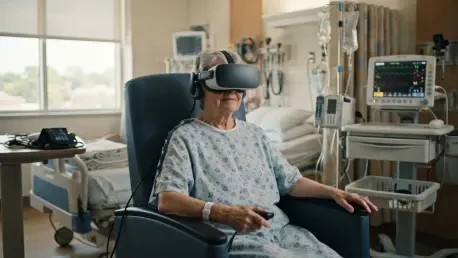

Integrating high-fidelity virtual reality into clinical care represents a shift toward mechanism-oriented therapy that prioritizes the patient’s need for autonomy and perceived environmental control. A multidisciplinary research team in Hungary has launched a multicenter randomized controlled trial to evaluate a specialized virtual reality intervention designed to address the psychological toll of long-term hospitalization on older adults. Led by Pál Tamás Szabó of the Future Care Lab at Moholy-Nagy University of Art and Design, the study focuses on a tool called Zenctuary VR+. This nature-based immersive system is built to test the action–outcome contingency, which is the psychological experience of performing an action and witnessing its immediate result. For older patients confined to hospital beds, the loss of autonomy and the breakdown of the link between personal action and environmental change can lead to significant distress. By using high-fidelity VR, the researchers aim to determine if reintroducing agency can mitigate symptoms associated with prolonged care.
Clinical Challenges and Theoretical Foundations
The Impact of Hospitalization: Understanding Learned Helplessness
The psychological concept of learned helplessness provides a crucial framework for understanding why many elderly patients experience a decline in mental well-being during long-term stays. When individuals find themselves in structured environments where their personal actions have no observable impact on their circumstances, they often transition into a state of chronic passivity. In a clinical setting, external factors such as rigid schedules, prescribed diets, and limited mobility strip away the patient’s ability to make basic decisions about their own daily life. This lack of control can quickly lead to motivational deficits and a diminished sense of self-efficacy, as the patient begins to believe that their efforts are futile. For those who are already grappling with the physical challenges of aging, the institutional nature of a hospital can reinforce the feeling that they are no longer active participants in their own lives but merely subjects of medical management.
Elderly Vulnerability: The Psychological Risks of Sterile Environments
Building on this foundation, Hungarian researchers highlight that while hospitalization is necessary for recovery, it inadvertently creates a psychological vulnerability that is particularly acute among older adults. This demographic often faces a convergence of stressors, including reduced physical strength and a loss of social roles, which makes the sterile and highly regulated environment of a hospital ward feel even more restrictive. The breakdown of the perceived link between an individual’s will and environmental change is a primary driver of the passivity seen in geriatric wards. When a patient is no longer required or permitted to exercise choice, their cognitive and emotional resilience begins to erode, often manifesting as depression or a generalized sense of hopelessness. By identifying these specific psychological triggers, the research team aims to use immersive technology to reintroduce the concept of choice, providing a digital alternative to the current physical restrictions.
Restoring Autonomy: The Role of Action-Outcome Cycles
The Zenctuary VR+ intervention is specifically designed to leverage the action–outcome contingency, a psychological principle where an individual performs a task and immediately observes the result. This feedback loop is essential for maintaining a sense of agency, as it confirms to the brain that the person remains an effective actor within their environment. For a patient confined to a bed, the ability to choose a direction or influence an object in a virtual space serves as a powerful counterweight to the powerlessness felt in the real world. By reestablishing this connection through high-fidelity virtual reality, the therapy aims to protect against the onset of learned helplessness by reinforcing the patient’s sense of personal competence. The immediate and visible feedback provided by the software ensures that the patient’s intentions are translated into meaningful digital changes, which can help to rebuild the cognitive foundations of autonomy damaged by passive care.
Cognitive Rehabilitation: Interactivity as a Therapeutic Tool
The study emphasizes that the core benefit of the intervention lies not just in the visual beauty of the environments but in the active participation of the user. Unlike traditional passive distractions like television or reading, which still place the patient in a receptive and sedentary role, the VR system requires the user to initiate actions. Whether it is selecting a specific garden path to explore or deciding which virtual plant to water, these micro-decisions accumulate to create a feeling of environmental control. This shift from being a spectator to being an agent is the fundamental mechanism the researchers are testing. By providing a safe and controlled virtual space where the consequences of action are always positive and rewarding, the intervention offers a form of cognitive rehabilitation. This approach seeks to prove that the simple act of choosing can be a therapeutic tool in its own right, potentially reducing the need for pharmacological interventions to manage anxiety.
Technical Execution and Clinical Validation
Engineering for Senior Needs: Hardware and Clinician Support
The technical infrastructure of Zenctuary VR+ utilizes the Meta Quest 3, a standalone headset that prioritizes comfort and safety for older users by eliminating the hazards associated with wired systems. The development of the software within the Unity engine allowed for a highly customized user interface that addresses the specific needs of patients who may have limited technical literacy or physical dexterity. A critical feature of this system is the secondary operator-facing application, which enables clinicians to view the virtual environment in real-time on a tablet or computer. This connectivity ensures that medical staff can provide immediate guidance if a patient becomes confused or experiences any level of discomfort, bridging the gap between the immersive digital world and the clinical reality. This dual-screen approach not only enhances safety but also allows for a collaborative therapeutic experience, where providers can monitor engagement levels and offer verbal assistance.
Immersive Environment Design: Nature and Interaction Mechanics
Within the software, patients are introduced to six high-quality nature scenes, such as lookout points and meadows, each designed to foster a sense of tranquility and curiosity. These environments are structured around predefined stations that serve as anchors for movement and interaction, using a gaze-assisted teleportation system to prevent the onset of motion sickness. This navigation method allows users to move through the space by simply looking at a destination, making it accessible even for those with limited hand coordination. The interaction tasks, such as feeding animals or collecting virtual objects, are purposefully designed with a low cognitive load to ensure they are rewarding rather than stressful. There are no competitive elements or time limits, which allows the patient to engage with the virtual world at their own pace. This focus on low-stress mastery is intended to provide a sense of achievement and relaxation, ensuring that the technology serves patient well-being.
Study Methodology: Randomized Controlled Trial Structure
To rigorously test the efficacy of the intervention, the team is conducting a randomized controlled trial involving 100 participants aged 60 and older, divided into active and passive groups. The active group engages fully with the interactive elements of the software, while the passive control group views the same nature scenes from a fixed virtual position. This design allows researchers to determine if the therapeutic benefit is derived from the interactive agency of the user or simply from the calming effect of the nature-themed visuals. Success is primarily measured through the Hospital Anxiety and Depression Scale, alongside secondary metrics that track self-esteem and general self-efficacy. By collecting data at multiple time points, including a four-week follow-up, the study aims to capture both the immediate psychological impact and the duration of any positive effects. This high level of statistical rigor ensures that the results can be translated into actionable clinical guidelines for future programs.
Future Implications: Establishing Standards for Digital Geriatric Care
The Zenctuary VR+ trial demonstrated how prioritizing agency over simple distraction addressed the mental health challenges faced by long-term hospital patients. By implementing strict safety protocols, such as cognitive assessments and seated sessions, the research team ensured that the technology remained accessible and safe for a medically vulnerable population. The project successfully bridged the gap between advanced immersive software and geriatric care, proving that digital tools can be used to reclaim a sense of autonomy within a restrictive environment. Healthcare providers should now consider integrating interactive virtual reality as a non-pharmacological supplement to traditional mental health support in clinical wards. Moving forward, the development of more personalized and task-oriented digital therapies will be essential for expanding the reach of these interventions. Future efforts should also focus on establishing a permanent infrastructure for VR assisted therapy in rehabilitation centers.